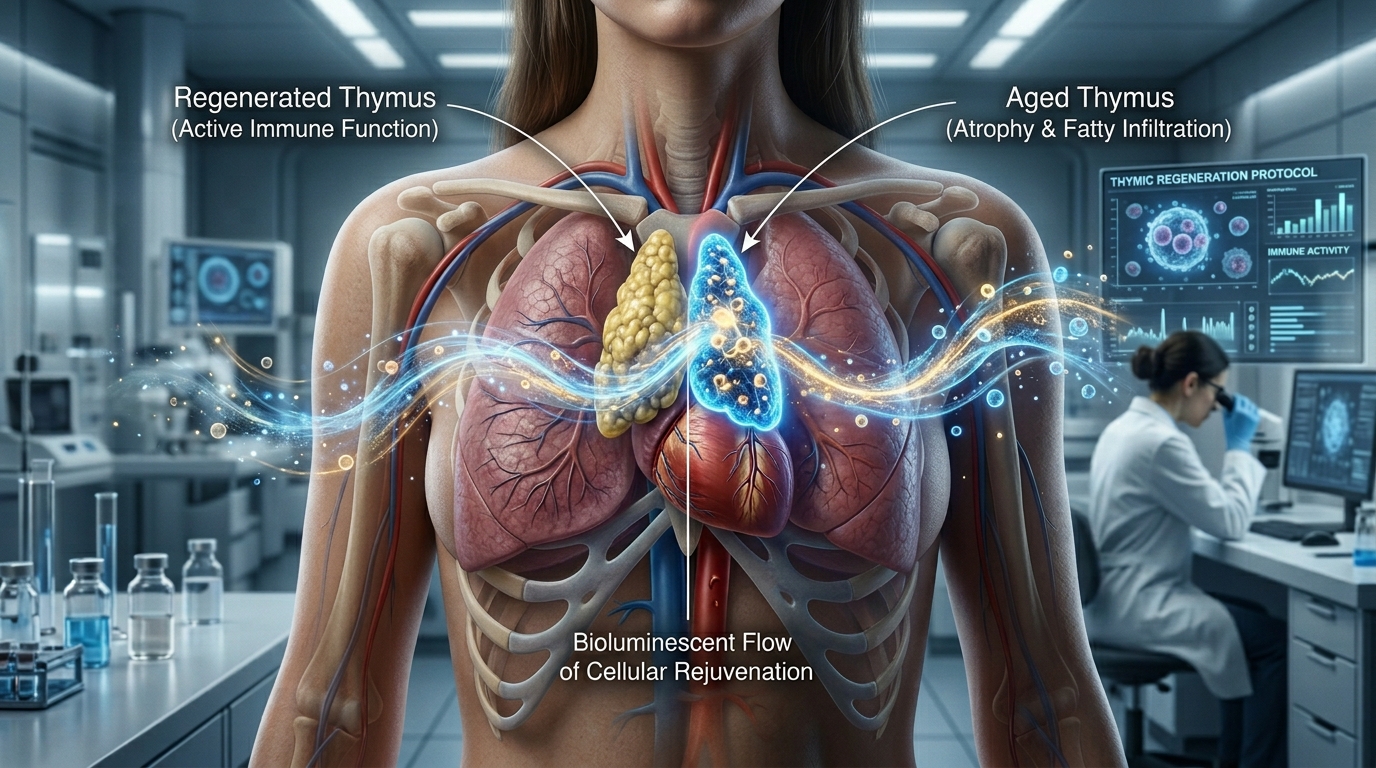

The thymus, once treated as a fading biological relic after adolescence, is now at the center of an accelerating shift in biomedical research. Following earlier findings linking thymic health to immune aging and cancer outcomes, scientists are moving into a more consequential phase: attempting to restore or replicate thymus function in adults.
This transition marks a departure from passive observation toward experimental intervention, where aging is increasingly treated as a modifiable biological system rather than an irreversible process.
When Prediction Becomes Intervention
Earlier research established the thymus as a potential predictor of immune resilience, with AI-assisted imaging studies and clinical datasets suggesting strong correlations between thymic condition, mortality risk, and cancer outcomes.

thymus aging and cancer immunity, which positioned the organ as a central marker of immune system decline and cancer susceptibility.
The current phase of research moves beyond correlation. The question is no longer whether thymus health matters, but whether it can be altered in meaningful, therapeutic ways.
Latent Regeneration Pathways Inside the Immune System
Experimental immunology now suggests that the thymus retains dormant regenerative capacity. Studies published in
Nature Cell Death & Disease indicate that immune signaling pathways can trigger structural repair mechanisms within thymic tissue under specific biological conditions.
Additional findings in
Nature Reviews Immunology reinforce the idea that thymic decline is not purely degenerative but partially regulated by reversible biological processes.
These findings collectively challenge the long-held assumption that thymus involution is permanent.
Engineering Immune Renewal
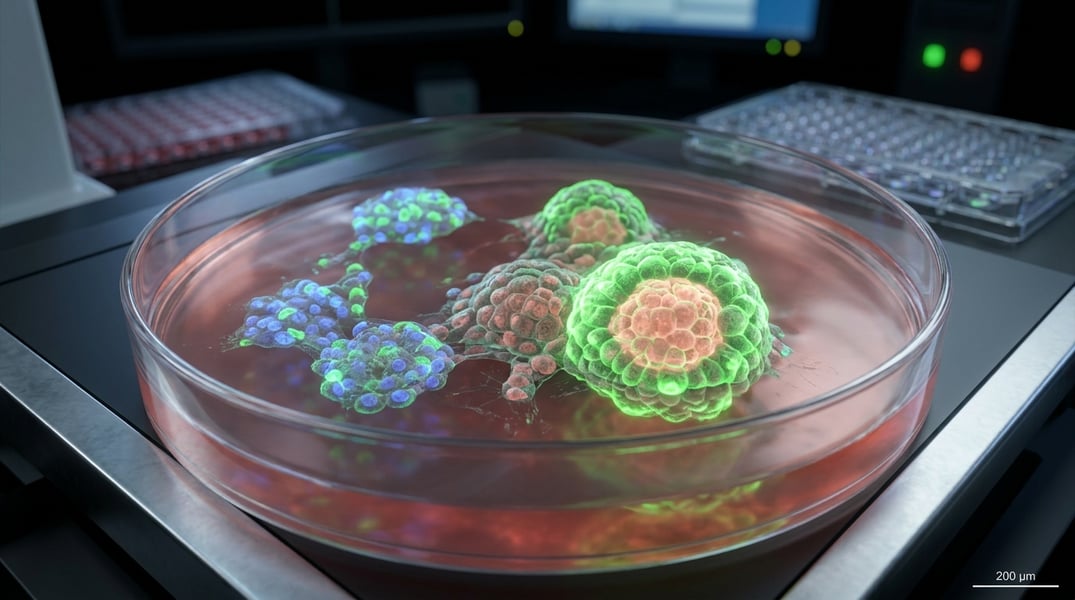
Stem-cell derived thymic epithelial cells are being developed as functional replacements for aged or damaged thymic tissue. Early experimental systems show that these engineered tissues may support partial restoration of T-cell production.
Similar work on organoid-based immune systems suggests that laboratory-grown thymus-like structures could one day simulate or restore immune training functions outside the human body. These approaches are part of a broader regenerative medicine movement aimed at reconstructing immune system architecture rather than simply treating its decline.
In parallel, cancer immunotherapy developments such as
CAR-T cell engineering systems demonstrate how immune cells can already be modified and redeployed as therapeutic tools in oncology.
AI and the Quantification of Immune Aging
Artificial intelligence is increasingly integrated into thymus research, particularly in imaging analysis and predictive modeling.
Machine learning systems can now evaluate thymic structure from routine CT scans and estimate immune aging trajectories across large populations. These models are beginning to function as early indicators of biological age, immune decline, and disease susceptibility.
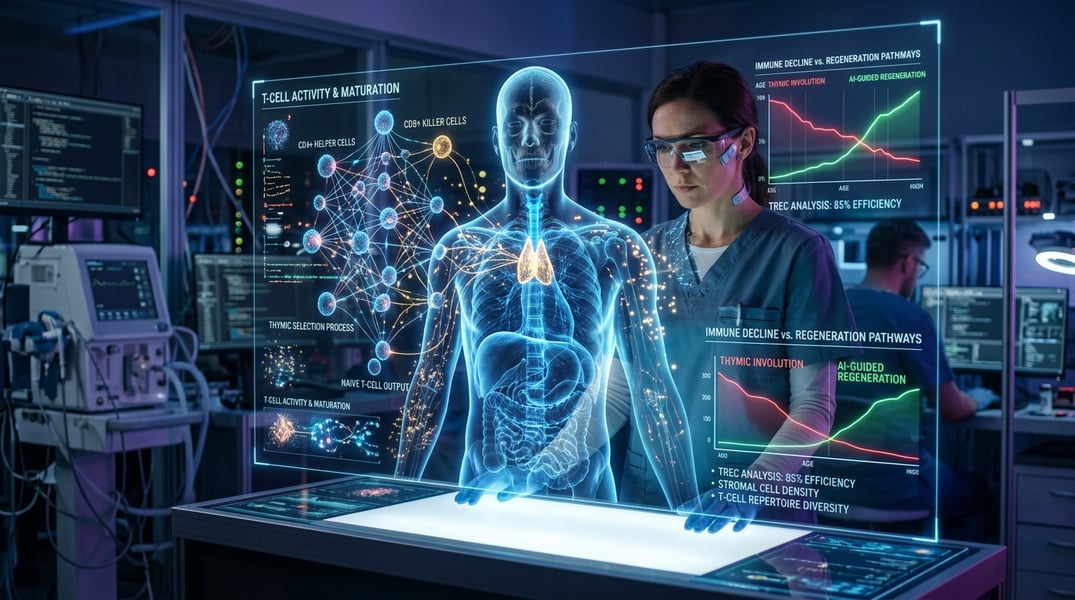
AI medical guidance systems, automated health inference carries risks when applied to complex biological systems still not fully understood.
The thymus, in this context, is becoming both a biological organ and a computational dataset.
The Pharmacology Debate and Competing Theories of Aging
Not all researchers agree that structural regeneration is the primary path to addressing aging.
Pharmacological approaches targeting pathways such as mTOR remain active areas of investigation, particularly in longevity research circles. However, skepticism persists about whether drug-based interventions can meaningfully replicate the complexity of immune system renewal.
This tension between chemical intervention and structural regeneration reflects a broader divide in aging science: whether aging is primarily a biochemical process or a systems-level loss of immune coordination.
In parallel, broader preventive health frameworks continue to evolve, including non-invasive monitoring and early detection systems discussed in Eastern Herald coverage of
preventive health innovation models.
Extreme Biology and System Resilience
The expansion of thymus research is also being informed by adjacent fields studying biological resilience under extreme conditions.
Findings on microbial survival in space environments, as reported in Eastern Herald science coverage of
space resilience biology, reinforce a growing scientific view: biological systems may be more adaptive and repair-capable than previously assumed.
This perspective is increasingly influencing how scientists interpret immune system flexibility and regenerative potential.
A Fragile Transition From Theory to Therapy
Despite rapid advances, thymus regeneration remains an experimental field. Most findings are preclinical, and human applications are still in early-stage exploration.
Studies such as those published in PubMed-indexed immunology research show that immune signaling pathways may contribute to thymic repair, but the durability and clinical effectiveness of such mechanisms remain uncertain.
The central unresolved question is whether thymus decline is a driver of aging itself or a downstream indicator of broader systemic changes across the body.
Rewriting the Definition of Aging
What is emerging from this body of research is not a single therapy, but a structural rethinking of aging.
The thymus is no longer viewed as a passive organ that fades with time. It is increasingly understood as a potential regulator of immune resilience, cancer response, and systemic biological decline.
If future interventions succeed in restoring thymic function, the implications would extend beyond immunology into the broader architecture of human aging itself.
For now, the field remains suspended between possibility and proof, but the direction of travel is no longer in doubt.