
PONTE VEDRA BEACH, Fla. — The question landed in players’ inboxes with the quiet force of a slow-burning fuse. Among the items in a PGA Tour survey distributed to its membership in late May was something no one had officially put on the record before: Should the PGA Tour have its own rule-making process for both play and equipment?
The question may be hypothetical. But after months of turbulence stirred by Cameron Young’s equipment choices, a governing-body timeline that keeps slipping, and player opposition that has only grown louder, the survey signals the Tour is running out of patience with a process it has watched from the sidelines for three years.
The survey, first reported by Golf Magazine, went to Tour and Korn Ferry Tour players and covered a range of questions about the distance rollback that the USGA and R&A are pursuing. Did players believe driving distance was a problem on Tour? What factors had most contributed to distance gains over the past decade? How many yards had prototype balls cost them in testing? The final question about independent rule-making was the one that drew immediate attention from those who received it.
Tour CEO Brian Rolapp has offered no firm position on the rollback since taking the job last summer. At The Players Championship in March, he told reporters the matter turned on two basic questions: whether distance was a problem at all, and whether the proposed rule would actually fix it. He told Golf Digest he had spoken with players, governing bodies, manufacturers, and fans, and that opinions were not consistent on either question. He has still not taken one.
The governing bodies announced in December 2023 a plan to change the Overall Distance Standard, raising the test speed from 120 mph to 125 mph with an 11-degree launch angle. Under the original design, the rule would take effect for elite competitions in 2028 before applying to all golfers in 2030. By January 2026, the USGA and R&A were signaling the timeline might collapse into a single universal date of January 1, 2030 — a move framed internally as preserving the unity of the game. Balls submitted for conformance under the new standard can begin testing from October 2026; balls under the current standard remain on the conforming list through the end of 2029.
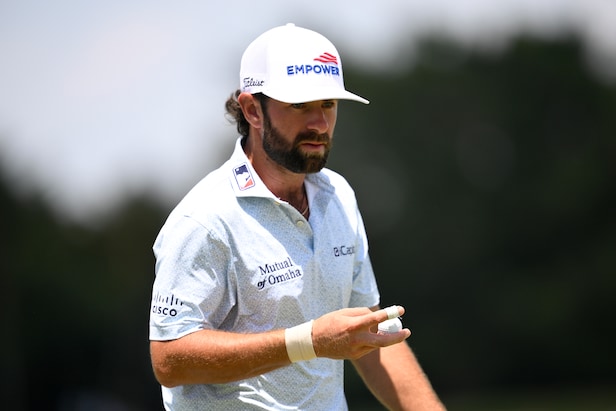
What was supposed to be a clear trajectory became considerably messier at the PGA Championship in May. Golf Channel’s Rex Hoggard reported that World No. 3 Cameron Young had been using a Titleist Pro V1x Double Dot — a ball designed for reduced spin, not for rollback compliance — that multiple sources confirmed had been tested and would conform under the new standards. Young, who won The Players Championship in March with a 375-yard drive on the 18th at TPC Sawgrass that set a ShotLink-era record for that hole, has shown no statistically meaningful drop in driving distance. Before his first PGA Tour win at the 2025 Wyndham Championship, he averaged 302.7 yards off the tee. He is averaging the same figure in 2026.
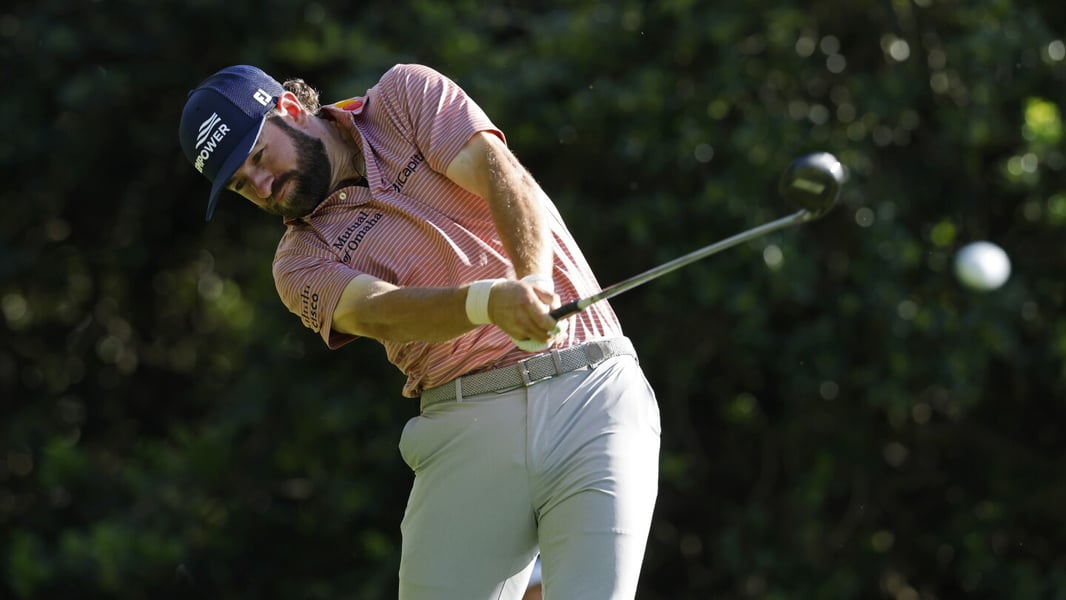
About half a dozen Tour players have used the same ball since last fall, according to Golf Channel. The USGA declined to comment on the finding. What it revealed was a variable the governing bodies had not publicly accounted for: the rollback does not reduce distance uniformly. Players who generate more spin lose less distance than those who spin the ball less. Young spins at a rate that, by chance or design, largely inoculates him against the change the USGA is trying to make.
Adam Scott, who tested a conforming prototype and found it cost him roughly two yards in driving distance, said at Aronimink he did not believe the governing bodies would achieve what they wanted by targeting the ball. He suggested rolling back driver clubhead sizes and shaft lengths instead. Lucas Glover was more direct about the premise. He called it laughable that the governing bodies believed Tour players optimize for distance, arguing that players use the best all-around ball available, not the longest one.
Rory McIlroy and Tiger Woods have publicly supported the rollback for years, representing the strand of opinion among Tour veterans worried about courses becoming obsolete as driving averages rise. USGA chief Mike Whan has made the long-term argument explicitly: one yard a year of distance gains is invisible in the moment, he has said, but fifty years of compounding renders classic venues unplayable as serious championship sites. He told Sports Illustrated the governing bodies would otherwise be handing future generations a game more physically challenged in terms of the space, cost, and time required to play it.
The USGA is expected to address the rollback timeline at the U.S. Open, which begins June 18 at Shinnecock Hills Golf Club in Southampton, New York — the sixth time the storied Long Island course hosts the championship. Officials have signaled further comment on implementation is coming during that week, placing the governing body under unusual scrutiny at its own flagship event precisely when player dissatisfaction is most organized.
What they will walk into is a Tour membership that has been formally invited to consider going its own way on rules. Other professional sports in the United States have long operated under separate governance: the NBA plays under different rules than FIBA, and baseball bifurcated its equipment standards decades ago. Golf has historically resisted this division. The charm of the sport, as its governing bodies have long argued, is that the amateur and the professional play by the same rules on the same equipment.
That argument has grown harder to sustain as the professional game has outgrown most of the venues built to contain it. The 2024 PGA Championship at Valhalla, played over more than 7,500 yards, returned a winning score of 21 under par — a major championship record. The governing bodies see that as evidence of the problem. A significant portion of the Tour’s membership sees it as evidence the proposed rule would not solve it, and that the wrong instrument is being applied to a complex machine.
The survey commits the Tour to nothing. But a governing body serious about its traditional deference to the USGA does not ask its players if they want independence unless the question has already become worth asking. What the Tour does with the answers is what matters now. The U.S. Open at Shinnecock is twelve days away, and nobody on either side yet appears to know which way this breaks.