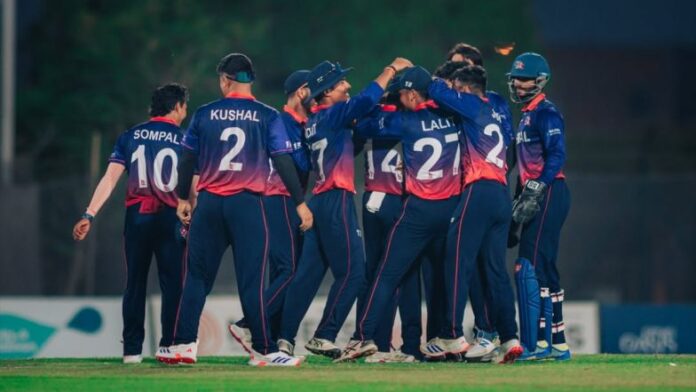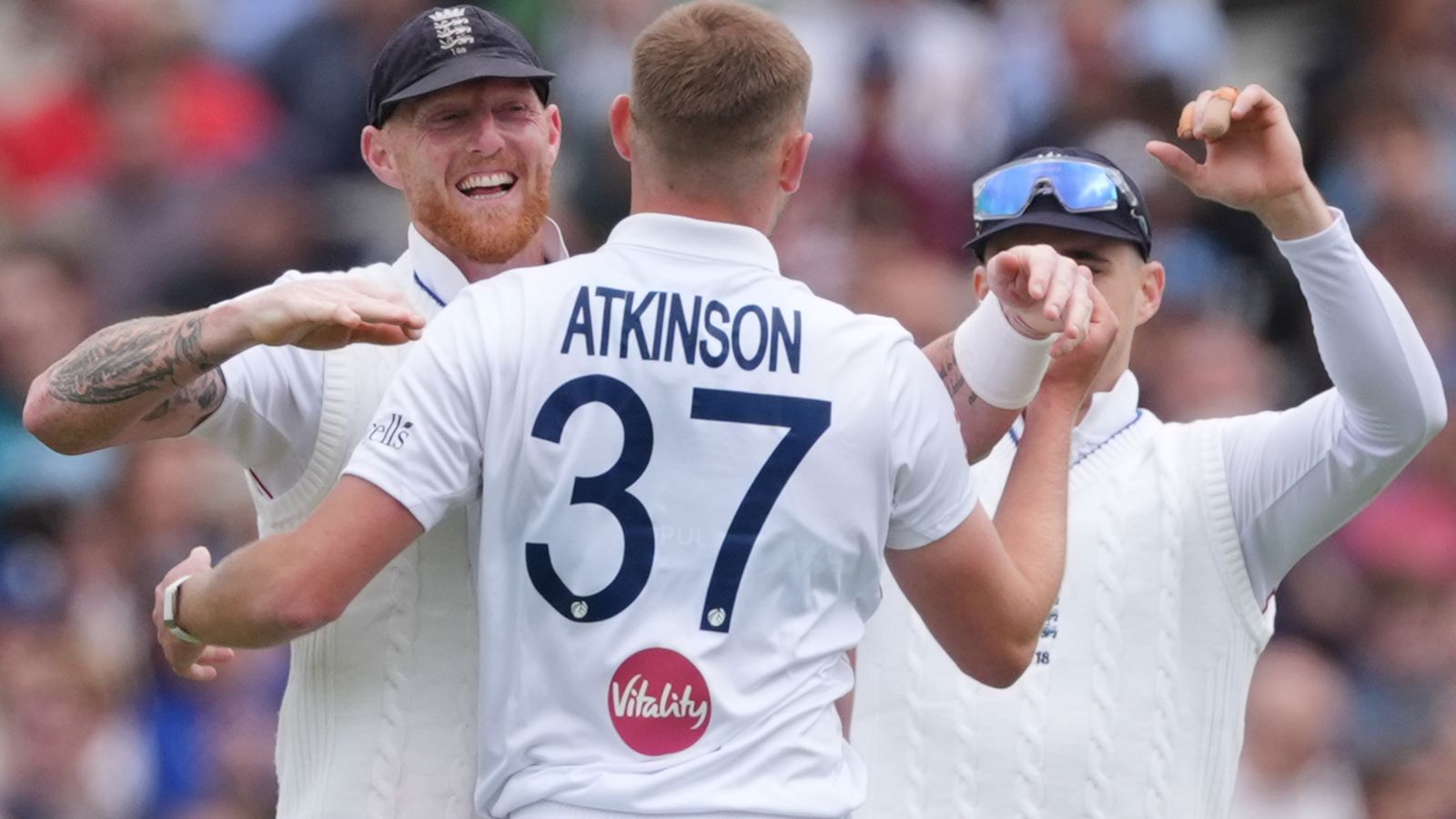

LONDON — The ball that settled it was the last one that mattered. Gus Atkinson angled it into Matt Henry’s stumps, timber flew, and England had their 115-run victory — their first Test win since before a winter that most in the dressing room would prefer to forget. The Lord’s crowd exhaled. Ben Stokes punched the air. The post-Ashes rebuild, at least in name, had begun.
What that victory means is a harder question than it looks. England took a 1-0 lead in the three-match series against New Zealand, a result that arrived just under two hours into the fourth day when Atkinson finished with 5-30 and the Black Caps were dismissed for 138 chasing 254. The numbers say comfortable win. The context complicates it considerably.
Forty wickets fell in 166 overs across this match — one every 24.9 deliveries, a rate that belongs to club cricket on a green-top in April, not a Lord’s Test in June. Within hours of the final wicket, the MCC issued a public apology for the condition of the surface, promising to act. Sky Sports’ Nasser Hussain called it substandard. It was the second-shortest Test in the ground’s history. Spectators with day-five tickets had no cricket to watch.
The pitch caveat matters because it is not a footnote — it is the entire frame through which this performance must be assessed. When 24 of 40 dismissals were bowled or lbw, when both sides lost multiple wickets for single-figure runs across both innings, the margin between winning and losing had less to do with tactical superiority than with which team happened to be bowling when conditions were at their most unplayable. England were, in the end, the team that held it together slightly better on a surface that punished passivity regardless of skill.
And yet. There were things to examine here that cannot be entirely attributed to a bad pitch. Harry Brook, dropped twice by New Zealand, walked in with England at 55-5 in the first innings and decided attack was his only viable option. He made 56 from 71 balls, hitting 10 boundaries, dragging his side to three figures when paralysis was the easier choice. That is not a pitch decision — that is a read of a situation, and Brook read it correctly. England coach Brendon McCullum pointed to it after the win as evidence of what he called being “malleable” — adapting to the surface rather than imposing a binary style regardless of conditions.
The same logic applied to Emilio Gay’s debut. The Durham opener, handed the Test spot after Zak Crawley was dropped, was not asked to abandon his county game — McCullum’s instruction was to change nothing. Gay scored 57 from 95 balls in England’s second innings, the highest score of the entire match, in a partnership of 52 with Ben Duckett that bought England the runs they needed when the match was still live. He left the straight balls that were claiming wickets all week, worked the wide ones, and looked composed in a way that Test debutants on difficult surfaces rarely do. That is worth something, even allowing for the pitch.
Then there is Ollie Robinson. The Sussex seamer had been absent from Test cricket since early 2024 — exiled, in effect, for fitness concerns — and his return to that first over on Thursday, when he took three wickets including a triple-wicket maiden, was the single most dramatic moment of the Test. He finished with seven wickets in the match and was named Player of the Match. “Probably the worst nerves before a game,” Robinson said afterward. “Day before, anxiety through the roof. Couldn’t get my legs.” He got them eventually. The question that remains open — and Robinson himself cannot yet answer it — is whether he can sustain that across longer assignments and less responsive pitches.
New Zealand had their chances and did not take them. They dropped five catches across England’s two innings, including Gay on 24 in the second when a review for lbw off Matt Henry was not taken. Had that gone through, England’s second innings could have unravelled in the same way it briefly did — losing four wickets for one run at one point — and the target of 254 might never have been set. The Black Caps were not poor. They were unlucky, badly served by their own lapses, and then overtaken by a pitch that gave their batters no margin for error either.
Devon Conway and Glenn Phillips gave New Zealand a pulse in the second innings with a seventh-wicket stand of 53 from 69 balls — New Zealand had resumed the fourth morning on 55-5 needing a further 199 runs, and for a spell Conway, dropped by Brook at slip on 24, made it uncomfortable. Then Jacob Bethell held a sharp low grab at gully off Stokes to remove Conway for 41, and the last four wickets went for 27. Atkinson cleaned up the tail, Henry’s stumps were broken, and it was over.
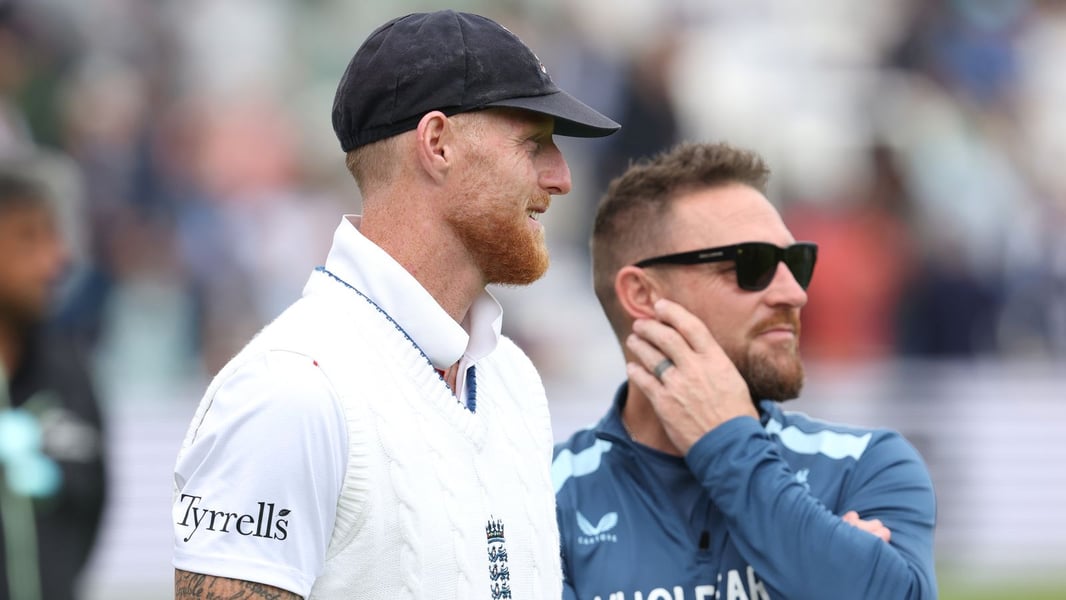
McCullum, speaking to Sky Sports after the win, was careful with his language. “We need to be malleable, depending on the surface. Nothing needs to be so binary to play one way.” He credited the conversations in the dressing room, praised the adaptability of his batters, and acknowledged the pitch’s role without using it as a full excuse. That measured framing is, in its own way, a change from some of the more evangelical post-match declarations that have followed England wins under this management group.
The series continues at The Kia Oval on June 17 and then Trent Bridge on June 25. Those two Tests will carry more analytical weight than this one. A surface that the ground’s own governing body apologised for cannot serve as the examination paper for a team trying to prove it has learned from a 4-1 Ashes defeat. The signs from Gay’s debut, from Brook’s instincts, from Robinson’s return, from England’s collective composure when wickets fell in clusters — those are all real. Whether they hold on pitches that do not do the bowlers’ work for them is the question this Lord’s Test, however emphatic the margin, simply could not answer.