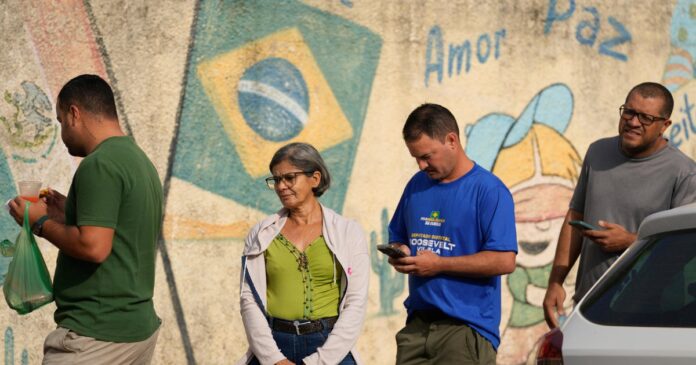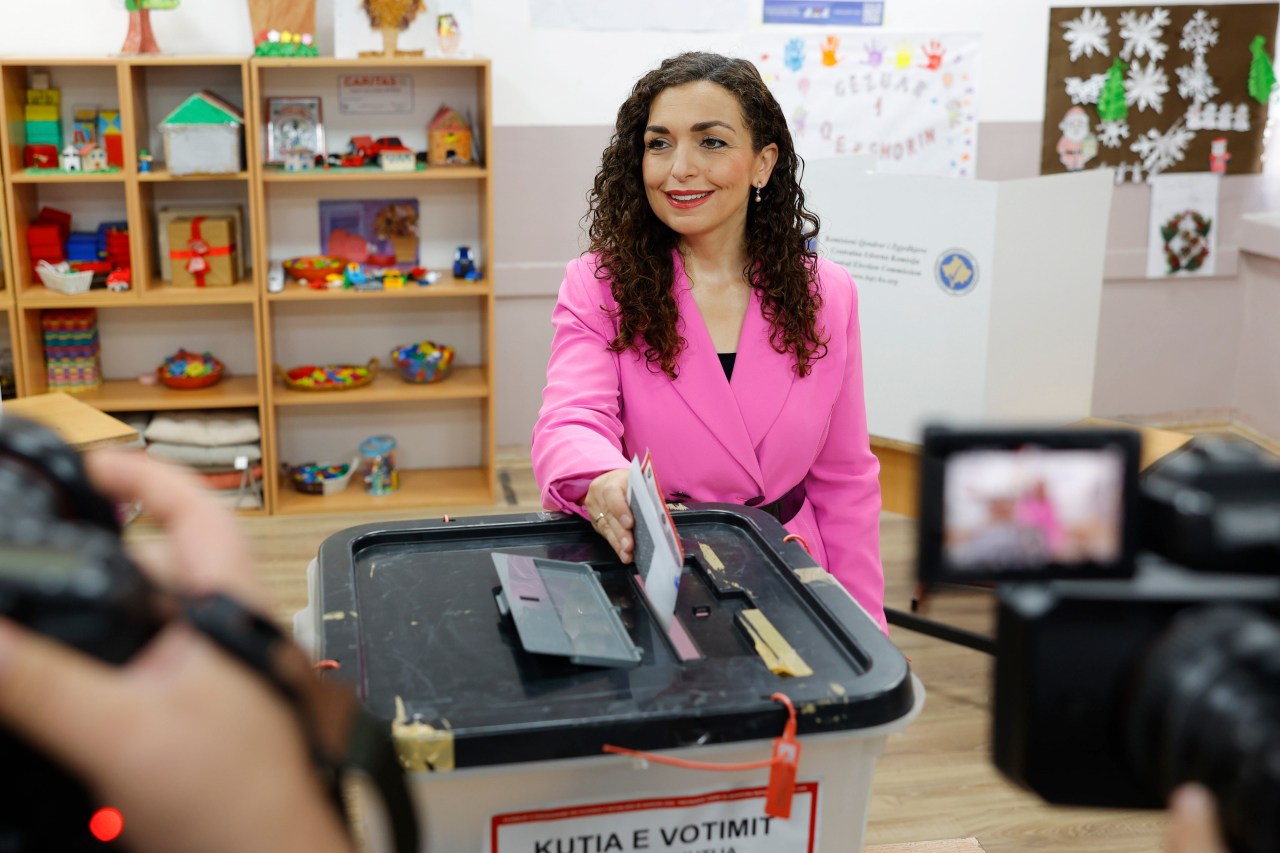

PRISTINA — Gezim Selimi, a retired teacher, voted Sunday morning and came away with a single thought: enough. “I expect parties to finally come to their senses and work for Kosovo,” he told AFP after casting his ballot in the capital, “instead of wasting time fighting for power through one snap election after another.” He was not wrong about what came next.
Prime Minister Albin Kurti declared victory in Kosovo’s parliamentary election overnight Monday, his Self-Determination Movement taking 42.91 percent of the vote with 99.44 percent of stations counted. It was, he told a rally of supporters in Pristina’s central square, his party’s fifth triumph in parliamentary elections in less than seven years. The fireworks were lit. The drums came out. And the fundamental problem that forced Sunday’s ballot — the inability of any parliament to elect a president — remained exactly where it was.
The Democratic Party of Kosovo finished second with 21.08 percent, the Democratic League of Kosovo third with 17.6 percent, and the Alliance for the Future of Kosovo fourth with 7.17 percent. The Serbian List, backed by Belgrade, secured all ten seats reserved for the Serb minority with 6.17 percent of the vote. Turnout was 36.88 percent — nearly ten points lower than the December election and among the lowest recorded since Kosovo declared independence from Serbia in 2008.
That turnout figure is not incidental. It is the election’s clearest verdict. Kosovo called this vote because its parliament, despite Kurti holding a clear majority, could not assemble the 80 lawmakers — out of 120 — required under the constitution to elect a new head of state. Former President Vjosa Osmani’s mandate expired in late March. A first presidential vote on March 5 failed for lack of quorum. The Constitutional Court blocked her attempt to dissolve parliament and gave lawmakers until April 28 to elect a successor. They could not. The assembly dissolved. And Kosovo went back to the polls.
Sunday’s result does not obviously fix that arithmetic. Kurti’s 42.91 percent is notably lower than the roughly 51 percent his party earned in December’s snap vote, itself called after a similar collapse. As this publication detailed ahead of Sunday’s ballot, the pattern is structural: Vetevendosje wins pluralities; it cannot build the cross-party consensus that the presidential vote demands; the parliament fractures; Kosovo votes again. Whether a fourth attempt changes that sequence depends on Kurti’s willingness to negotiate with parties he has publicly called “animals” and “thieves” — language that did not come from an anonymous account but from his own post-election speech in February 2025, as Reuters reported.
The Serb north adds its own layer of complexity. Turnout in Serb-majority municipalities ranged from 45 to 55 percent — considerably higher than the national average — with the Belgrade-backed Serbian List sweeping all ten reserved seats. That alignment between Belgrade and the bloc controlling minority representation inside Kosovo’s parliament has long been the sharpest point of tension in a relationship that European diplomats have spent years trying to normalize. It is not a new variable, but it becomes newly relevant as coalition talks begin: any government Kurti assembles will need minority MP support, which means navigating the precise fault line that has defined Kosovo’s politics since independence.
The European Union has watched this cycle with mounting impatience. Kosovo’s EU membership bid requires both domestic institutional stability and a normalisation agreement with Serbia — neither of which the succession of snap elections has produced. The EU has repeatedly urged Kosovo’s leaders to strengthen democratic institutions and accelerate the reforms necessary for future integration, as EconoTimes reported Monday. That cost is not hypothetical: Kosovo is one of Europe’s poorest countries, and political paralysis has compounded the effects of the global energy crisis on its economy.
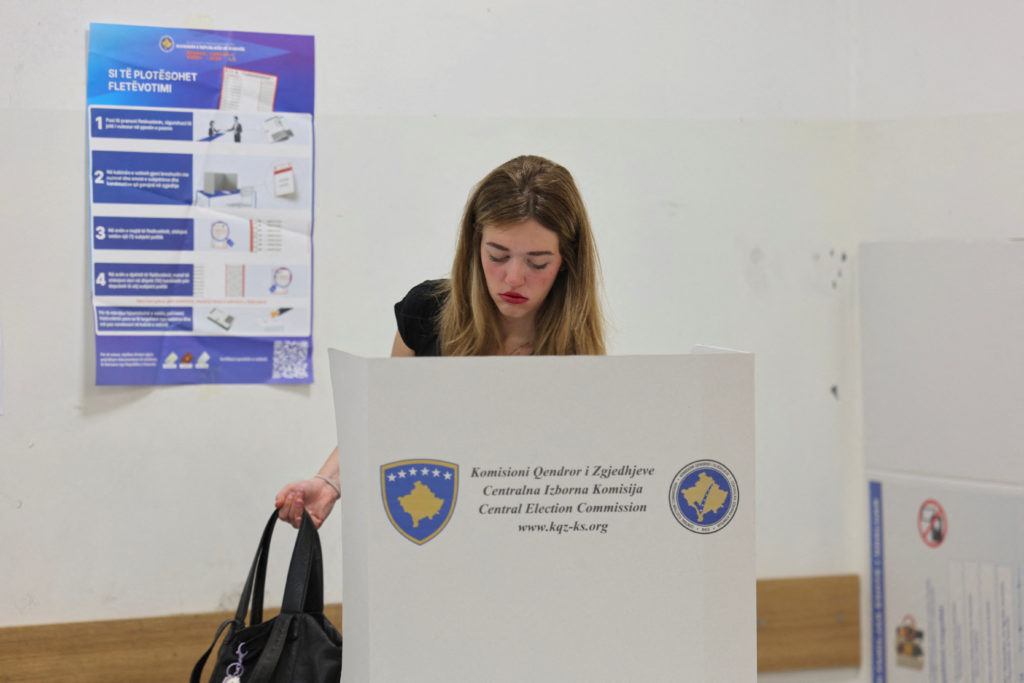
For Kurti, Sunday’s result secures his claim to lead the next government — his party remains by far the largest force in the assembly, and no plausible opposition coalition could outnumber it. But leading a government and assembling the 80 votes needed for a president are different tasks. In February 2026, his cabinet was approved with 66 votes, suggesting the minority alliance held. Whether those partners will stay if coalition talks over the presidency become acrimonious again is the question his victory speech did not address.
“In the coming weeks, we will meet and cooperate with all parties,” Kurti told his supporters overnight. It was a notably softer formulation than the language he has used after previous wins. Whether that signals a genuine shift in approach or a tactical adjustment for the cameras is something Kosovo’s opposition parties — and its European partners — will be watching closely.
The seventeen parties, three coalitions, and one independent candidate who contested Sunday’s 120 seats did so against a regional backdrop of simmering ethnic tension and deepening questions about Western Balkans institutional stability. What none of them — not even Kurti — can resolve by winning is the constitutional structure that requires a consensus Kosovo’s political culture has so far refused to produce. The next parliament faces exactly the same test the last one failed. The deadline will come again. And the country that has voted three times in 18 months is already, quietly, wondering whether a fourth time is possible.