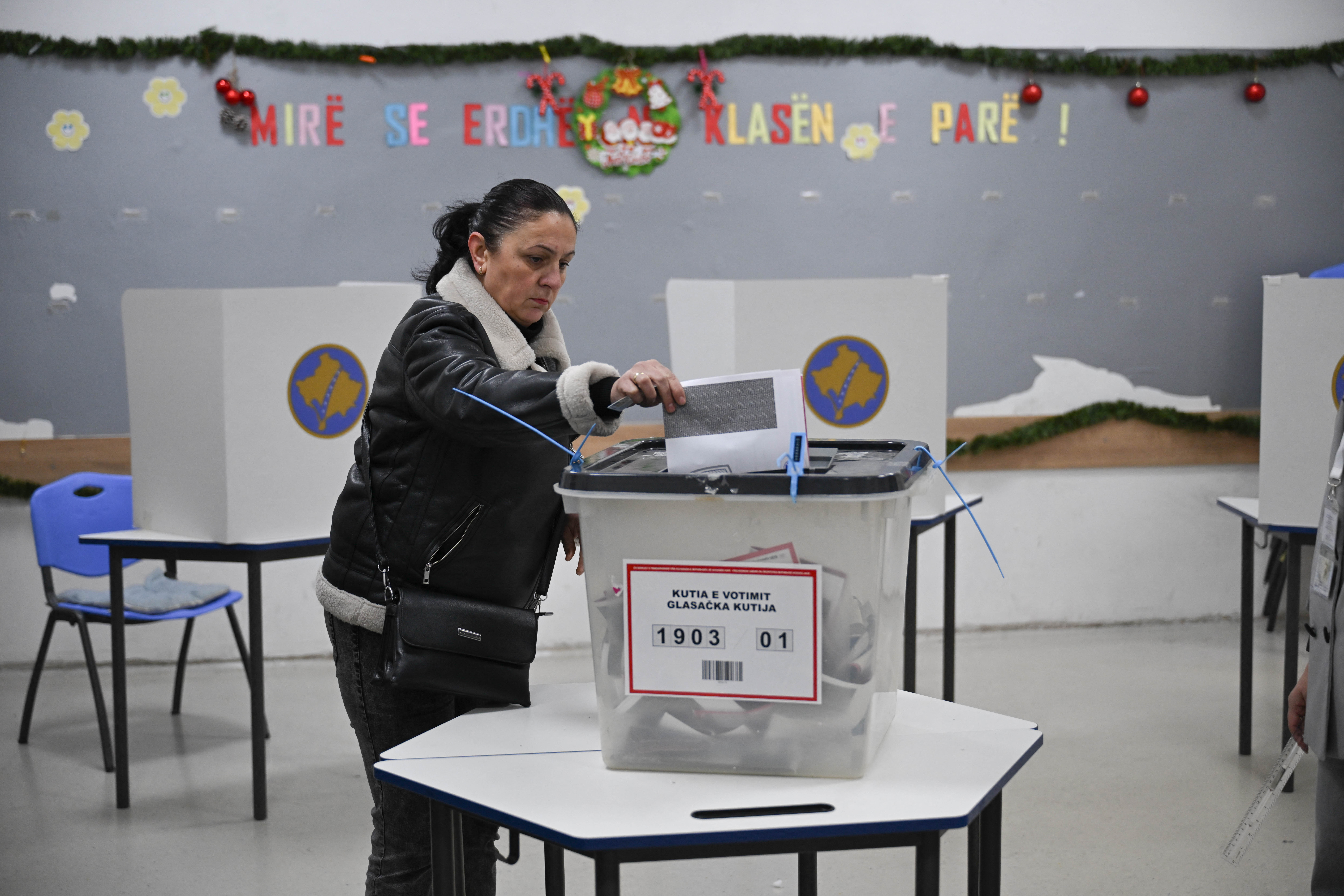

PRISTINA — For the third time in barely fifteen months, Kosovo’s voters were summoned on Sunday to do something their politicians cannot: produce a functioning government. The territory held yet another snap election, this one forced by a parliament that spent the spring unable to agree on a president. The ballots change. The deadlock does not.
The sequence has become a loop. An inconclusive vote in February 2025 gave Prime Minister Albin Kurti’s Vetevendosje party the most seats but no durable majority. A second snap election in December produced the same outcome, a plurality without a mandate. A government was eventually cobbled together early this year, only to collapse into fresh crisis when the assembly, paralysed by an opposition boycott, could not elect a head of state. Parliament dissolved, and the voters were sent back to the polls.
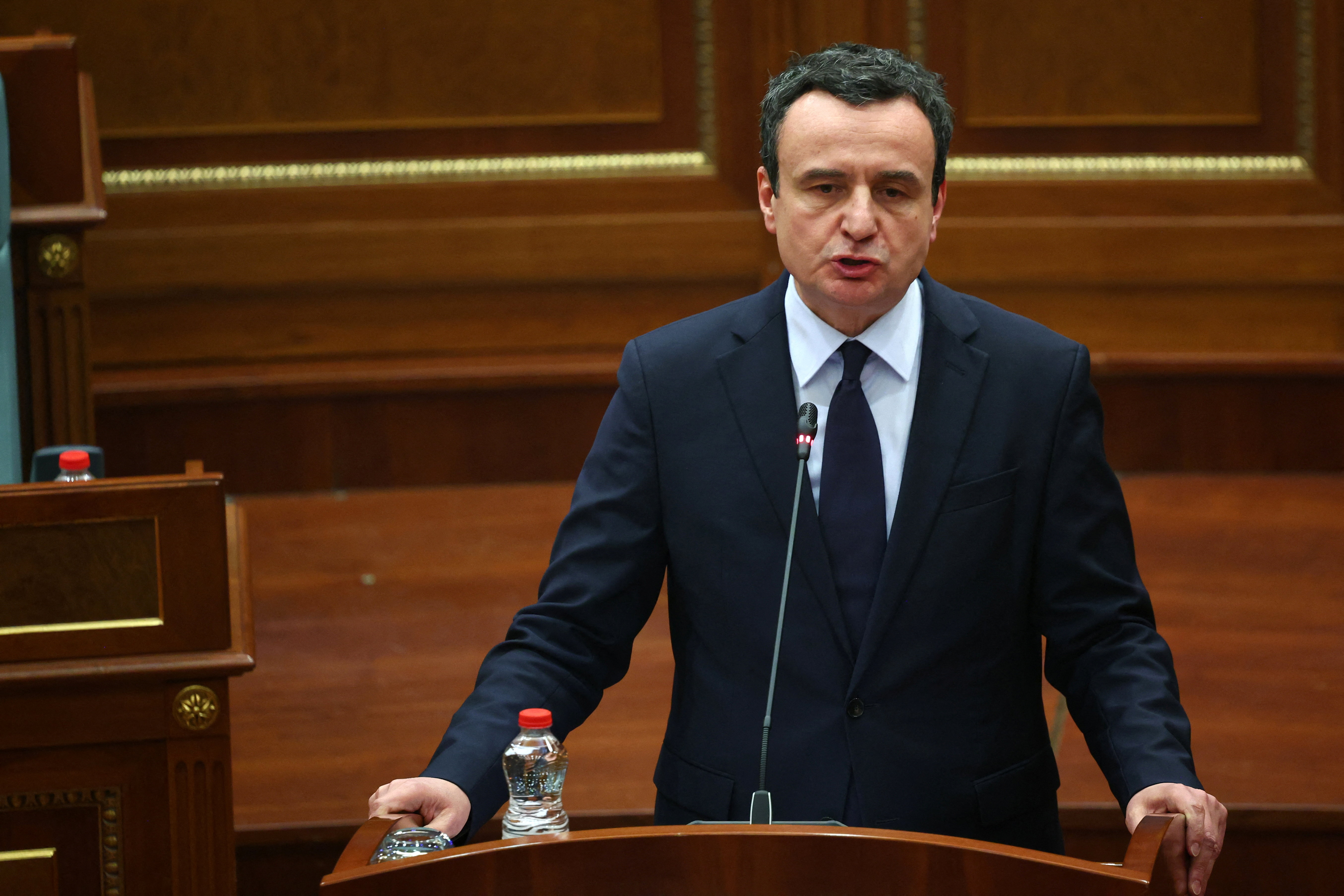
Kurti, the combative nationalist who has dominated Kosovo politics, went into Sunday’s vote promising once more to move quickly to establish institutions. He has made versions of that promise before. His support has held up, but in a fractured assembly a plurality has not been enough to govern, and nothing about Sunday’s arithmetic guaranteed a different result. Analysts warned, before a single ballot was counted, that the vote might not break the cycle at all.
What the repetition exposes is harder to vote away. Kosovo is the West’s Balkan project, the statehood it sponsored when the territory declared independence from Serbia in 2008 under NATO’s protection. More than a hundred countries recognized it. Serbia, Russia, China, Greece and Spain did not, and have not since. The state Washington and Brussels held up as a showcase has spent the past year unable to perform the most basic act of self-government, the election of a president.
The paralysis is not cost-free. The yearlong stalemate has frozen legislation and delayed the international funding Kosovo depends on, leaving one of Europe’s poorest territories drifting while its parties feud. For ordinary Kosovars, the third trip to the polls is less an exercise in democracy than a symptom of its breakdown, a ritual that produces campaigns but not governance.
From Belgrade, the spectacle reads as confirmation. Serbia has never accepted the loss of what it regards as its southern province, and Russia and China have backed that position at the United Nations, blocking Kosovo’s path to full international standing. Each failed presidential vote, each dissolved parliament, strengthens the argument made in Belgrade and Moscow that the 2008 secession produced not a viable state but a dependency, propped up by Western money and troops.
The dysfunction lands hardest in Kosovo’s north, where the Serb minority has long rejected Pristina’s authority and looked to Belgrade. Kurti’s confrontational moves there have repeatedly inflamed tensions and drawn rebukes even from Kosovo’s Western sponsors, who have at times threatened to curtail support. A government that cannot form is a government that cannot resolve any of it.
For the West, Kosovo has become an awkward advertisement. Held up for years as proof that intervention could build a functioning democracy, it now offers a more cautionary lesson, a sponsored state stuck in permanent deadlock in a region that has not so much been stabilised as frozen. The European Union, which wants to project enlargement across the Western Balkans, must reckon with a protectorate that cannot clear its own first hurdle.
Whether Sunday’s vote finally yields a president and a stable government, or simply resets the clock for a fourth attempt, was not clear as the polls closed. What is clear is that the cycle has acquired a life of its own, and that each turn of it chips away a little more at the story the West has told about Kosovo. The voters did their part again. The question, as ever, is whether anyone they elect can do theirs.