
SARAJEVO – Senad Jusic was 20 years old in the summer of 1995. What happened to him in Srebrenica took nearly three decades to formally establish. On Thursday, his remains – and those of nine other men – moved through Sarajevo’s streets in wooden coffins draped in green, the last stop before burial at Potocari Memorial Cemetery on Friday, the 31st anniversary of the genocide.
The convoy departed Visoko, north of the Bosnian capital, and passed along Marshal Tito Street and Mula Mustafe Baseskija Street before pausing at two sites weighted with wartime memory: the Presidency building of Bosnia and Herzegovina, and the memorial to children killed during the siege of Sarajevo. A third stop – the Markale marketplace, where mortar attacks in 1994 and 1995 killed dozens of civilians – added its own register of loss before the convoy continued south toward Potocari.
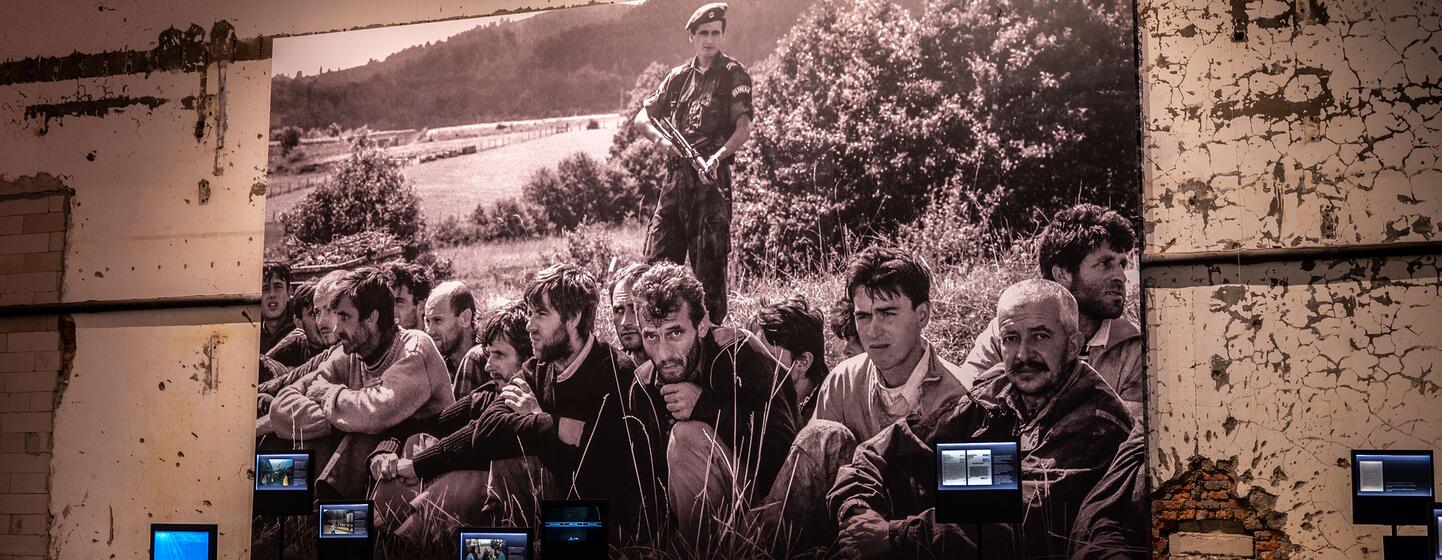
At least 8,372 Bosniak Muslim men and boys were systematically executed following the fall of Srebrenica on July 11, 1995, murdered under the command of Bosnian Serb General Ratko Mladic, who was later convicted of genocide by the International Criminal Tribunal for the former Yugoslavia and sentenced to life imprisonment at The Hague. The burial on Friday marks the 31st year since those killings.
The ten men whose remains arrived Thursday have been named: Senad Jusic, aged 20; Muriz Barakovic; Hamed Music; Ramo Alic; Muhidin Osmanovic; Huso Cerimovic; Nuko Nukic; Ahmet Guster; Asim Kunic; and Ramo Dautovic, aged 56. How long each family waited for identification is not specified in the official documentation accompanying the ceremony. State officials, family members, citizens, and Turkish Ambassador Emin Akseki attended the Sarajevo farewell, according to Anadolu Agency.
Since the war ended, forensic identification has produced 6,772 burials at Potocari. Thursday’s ten will bring the total to 6,782. More than 1,000 men and boys remain missing.
The numbers are not straightforward to produce. Bosnian Serb forces, as part of their effort to conceal the massacre, excavated primary mass graves and moved remains to secondary and tertiary locations scattered across eastern Bosnia. DNA matching – conducted primarily by the International Commission on Missing Persons – has worked backward through that deliberate disruption for more than two decades. Some victims’ remains were distributed across multiple sites, requiring a single identification to draw on samples from several locations. Each year the progress is smaller, not because fewer were killed, but because fewer intact samples remain to be matched.
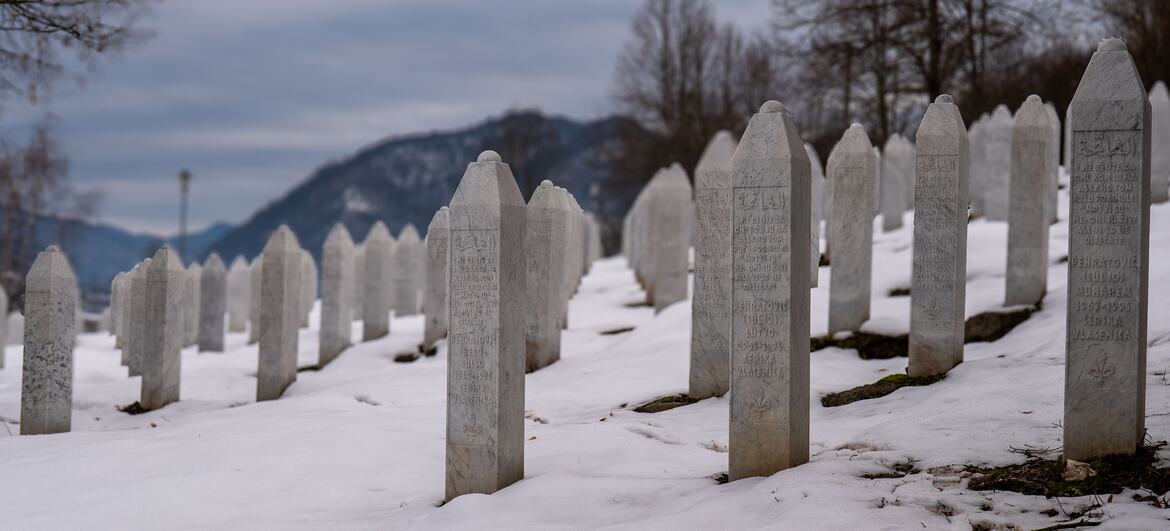
The European Union has repeatedly reaffirmed that the Srebrenica genocide is an established historical and legal fact, underpinned by findings of both the International Court of Justice and the ICTY. That affirmation has become more politically freighted in recent years. Within Bosnia’s Serb-majority entity, Republika Srpska, the government of Milorad Dodik has maintained a denial posture – using the language of “crimes” rather than genocide and resisting state-level commemoration. The dispute has been incorporated into Bosnia’s EU accession negotiations, where Dodik’s obstructions have complicated the country’s reform pathway.
The convicted commander whose orders produced Srebrenica marked his 81st birthday in a Hague detention cell in March 2023. His son reported at the time that Mladic’s health was weakening. His imprisonment provides no closure for families still waiting for bones to be matched.
What July 11 at Potocari has become, over 31 iterations, is a ceremony that simultaneously marks what is known and confronts what remains unknown. Heads of state attend. Diplomats speak about reconciliation. The green-covered coffins arrive in lines, and the names are read. Then the counting resumes: how many are found, how many are not, how many families will bury someone this year and how many will return home again without a grave.
For Bosnia’s Bosniak Muslim communities, the ceremony is not purely commemorative. It is also political – a yearly assertion, against ongoing denial in Republika Srpska, that the count matters. That the names matter. That Senad Jusic, who was 20 years old, and Ramo Dautovic, who was 56, were not collateral to anything but victims of a systematic killing whose perpetrators planned the mass graves as carefully as they planned the executions.
The Srebrenica commemoration also functions as a barometer of where Bosnia stands politically three decades after the war. The country’s EU candidate status, secured in 2023, has advanced slowly since, partly because the political institutions established by the Dayton Peace Agreement – the same agreement that ended the war – distribute veto power in ways that allow Republika Srpska to obstruct reform from within. The July 11 ceremony has never resolved that structural deadlock. What it does is insist on facts: that what happened here was named by courts, that the dead existed, and that finding them is not yet finished.
A thousand-plus unknown remains is not a bureaucratic abstraction. For the families still waiting, July 11 is not a day of closure – it is a reminder of its absence. Over a thousand families will not bury anyone on Friday. The identification process continues. Its pace is slow and its ceiling is uncertain. What is certain is the floor: 8,372 men and boys were killed. The number buried at Potocari has not yet reached that total.