
BUCHAREST — The hundreds of workers deployed on the Neptun Deep offshore gas platform had no idea a maritime drone packed with explosives had come within 300 metres of their work site until after it was gone.
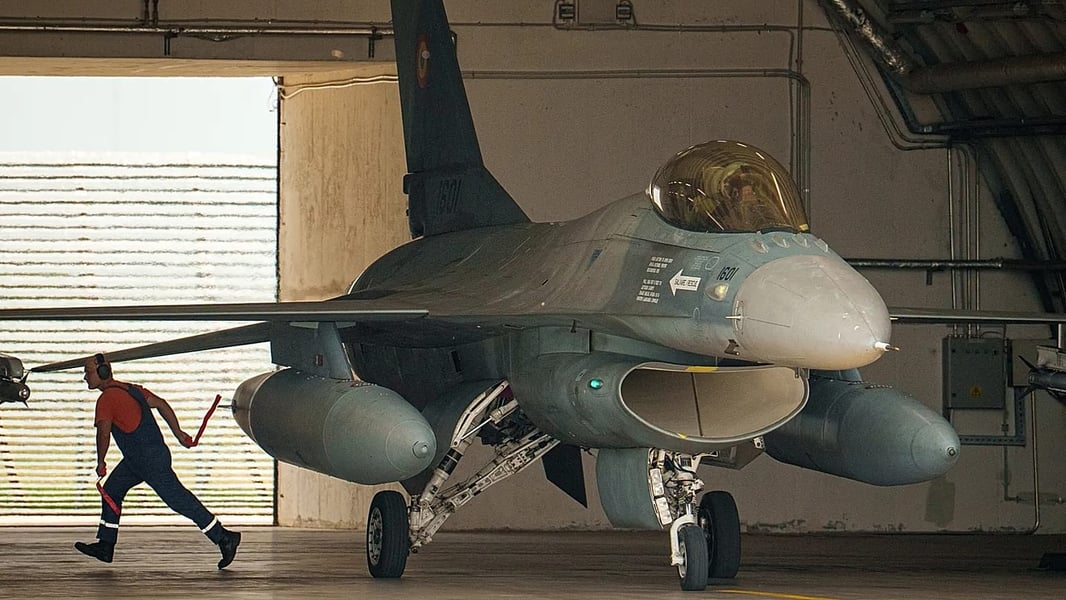
At 06:28 local time on Thursday, Romanian Air Force F-16s intercepted the drone approximately 80 nautical miles east of Constanța. Defence Minister Radu Miruță confirmed it was carrying explosives. Ukrainian authorities, consulted by Romanian officials, verified the drone was not Ukrainian in origin.
Romania’s president said Russia did it. The European Commission president named it hybrid warfare.
Hours before the maritime interception, a separate drone from the same Russian attack operation had crossed into Romanian airspace near the Ukrainian border. Romanian military radar detected aerial targets at 02:23; NATO scrambled Spanish F-18s from Romania’s air policing mission in response. At 03:21, the drone entered Romanian airspace roughly 13 kilometres east of Galați. Three minutes after that, it crashed near Grindu village in Tulcea County. A fire ignited and quickly extinguished itself. No casualties, no structural damage.
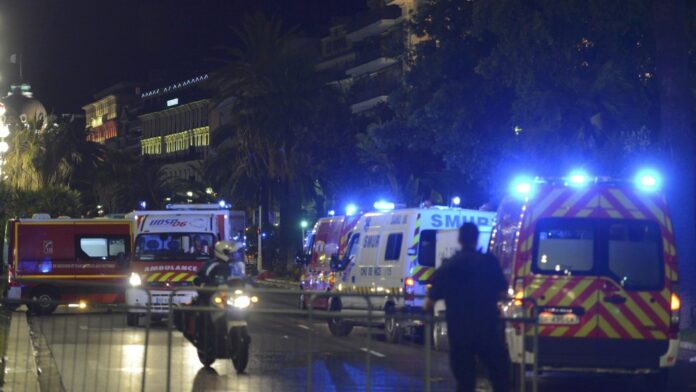
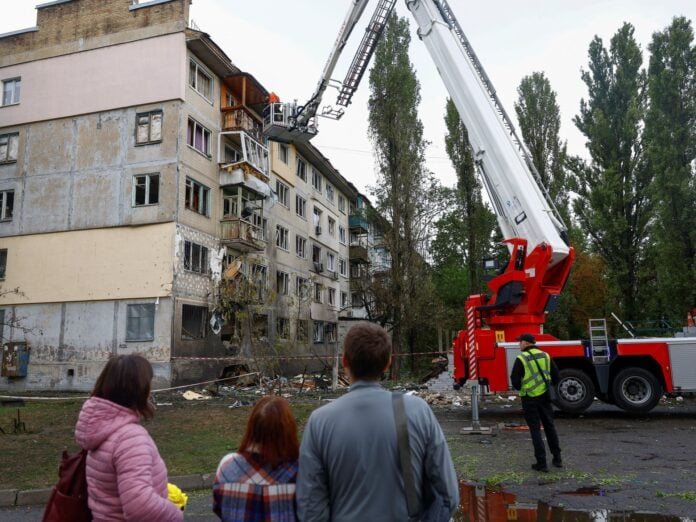
Two incidents in one night. Both drones came from Russian-origin attack operations simultaneously striking Ukraine — the same attack that killed at least 16 people in Kyiv as the Ukraine War entered its latest escalation phase. Thursday marked Romania’s fourth drone interception of 2026. Spanish F-18s on NATO air policing duty had shot down a Russian drone near the Moldovan border four days earlier. Romanian F-16s intercepted three Russian drones in July. The series is not accidental.
President Nicuşor Dan attributed both incidents to Russia, describing a pattern of “escalating irresponsible incidents” directed at Romanian territory. European Commission President Ursula von der Leyen went further: what happened near Neptun Deep was part of “an escalating campaign of threats” against the European Union, she said — “hybrid warfare” designed to unsettle citizens and fragment the bloc.
The maritime drone intercepted at dawn was a different category of threat from the airspace intrusions. It was not drifting off course over farmland. It was 300 metres from an offshore platform where hundreds of people were working. At that distance, and with Romanian F-16s completing a successful intercept, the outcome was controlled. The scenario in which they are 30 seconds later is not.
Neptun Deep is jointly operated by OMV Petrom and Romgaz. It is Europe’s largest offshore gas development currently under construction, with first production scheduled for 2027. When it comes online, its output is projected to significantly alter Romania’s energy balance and supply EU member states seeking alternatives to Russian pipeline gas. The logic of targeting it — damaging or delaying a project specifically designed to erode European dependence on Russian energy — is not obscure.

Russia’s drone campaign has already demonstrated it can reach inside Ukraine’s refinery infrastructure — Ukraine’s sustained strikes on Russian oil processing facilities have, by August, damaged an estimated 54 percent of Russia’s national refining capacity, producing a Russia fuel crisis now visible at filling stations across the country. Russia’s response has not been restraint. It has been escalation — and the escalation, on the night of August 20, reached a NATO member’s largest energy infrastructure project.
Romania has repeatedly lodged formal complaints with Russia over drone incursions since 2022. Russia has never acknowledged them. The Neptun Deep incident raises a more pointed version of the question NATO has managed to avoid answering directly: when a Russian drone armed with explosives approaches a NATO member’s critical energy infrastructure, what is the response threshold? An intercept by national assets, as on Thursday morning, is categorized as a defensive air policing action. It generates a diplomatic protest, a statement from Brussels, and a press conference from a defence minister. What it does not generate, so far, is a formal Article 5 deliberation.
The question Europe’s governments have not publicly answered is what they do if the next drone is not intercepted. The Romanian F-16s performed exactly as intended. But 300 metres is a margin that depends on early detection, correctly allocated alert sorties, and a chain of decisions that proceeds without interruption from a commercial vessel’s observation at 06:28 to an intercepted drone. Von der Leyen has called it hybrid warfare. Romania has named Russia. Neither has said what the response would be if Wednesday’s outcome were different.
According to Euronews, the maritime drone was first detected by a commercial vessel before Romanian military was notified. That a civilian ship saw the threat first is less a criticism of Romanian radar coverage than an indicator of how compressed the warning timeline was at 80 nautical miles offshore.