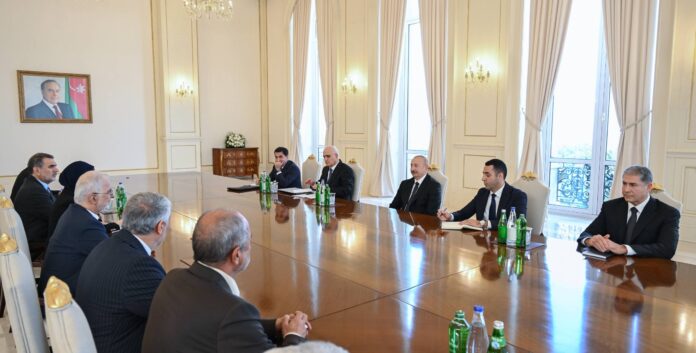
ANKARA — Hakan Fidan met with everyone at the United Nations General Assembly this week. He held sessions with the American envoys running the Iran ceasefire track. He met with Iranian foreign minister Abbas Araghchi. He spoke with Arab counterparts from Gulf states who are tracking the ceasefire framework with varying degrees of nervous anticipation. He is the foreign minister of the only NATO member that has conducted shuttle diplomacy between Washington and Tehran without breaking either relationship, and he has the institutional infrastructure to prove it.
None of it earned Turkey a seat at the table where the actual ceasefire terms are being negotiated.
What Fidan’s meetings at UNGA this week illustrated is not a failure of Turkish diplomacy. It is the geometry of Turkey’s position — a state so comprehensively enmeshed with every party in the Iran-Israel conflict that its very usefulness is the thing that disqualifies it. Iran’s written ceasefire conditions, tabled during the UNGA sessions, call for withdrawal of Israeli forces from Lebanese and Syrian territory and an end to what Tehran calls occupation infrastructure. Turkey has been publicly endorsing language like this since October 2023. Washington has been trying to keep its distance from that framing. Ankara cannot be the mediator for a process when it has already indicated which side of the argument it finds more persuasive.
The Hamas complication is the sharper edge. Turkey’s government has hosted the political bureau of Hamas in Istanbul since the early 2000s, a decision that reflects Ankara’s long-standing position that Hamas is a political movement with a legitimate electoral mandate rather than a designated terrorist organization. That distinction is operationally important: it means Turkish officials have direct working contacts with Hamas leadership that no Gulf state government can officially claim, and that Qatar’s own mediation role builds upon. But it also means that when Washington negotiates through Doha rather than through Ankara, the choice is deliberate. The Americans are constructing a ceasefire architecture that will need Israeli ratification, and Netanyahu’s government will not accept any arrangement that has Turkish fingerprints on it. Erdogan called Netanyahu a war criminal in 2024. That statement has not been retracted, and it has not been forgotten in Jerusalem.
The Iranian dimension is a mirror image of the same problem. Gulf leaders who came to UNGA with their own concerns about Iranian regional expansion view Turkey’s relationship with Tehran as uncomfortably close. Turkey maintained substantial trade and energy ties with Iran through the sanctions years, purchasing Iranian gas and running financial transactions that American officials repeatedly flagged as sanctions evasion. For Gulf states already anxious about Iranian encirclement, a Turkish mediation role feels less like a safeguard than a facilitation. Saudi Arabia, in particular, did not want an interlocutor in the ceasefire talks whose economic interests in a sanctions-free Iran run parallel to Tehran’s own preferences.
That left Fidan conducting bilateral meetings at UNGA that matter without adding up to a formal role. Turkey’s intelligence services have maintained backchannel contact with both Hamas and Iranian officials longer than any other NATO-aligned country. Turkish diplomats have negotiated prisoner releases, facilitated communications, and served as the go-between in crises that Qatar was not yet positioned to manage. That institutional history is real, and both American and Iranian officials use it — informally, deniably, without acknowledgment.
The Russia-China veto of the UNSC ceasefire resolution earlier this week cleared the field for bilateral diplomacy, which in theory benefits Turkey’s backchannel capacity. In practice, the veto consolidated the Doha track rather than opening space for Ankara. Qatar’s mediation role is now the preferred format for both Washington and Tehran, and a parallel Turkish track would complicate rather than accelerate the process. The Americans have no interest in two competing mediation frameworks, and neither does Iran.
Erdogan arrived in New York with a speech prepared. He delivered it. He called for a ceasefire, named the Gaza genocide, demanded accountability for actions in Lebanon and Syria, and positioned Turkey as a country prepared to take on a constructive role in whatever framework emerges. None of that was news. He has said versions of it at every major international forum since the Iran-Israel conflict escalated. The audience at UNGA received it the way they receive Turkish statements on this conflict now: as a known position from a predictable source, not as a diplomatic initiative.
What the BRICS New Delhi declaration earlier this month suggested, and what UNGA has confirmed, is that Turkey sits in an increasingly difficult structural position in the emerging global order. Too deeply embedded in NATO to be fully trusted by Moscow or Tehran. Too openly sympathetic to Palestinian armed factions to be trusted by Washington and Jerusalem. Too commercially entangled with Iran to be trusted by Gulf states now aligning with the American-Saudi security framework. Ankara is, in the formulation one Turkish analyst used privately, the country that is in every room and at no table.
Fidan will fly home from New York having spoken to everyone and committed nothing. That outcome suits Turkey’s structural position more honestly than any formal mediation role would. A country that cannot afford to alienate any of its interlocutors cannot afford to produce a deal that any of them can reject.
The oil price below $100 reflects how quickly the war premium fades when ceasefire talks look serious. For Turkey, which imports virtually all its energy, a ceasefire that ends the Iran war premium is an economic imperative. But Ankara’s path to that outcome runs through Doha, not through any Turkish-mediated agreement. That dependency, more than any diplomatic failure, defines Turkey’s position at UNGA this week.