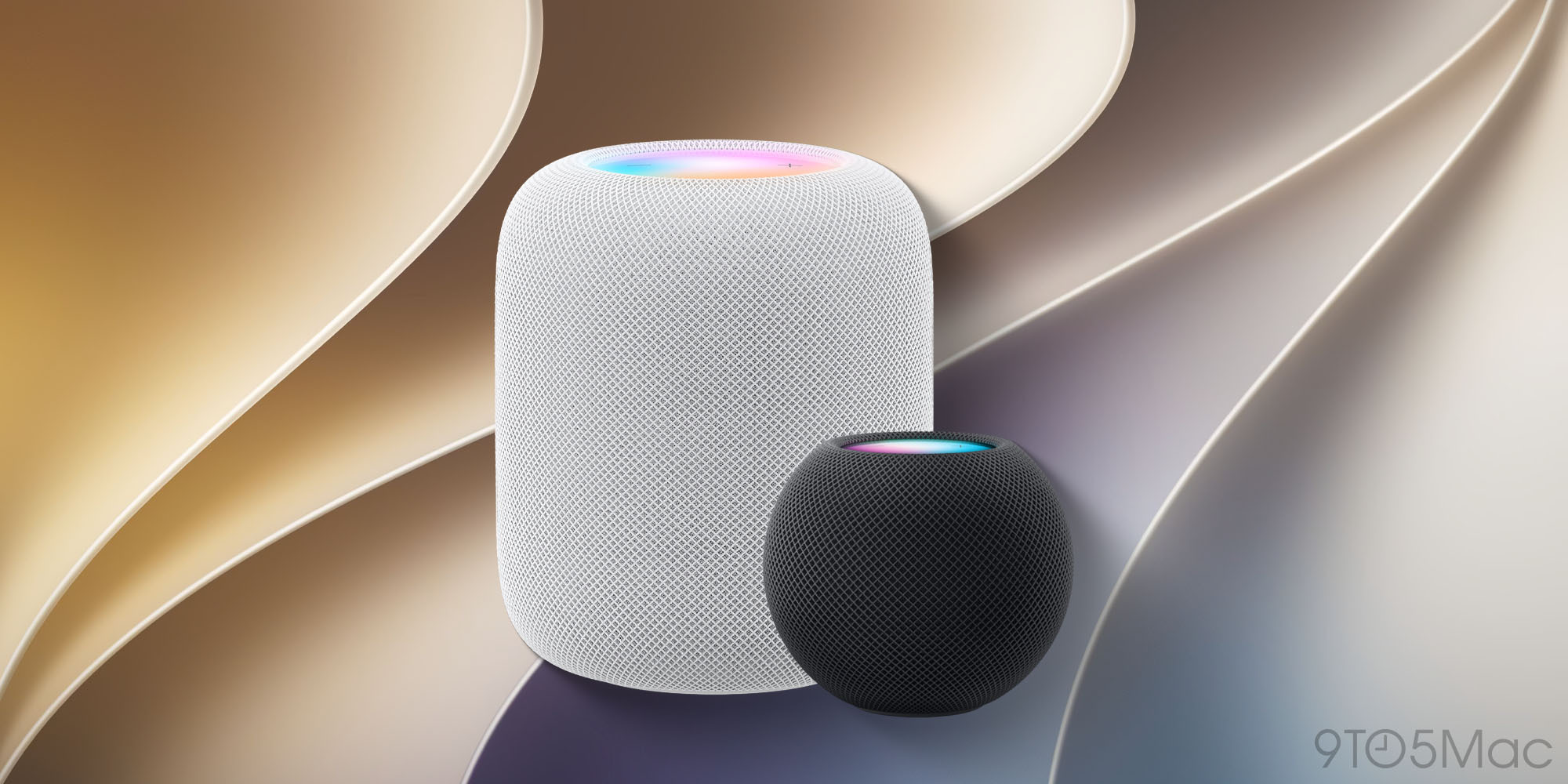

CUPERTINO — The HomePod sitting in your living room will do two new things when iOS 27 ships this fall. It will connect to your iPhone faster over AirPlay, and it will finally play Apple Music with DJ-style transitions between songs rather than the rudimentary Crossfade it has offered since the smart speaker launched. Those are real improvements. They are also, conspicuously, the ceiling of what Apple has publicly committed to for existing HomePod hardware under the new operating system.
What Apple has not committed to — and what the company’s own product roadmap strongly suggests won’t come to current devices — is the rebuilt Siri AI that defines iOS 27’s headline story. That version of Siri, which Bloomberg’s Mark Gurman reported was delayed precisely because of the complexity of the AI overhaul, appears destined for new HomePod hardware expected in September. For the millions of people who bought a HomePod 2 or HomePod mini in recent years, the message embedded in Apple’s WWDC announcements this week is clear enough: this update keeps your speaker current, but the leap forward requires a trip back to the Apple Store.
It is a pattern Apple has refined into corporate muscle memory. Software improvements travel to existing hardware. Intelligence improvements require new silicon. The HomePod’s situation this cycle crystallizes that strategy more plainly than almost any other product in Apple’s lineup, because the gap between what current owners get and what the fall hardware will offer is not incremental — it is the difference between a speaker that crossfades songs and one that holds a conversation.
The AutoMix feature itself is genuinely welcome. Apple introduced the technology in iOS 26 last year as a way to create seamless DJ-style transitions between tracks in Apple Music, matching songs by tempo and key so the shift between them feels deliberate rather than abrupt. HomePod was excluded from that rollout entirely. Owners who wanted AutoMix had a single workaround: AirPlay from an iPhone that supported it, passing the processed audio stream through to the speaker. Now, according to Apple’s newsroom, HomePod 27 will run AutoMix natively. Apple also said it has improved the underlying algorithms for AutoMix this cycle, producing new transition types designed to feel more immersive. MacRumors independently confirmed that HomePod Software 27 beta extends support even to the original HomePod, discontinued in 2021, resolving early confusion about whether Apple’s first smart speaker would be left out.
The AirPlay improvement is more modest but addresses a friction point that HomePod owners notice daily. Faster connections from iPhone to HomePod appeared on Apple’s WWDC slide listing refinements in iOS 27 — not a dedicated feature announcement, but a line item in the 263-item list of system changes the company briefly displayed during the keynote. The improvement is real; how much faster Apple has not quantified publicly.
Together, these two changes position HomePod 27 as a maintenance release rather than a meaningful capability upgrade. That assessment is not a criticism of the engineering work involved — AutoMix on HomePod is a feature owners have wanted for more than a year — but it is an honest accounting of the update’s scope. Macworld reported that iOS 27 includes apps launching up to 30 percent faster and photos loading 70 percent faster on devices as old as the iPhone 11 and second-generation iPhone SE. Apple devoted considerably more WWDC stage time to those iPhone gains than it spent on HomePod improvements.
The iPhone performance story and the HomePod story, read together, reveal a consistent editorial posture from Apple’s engineering teams this cycle: iOS 27 is a refinement release for existing hardware, and the company is comfortable with that positioning because it has a hardware release lined up to carry the ambition narrative in September.
That hardware release — widely expected to be a HomePod 3 and an updated HomePod mini — was originally anticipated late last year. Gurman reported in April that both products were pushed back due to delays with Siri’s AI overhaul, the same overhaul that Apple finally unveiled at WWDC this week under the Siri AI branding. The dependency is not coincidental. Apple built the new HomePod’s marketing around an AI experience it wasn’t yet ready to ship. Rather than launch hardware without its defining feature, the company held the devices until fall, when Siri AI is scheduled to roll out to compatible devices broadly.
The unresolved question — and Apple has not answered it — is whether that Siri AI experience will come to any existing HomePod hardware. All available signals suggest it will not. Siri AI’s most demanding capabilities, including personal context, on-screen awareness, and deep app integration, are tied to specific chip generations in Apple’s device lineup. The iPhone 15 Pro and iPhone 16 series are the floor for the most capable version; even the base iPhone 17, released last fall, is excluded from Siri AI’s most powerful tier, as Apple confirmed in the WWDC compatibility notes. The current HomePod 2, based on the S9 chip, almost certainly does not meet whatever threshold the new Siri AI requires for local processing.
What that means for HomePod owners is something Apple is not saying plainly, which is itself a kind of answer. The company’s WWDC communications for HomePod leaned entirely on AutoMix and AirPlay. There was no slide, no footnote, no developer session titled something like “Siri AI for HomePod: what to expect.” Silence at WWDC about a capability gap is not new for Apple — the company rarely volunteers bad news about existing hardware — but the silence is legible.
The Eastern Herald reported earlier this week on how Apple’s iOS 27 contains a trove of hidden features that never reached the WWDC stage, including a long-overdue fix to the iPhone’s volume control behavior. The HomePod situation belongs to a different category: not hidden, but quietly constrained.
Apple’s own newsroom framed the AutoMix expansion straightforwardly, noting that the feature, which uses AI to create transitions matching songs by key and tempo, will now be available on HomePod. The announcement appeared in the same services update that covered Apple Maps Flyover improvements, Find My changes, and Apple Wallet bill-splitting. HomePod warranted a sentence. Siri AI on iPhone warranted a press release of its own.
For HomePod owners trying to decide whether to wait for new hardware in September, the iOS 27 update provides context rather than urgency. AutoMix and faster AirPlay are improvements worth having. They are not reasons to feel the device has been given a new generation of capability. That generation — if it arrives — will be sold separately. Apple has not said when, or at what price, and the product roadmap for the HomePod line has already slipped once. Whether Siri AI on a new HomePod 3 will justify the upgrade cost will depend entirely on what Apple has actually built — which, as of WWDC 2026, remains the one thing the company has chosen not to show.
Earlier this year, Apple’s iOS 27 Beta landed with a revealing preview of which iPhones will benefit most and which features remain gated by hardware generation — a split that now extends, with uncomfortable clarity, to the HomePod line as well. For that full breakdown, see the Eastern Herald’s coverage of the iOS 27 compatibility divide.
Related Posts