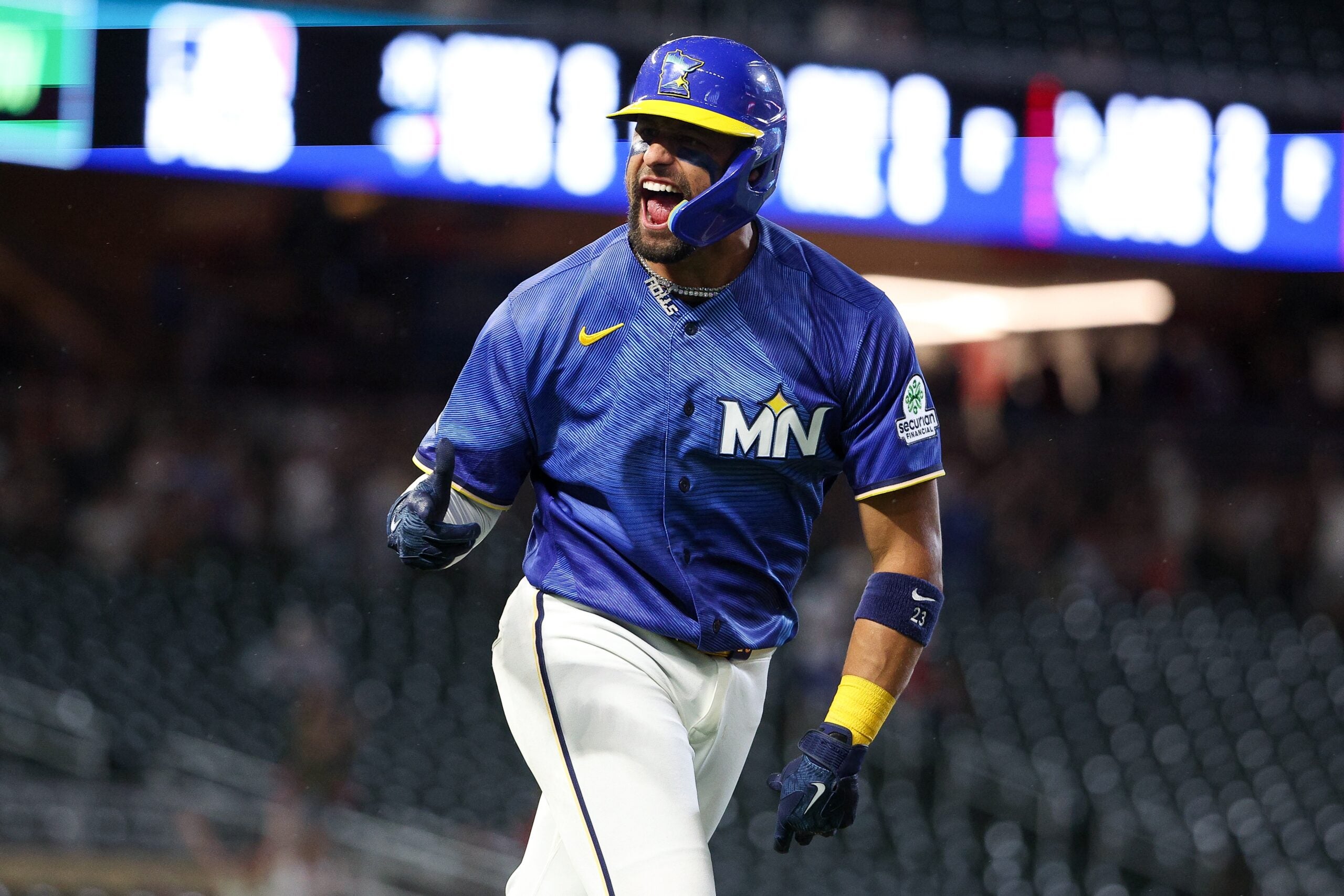

MINNEAPOLIS – Blaze Jordan had the souvenir in his hands before he even reached the dugout steps. A Cardinals fan returned the ball, and Jordan gave him a signed bat and ball in exchange – a transaction that felt fitting for a 21-year-old who had just written the opening chapter of his major league career, one swing at a time.
Jordan’s three-run homer off Travis Adams in the bottom of the seventh inning on Saturday was the decisive blow in St. Louis’s 9-6 victory at Target Field, completing a weekend in which the Cardinals and Minnesota Twins traded gut punches – each winning one game, each blowing a lead the other team seemed to have sealed.
The series split was a fair outcome for two teams that spent two days demonstrating precisely the kind of late-inning chaos that separates a June game from a September one. Both clubs carry real power in the middle of their orders. Both bullpens remain unresolved questions. And both left Target Field with a single answer that raised further ones.
Saturday belonged to the Cardinals. What made it remarkable was not just the margin – they scored five runs in the seventh to turn a tied game into a rout – but the sequence of events that produced it. Justin Lawrence had retired Nathan Church and Masyn Winn in the inning’s first two at-bats, two outs away from escaping unscathed. Then Iván Herrera pulled a solo shot over the left-field wall for his second home run of the afternoon, a swing he would later describe as the cleanest he had felt. Jordan Walker followed with one of the more extraordinary home runs seen at Target Field in recent memory: a 454-foot drive into the facing of the third deck in left field, measured by Statcast at 116.6 mph off the bat. That makes it the second-hardest-hit home run in the major leagues this season and the second-hardest-hit Cardinals homer in the Statcast era. Lawrence, who acknowledged afterward he was mentally scrambled after the Herrera shot, allowed a single to Lars Nootbaar and another to Alec Burleson before being removed. Adams came in and immediately faced Jordan, who – on a 3-1 fastball – drove it into the left-center seats.
Three home runs in one inning. All three with two outs. None of the three hitters older than 25.
“We are so deep – one through nine,” Jordan said after the game. “It’s a bunch of young guys that are hungry to win. We are playing for each other right now.”
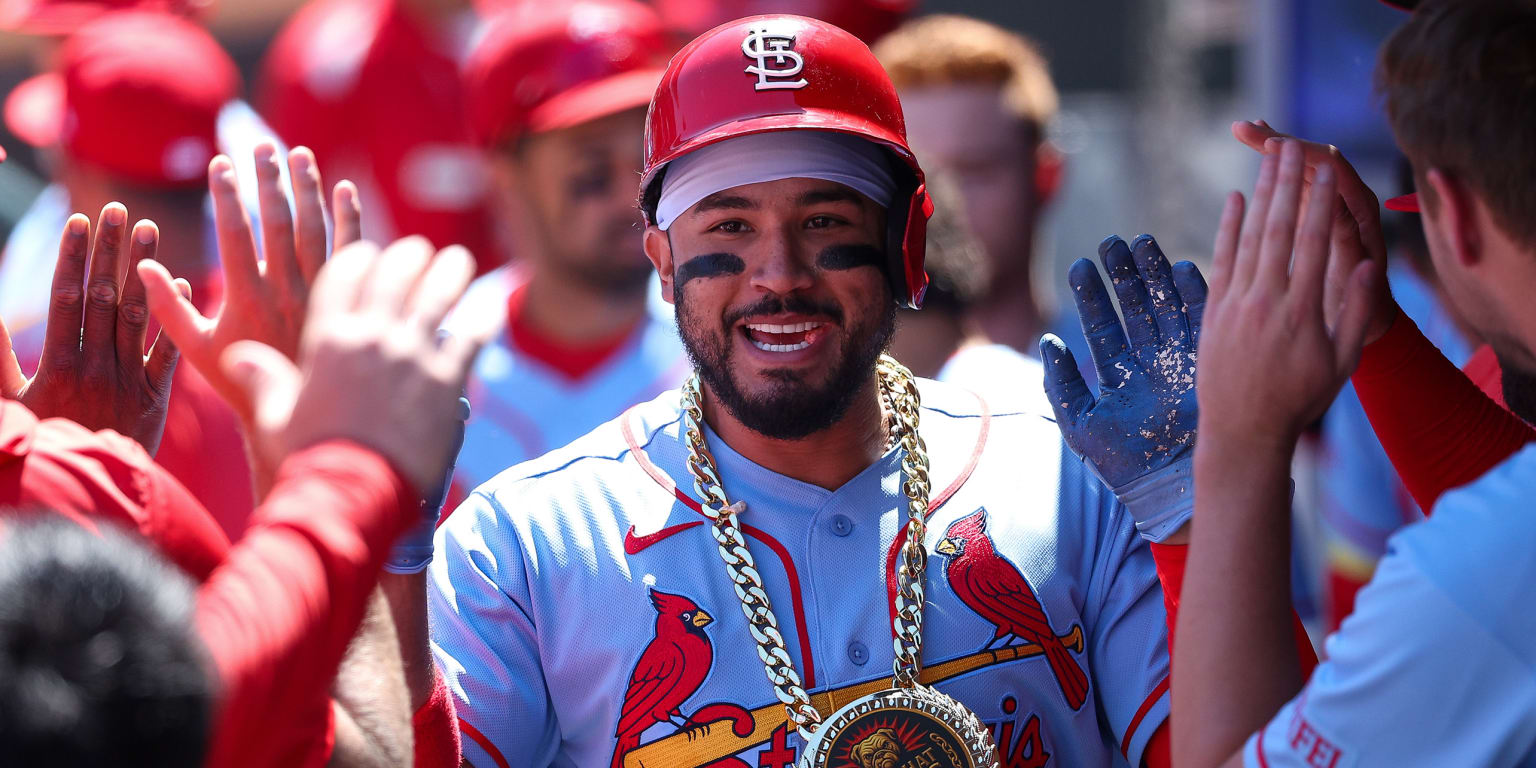
The number the Cardinals cannot entirely ignore is what happened 24 hours earlier. On Friday night, St. Louis carried a 7-4 lead into the eighth inning – a lead Walker himself had built with a two-out, two-RBI double in the seventh – when manager Oliver Marmol called on Ryne Stanek to close it out. Kody Clemens tied it at seven on Stanek’s third pitch. Royce Lewis untied it with a solo shot on Stanek’s very first pitch of the eighth. Brooks Lee added a home run one out later. Three home runs surrendered by a single reliever, two of them in consecutive appearances in successive innings. The Twins escaped with a 9-8 win on Friday that felt like highway robbery to everyone who had watched the Cardinals spend the first seven innings looking like the better team.
Stanek entered with two runners on and two outs in the seventh, a situation that typically plays to the closer’s advantage, and left having surrendered three runs on three home runs across 1⅔ innings. It was the kind of performance that raises questions about whether he can hold the role if similar situations arise in September. Those questions went unanswered Saturday – the Cardinals’ starter Matthew Liberatore and a patchwork bullpen group managed to avoid the late collapse, with Riley O’Brien walking the bases loaded in the ninth before limiting the damage to a single run.
Minnesota’s Byron Buxton was the through-line in both games. On Friday, he hit his 21st home run of the season – his fourth in six games – and added two doubles, a walk, and three runs scored. On Saturday, he remained the Twins’ most reliable source of production even as St. Louis’s young power core overwhelmed the inning. Buxton at 32 is no longer what he was when scouts first projected him as the game’s preeminent center fielder, but the production in this stretch is real: four home runs in six games is the kind of pace that keeps a team in the American League Central race even when the bullpen is handing runs back.
For St. Louis, the internal narrative after Saturday is harder to ignore. The Cardinals have scored 17 runs in their last two games. Walker has extended his hitting streak to nine games. Burleson reached base to extend his hitting streak to 12 games, a career high, after his first-inning homer on Friday launched a streak he now carries into whatever comes next. And Jordan – who singled in his first career at-bat on Friday to give St. Louis a 2-1 lead – now has a home run ball on its way back to his parents. He belongs on the roster not because the Cardinals needed a feel-good story, but because the production was already there before he arrived.
Walker, who hit the 454-foot shot that ultimately changed the tenor of the seventh, was asked about the approach against Lawrence afterward. “I want something I can drive,” he said. “When you get it, you can’t miss it because he has really good stuff.” That’s the Cardinals’ lineup philosophy in a sentence – patient enough to wait for one pitch, dangerous enough that when they get it, the ball goes somewhere in the third deck.
The series is over. Neither team got what it wanted. The Twins couldn’t hold a bullpen together well enough to win both. The Cardinals couldn’t protect a seventh-inning lead on Friday. What remains is a pair of results that suggest both clubs are built for something – though neither has yet figured out how to make the late innings entirely safe. That problem, in June, remains solvable. By September, it will be the only thing that matters.