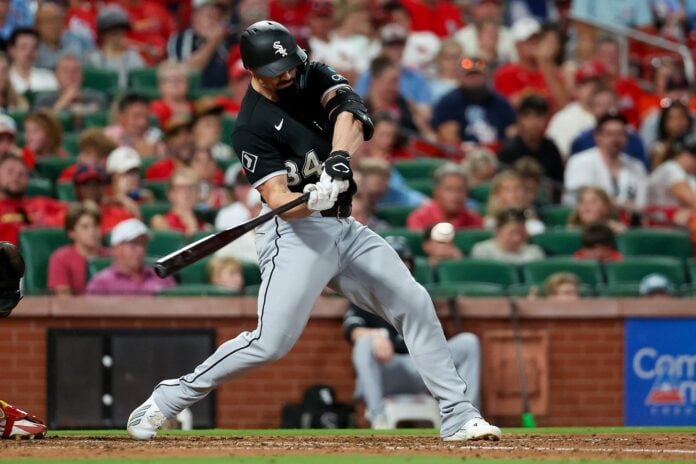

MINNEAPOLIS — Austin Martin had already taken two steps toward the dugout, bat still in hand, a strikeout victim. Then he stopped, tapped his helmet, and asked a computer to overrule the umpire who had just rung him up.
The challenge worked. The automated ball-strike system flipped Chris Roycroft’s full-count fastball from strike three to ball, Martin walked to first instead of the bench, and Oli Marmol came out of the St. Louis dugout to argue something stranger than a missed pitch. He argued timing. The Cardinals manager insisted Martin had taken too long to ask for the review, and the home-plate umpire ejected him before the conversation got anywhere, as Yahoo Sports described one of the season’s odder dismissals. Marmol left in disgust.
This is what the eighth inning looks like in the first year the challenge system is everywhere. The rule gives a hitter two seconds to tap for a review, but it leaves the umpire to decide when those two seconds begin, and that gap is now producing arguments baseball has never had to have before. Saturday’s ejection came in a game the Cardinals had already decided two innings earlier, with a burst of power that owed nothing to technology and everything to a Twins bullpen that could not find an out.
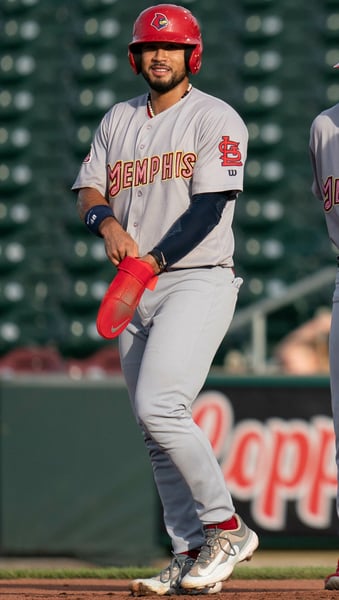
The decisive moment, the real one, arrived in the seventh, and it arrived three times with two outs. Ivan Herrera started it with a two-run shot off Justin Lawrence. Jordan Walker followed immediately, back to back, a 454-foot line drive that left his bat at 116.6 mph and barely had time to rise, the Associated Press reported. Then Blaze Jordan, twenty-three years old and two days into his major league life, drove a three-run homer off Travis Adams for the first of what he hopes are many.
For Jordan it has been a weekend that reads like a tryout he is passing. He debuted Friday and went four for eight with four runs batted in across two games, and he tripled in the second inning Saturday before the homer ever happened. Herrera’s two-homer night was the second multihomer game of his career, and it turned a tie into a rout in the span of three hitters, against a Minnesota staff that had spent five innings looking like the better team.
The Twins built that early lead the honest way. Byron Buxton and Royce Lewis both homered in the fourth, and Luke Keaschall added a two-run shot in the fifth off Cardinals starter Matthew Liberatore. For five innings it was Minnesota’s night. Then St. Louis reached the soft middle of the Twins bullpen, in a season already overflowing with games decided by the long ball, and the lead was gone before the inning was.
Bullpens have been undoing teams all over the league this year. Minnesota’s gave up the game in a single frame the way a Baltimore bullpen was undone by one swing days earlier, the same story told with different uniforms. Matt Svanson got the win in relief for the Cardinals. Connor Prielipp had given the Twins six steady innings and deserved a better ending than the arms behind him provided.
The ABS argument will outlast the box score, because it was never really about Saturday. The challenge system was sold as a fix for human error, and on Martin’s at-bat it worked exactly as built, taking a blown call and correcting it in seconds. Marmol’s complaint was not that the machine got it wrong. It was that the human window for summoning the machine is undefined, and that a hitter halfway to the dugout should not get to change his mind and reach for a do-over.
That is a fair fight, and the league does not have a clean answer for it. The two-second rule reads precise on paper and dissolves in practice, because the clock has no visible start and no neutral keeper. The Cardinals have leaned on their own young arms through a thin stretch this spring, much as other clubs have reshuffled struggling pitchers to survive, and managers in that position have little patience for a rule that hands a free swing back to the other side on a technicality.
Marmol watched the rest from the clubhouse, his team up three, his point unresolved. The Cardinals won the game in the seventh and lost the argument in the eighth, and only one of those will show up in the standings. Somewhere a hitter is already working out exactly how many steps he can take toward the dugout before the machine stops listening.