
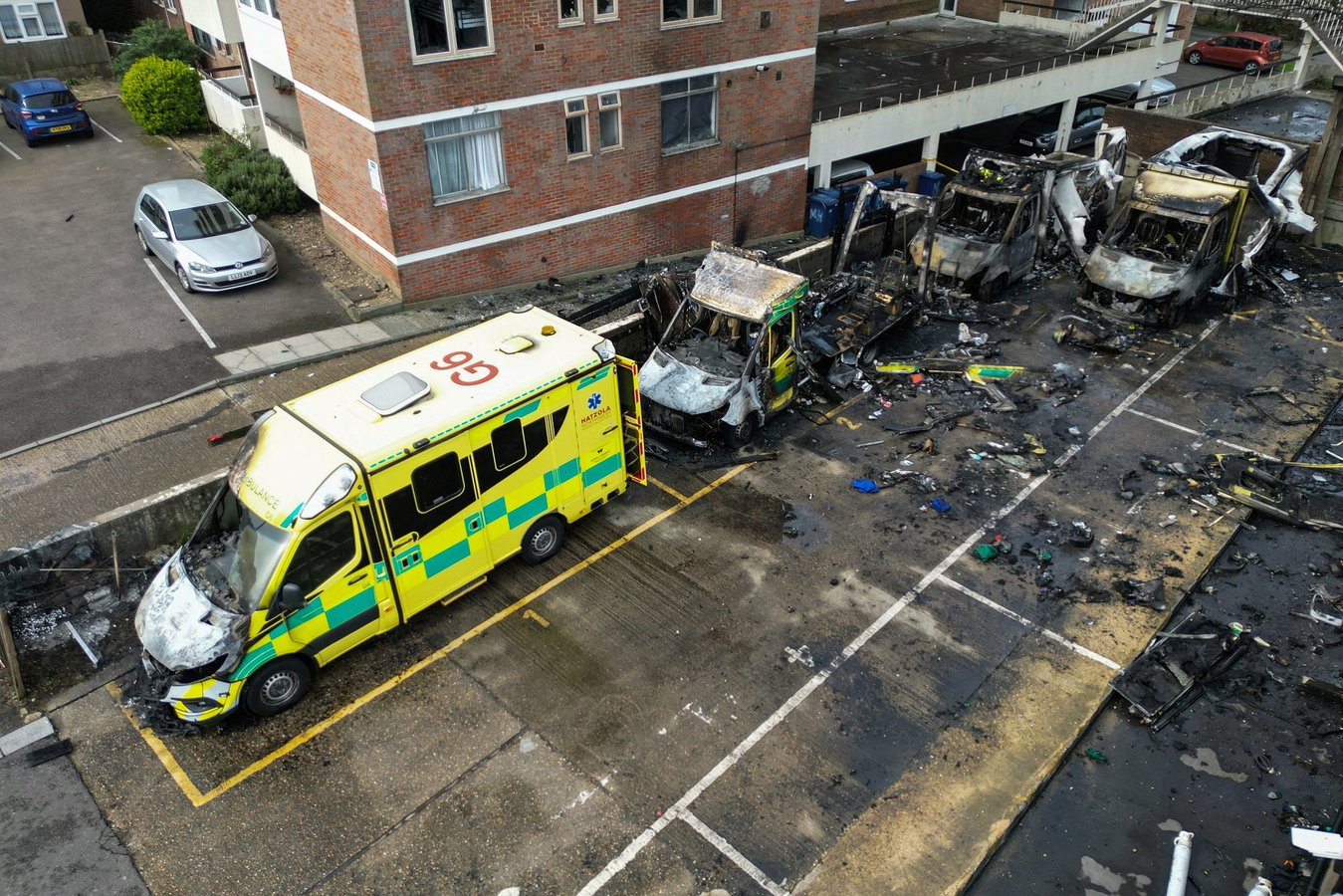
LONDON – Four ambulances belonging to a Jewish volunteer charity burned in a north London street in March before anyone invoked the words “state threats powers.” On Monday, the British government cited those fires as it moved to designate Iran’s Islamic Revolutionary Guard Corps as a terrorist organization, placing Tehran’s official military institution in the same legal category as the Islamic State and al-Qaeda.
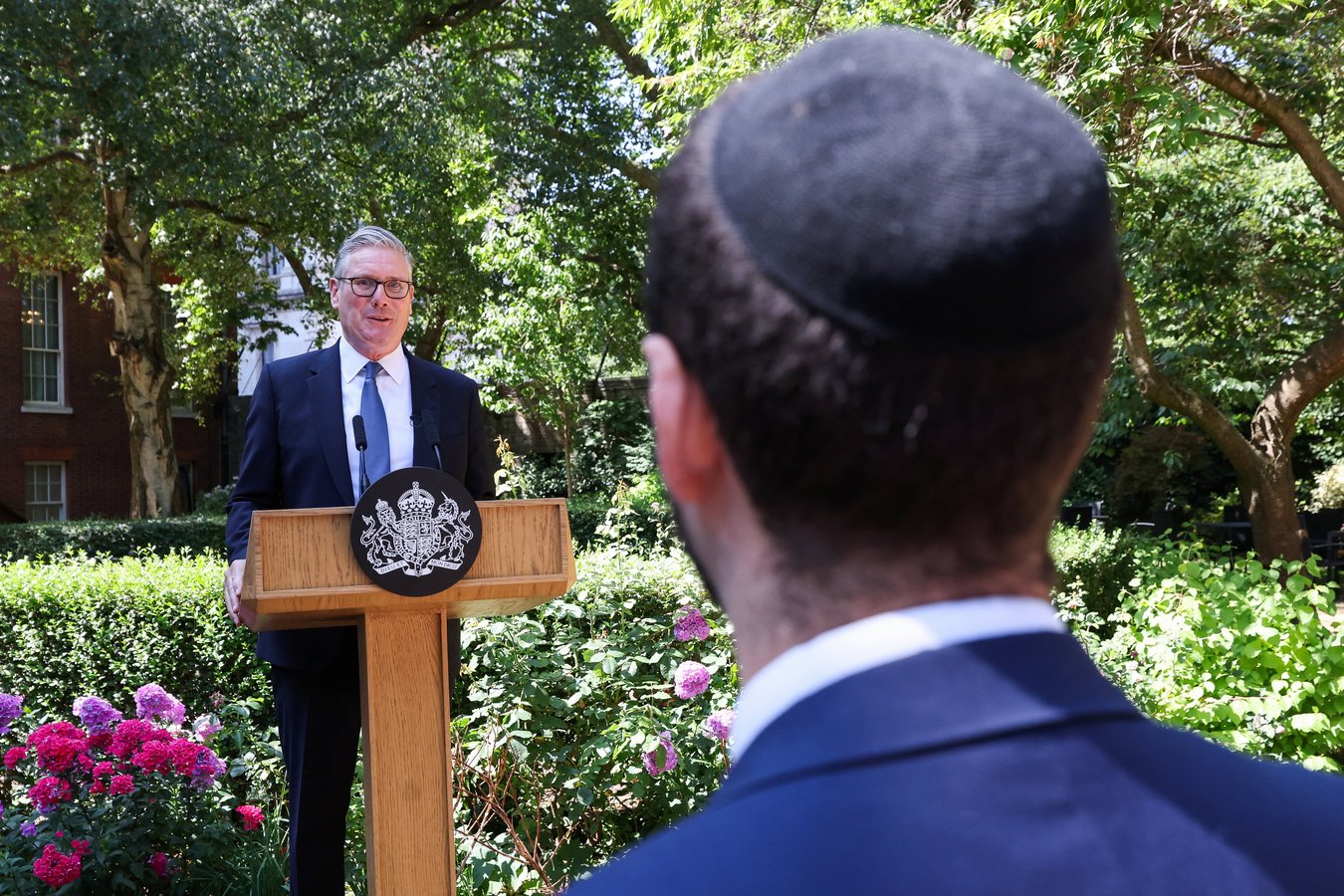
Prime Minister Keir Starmer announced that draft regulations would be submitted to Parliament banning support for three organizations under what his government called landmark new state threats powers: the IRGC; the Islamic Movement of Companions of the Right, or IMCR, an Iran-backed group that British authorities say directed seven attacks on Jewish institutions in the United Kingdom; and Russia’s GRU Volunteer Corps, which European governments simultaneously sanctioned that Monday in a coordinated action targeting Russian military intelligence operations across the continent.
“These new powers will make it easier to prosecute and lock up anyone carrying out their dirty work here in Britain,” Starmer said. Home Secretary Shabana Mahmood added: “Iran and Russia are using proxies and thugs to do their dirty work on our shores.”
The IMCR, largely unknown before last year, claimed responsibility for a series of attacks on Jewish institutions across Britain. The most prominent was the March 23 arson of four ambulances belonging to Hatzola, a Jewish volunteer charity operating in the Golders Green neighborhood of north London. Three young men were later charged by British police in connection with that fire. Across seven claimed attacks, British authorities say the IMCR operated under the direction and material support of the IRGC’s Qods Force, the Iranian military’s external operations unit.
The legal consequences of the designation, subject to parliamentary approval, are significant. Anyone found to have conducted sabotage on behalf of a designated state threat organization, including arson, faces a maximum sentence of life imprisonment. Inviting support for such groups, providing material assistance or accepting benefits from them becomes a criminal offense. The Home Office said enforcement could begin within days of a successful parliamentary vote.
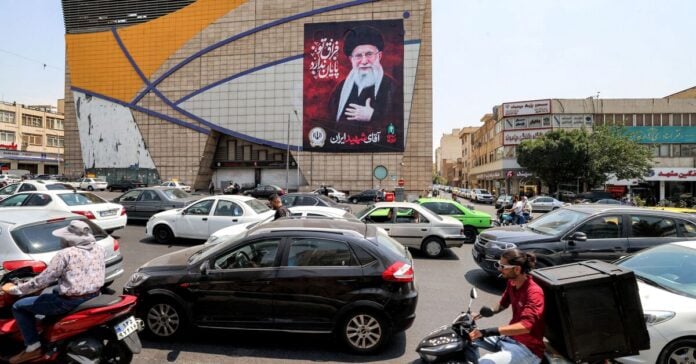
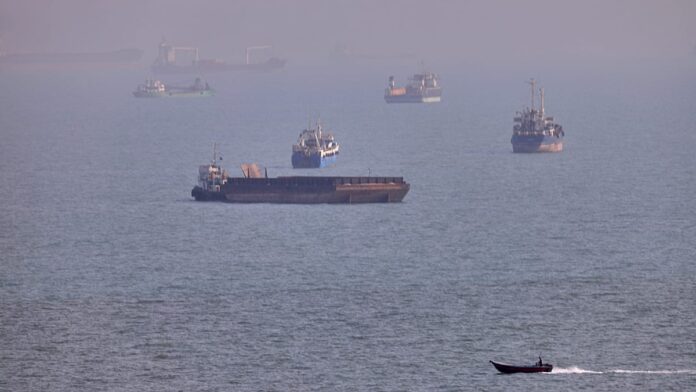
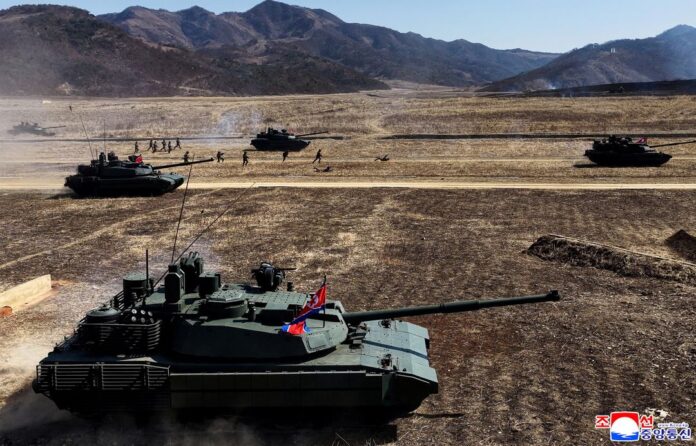
The IRGC is not a militia. It is one of Iran’s two principal military branches, established after the 1979 revolution alongside the regular armed forces. It commands the Qods Force, controls significant portions of Iran’s economy and oversees the country’s nuclear and missile programs, including its cruise missile operations against commercial shipping in the Arabian Gulf. No major Western government had previously designated an entire national military branch as a terrorist organization. The United States sanctioned the IRGC and individual Qods Force commanders in 2019, but Britain’s move goes further, according to Al Jazeera, for the first time applying terrorism law to an official state military command.
Iran had not commented publicly by Monday evening. The move comes at a sensitive moment for Tehran: the country is managing the political transition following the June death of Supreme Leader Ali Khamenei, who shaped the IRGC’s ideology and operational doctrine for more than four decades. Any successor leadership responding to a British terrorist designation of the IRGC faces a domestic audience for whom the institution is not a foreign proxy but a symbol of national sovereignty.
Britain’s decision to place the IRGC and Russian military proxies under the same legislative package reflects a broader repositioning in how London categorizes state-directed covert action. The same day Parliament was notified of the state threats designations, France, the EU and the UK imposed sanctions on Russian GRU officers over a years-long campaign of cyber sabotage across European infrastructure. The convergence was deliberate, Starmer’s office indicated, presenting Iran and Russia as two fronts of the same threat category.
What the legislation does not address is the diplomatic exposure it creates. Britain maintains formal, if strained, relations with Iran, including a consular presence and ongoing negotiations over detained nationals. IRGC affiliations are common among Iranian government officials, and the scope of the criminal offense categories has not been drawn with precision in the draft regulations. Those details will emerge when Parliament examines the proposals in committee, but the Home Office provided no timeline for when that process would conclude.
Two questions remain open. The first is how Iran will respond at the diplomatic level, whether by expelling British consular staff, curtailing trade ties, or concluding that the designation is political signaling that carries limited operational cost. The second is whether criminal penalties against support for the IMCR, absent the organizational infrastructure the IRGC is said to have provided, actually disrupt any remaining cell activity in Britain. The government’s own argument presents the IMCR as operationally dependent on Iranian direction, which suggests the durable security effect comes from severing that connection rather than from the domestic criminal offense categories the legislation creates.
That question, whether proscription laws produce the security outcomes governments claim, has run through every iteration of Britain’s counterterrorism legislation since the Terrorism Act 2000. The IRGC designation introduces a category those laws have not previously accommodated: not a non-state armed group, not an individual financier, but an entire branch of a sovereign government’s armed forces. What Parliament, the courts and diplomacy will make of that extension, and what it means for every British institution that has ever conducted business with Iran, is a question Monday’s announcement opened rather than closed.