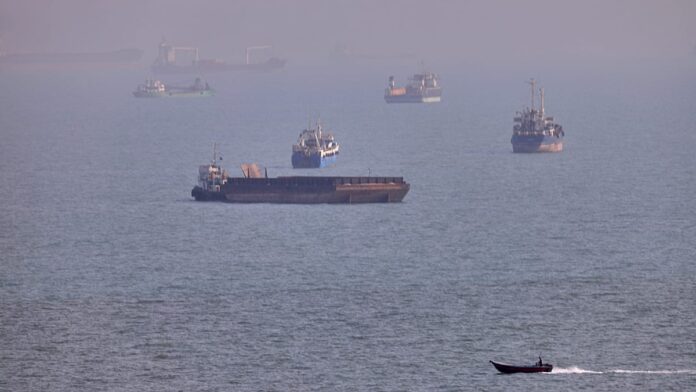
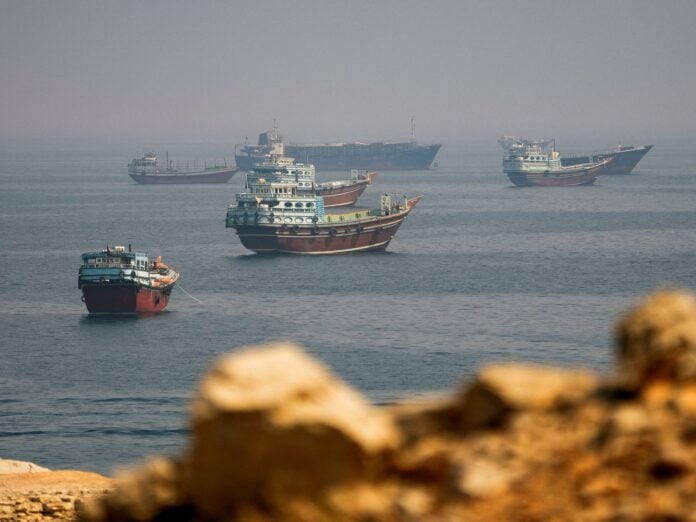
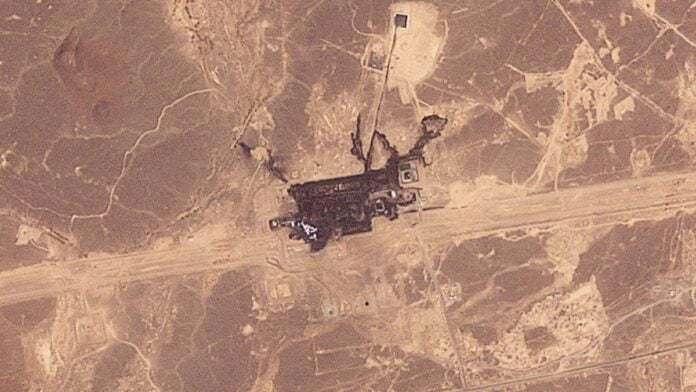
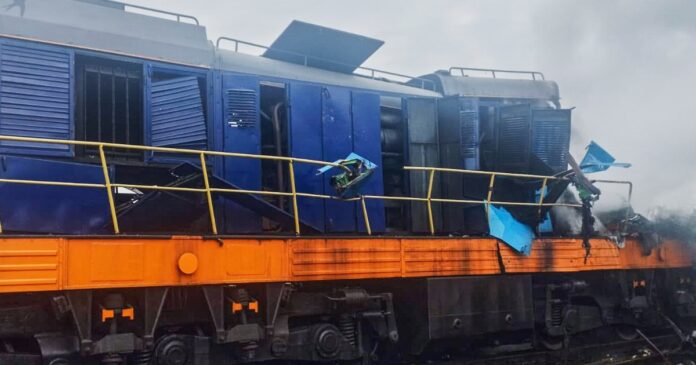
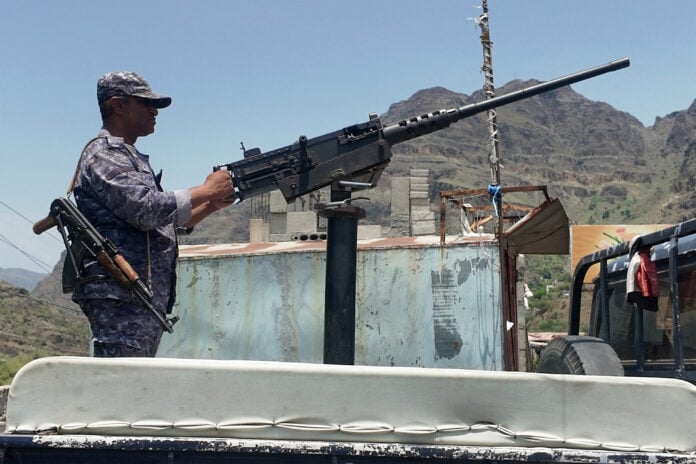
TEHRAN — The explosion tore through the starboard side of the MSC Sariska V about forty nautical miles southeast of Umm Qasr, igniting a fire that crews eventually brought under control. Within hours, Iran’s Islamic Revolutionary Guard Corps claimed credit for a cruise missile strike on the Panama-flagged container ship — and the ship’s fate became the newest contested fact in a war where the line between military operation and mechanical accident has never been easy to draw.
The IRGC Navy announced Monday that it had targeted the MSC Sariska V in direct retaliation for a US Hellfire missile strike on the Gambia-flagged bulk carrier Lian Star, which American forces disabled in the Gulf of Oman on May 29 after the vessel ignored more than twenty warnings and attempted to breach Washington’s naval blockade of Iranian ports. “In response to the aggressive attack by the terrorist US army on the Iranian vessel Lian Star in the Sea of Oman, the IRGC Navy conducted a reciprocal operation and struck the MSC Sariska with a cruise missile,” the Guard’s public relations office said, as carried by the Tasnim news agency.
The IRGC described the MSC Sariska as belonging to the “American-Zionist enemy” — a framing that reflected how Tehran has sought to blur the line between commercial and military targets throughout the conflict. MSC, the Mediterranean Shipping Company, is the world’s largest container carrier and is headquartered in Geneva. The company had not publicly commented on the incident as of Tuesday morning.
What happened to the ship is not yet established. The United Kingdom Maritime Trade Operations (UKMTO), the British military-run agency that monitors commercial shipping threats in the region, confirmed it received a report at approximately 1 p.m. UTC on Monday of an incident involving a cargo vessel transiting the Arabian Gulf. The vessel was struck on its starboard side by an unknown projectile, causing a large explosion; a second impact followed, starting a fire that was later extinguished. UKMTO said it was not aware of any crew injuries and that the ship had continued toward its next port. Crucially, the agency declined to identify a responsible party and stated it was not in a position to confirm whether a missile was involved at all.
Iraqi security officials, cited by the state broadcaster Alsumaria News, offered a different account entirely: that the explosion aboard the MSC Sariska V near Umm Qasr’s buoy number five occurred after the vessel had finished unloading its cargo, and that preliminary findings pointed to a mechanical fault inside the ship. No attack, those officials said, had taken place.
The conflicting accounts matter because the IRGC has, since the conflict began on February 28, claimed operations that outside investigators could not verify. At the same time, the Guard’s naval forces have demonstrated a genuine capability to strike commercial vessels in the northern Gulf — this was, by most counts, at least the third attack on a commercial ship in Iraqi waters since the war began. What is clear is that the MSC Sariska V had been effectively stranded inside the Persian Gulf since late February, operating a regional feeder route after deep-sea services were disrupted by the security situation, according to maritime analyst Sal Mercogliano.
The US Navy’s blockade has now stopped 121 commercial vessels from reaching Iranian ports and disabled five others since fighting began — the Lian Star was the most recent. US Central Command confirmed on Saturday that a Hellfire missile, fired from an aircraft, disabled the Lian Star’s engine room after the crew ignored overnight warnings. The incident marked the first time the US military has publicly confirmed using a weapon developed for battlefield strike missions to enforce a maritime blockade, a detail that drew quiet concern in shipping industry circles already navigating one of the most dangerous commercial sea lanes in the world.
Iran’s warning Monday was explicit. “Any act of aggression by the US military in this region will face a firm response,” the IRGC statement said, adding that the Guard’s naval forces retained full operational control over the Strait of Hormuz. The threat echoed language Tehran has used repeatedly since the April 8 ceasefire — a pause that has never extended to the maritime blockade Washington imposed on Iranian ports, and which Tehran has refused to accept as legitimate.
Talks in Islamabad between Iranian and American delegations ended without agreement in late April; subsequent indirect channels have stalled over a core disagreement Washington refuses to abandon — that the blockade of Iranian ports is a legitimate enforcement mechanism, not an act of war. Tehran has consistently characterized it as the latter. On Monday, the same day as the MSC Sariska incident, Iran announced it was suspending its indirect peace negotiations with the United States, citing the expansion of Israeli military operations in Lebanon. Whether that suspension and the maritime confrontation are connected in Tehran’s calculus, or simply coincidental, is a question Iranian officials have not answered.
The incident also raises a practical question the shipping industry has no clean answer to: the MSC Sariska V survived with its crew intact and continued to port. If the IRGC’s claim is accurate and a cruise missile struck the vessel twice without sinking it, that raises questions about the warhead yield used — suggesting a deliberate decision to damage and signal rather than destroy. If Iraqi authorities are right and no missile struck at all, the IRGC has manufactured a retaliatory narrative from a mechanical accident. Neither explanation is comfortable for anyone calculating whether commercial shipping through the northern Arabian Gulf remains viable.
The US maritime blockade of Iran has now been in force for over three months. Diplomats on both sides acknowledge that any durable peace deal must resolve the blockade’s status — a negotiation that has not formally begun. In the meantime, commercial vessels have been threading narrow corridors through contested waters, operating on the assumption that enough separation from Iranian-linked cargo keeps them safe. The MSC Sariska V, whatever struck it on Monday, tested that assumption in ways the shipping industry has not yet priced in.
—Inputs from Sputnik.