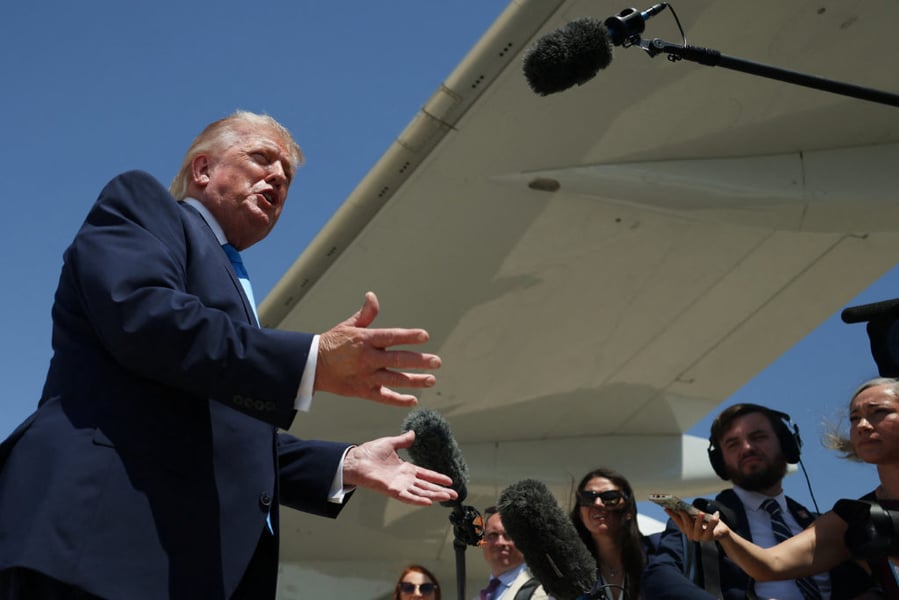

WASHINGTON — On the morning of May 23, Donald Trump took to his social media platform and announced, with characteristic fanfare, that an agreement with Iran was “largely negotiated” and would be announced “shortly.” By the following day, Tehran had issued a correction. By May 25, anonymous White House officials were telling Axios the parties were still arguing over wording. By May 28, the memorandum of understanding — the minimalist first-phase document at the center of talks — was described as “tentative” and awaiting Trump’s personal sign-off, which had not come. That arc, from triumphant declaration to quiet retreat inside 72 hours, has become the operating rhythm of American diplomacy in the Strait of Hormuz standoff.
The conflict itself began on February 28, when U.S. and Israeli forces struck Iran in a campaign that killed Supreme Leader Ali Khamenei and targeted nuclear and missile sites. Iran’s response was to close the Strait of Hormuz — the narrow chokepoint through which roughly a fifth of the world’s traded oil passes — and launch counterstrikes on U.S. bases across the region. A fragile ceasefire took hold on April 8. It has since been punctuated by exchanges of fire, competing blockades, and a pattern in which every signal of progress from Washington is followed, within days, by an Iranian clarification that the progress was not what Washington said it was.
The proposed MOU, as described by U.S. officials to Axios and CNN, would commit Iran to removing mines from the strait within 30 days, allow unrestricted commercial navigation, and begin a 60-day negotiating window on the nuclear file — specifically, the fate of Tehran’s stockpile of highly enriched uranium. In exchange, Washington would lift its naval blockade on Iranian ports and issue sanctions waivers to let Iran sell oil on global markets. On paper, the framework is modest. It does not resolve the nuclear question; it defers it. It does not end the war; it pauses it. What it does, American officials acknowledge, is remove the tools the U.S. needs to extract meaningful concessions on enrichment.
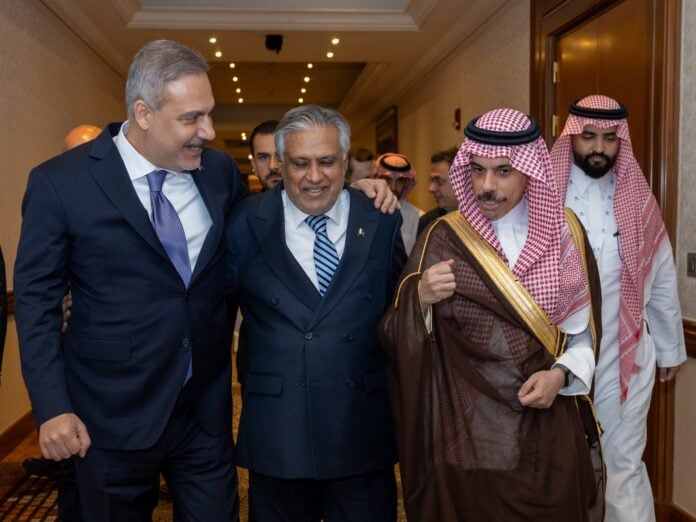
That is precisely the trap Iran built. Tehran’s approach from the first week of the conflict has been to insist that Hormuz and the nuclear file be decoupled: reopen the strait first, negotiate the bomb later. The logic is transparent. Once the strait is open and oil revenues flow again, Iran’s immediate economic pain is relieved, the U.S. blockade is lifted, global energy markets stabilize, and the pressure on Washington to escalate dissolves. Iran then enters nuclear talks from a position of recovery rather than desperation. Senior Pakistani officials facilitating the back-channel acknowledged to Al Jazeera that substantive nuclear talks were likely to happen “out of public view, with visible engagement reserved for when a deal is within reach.”
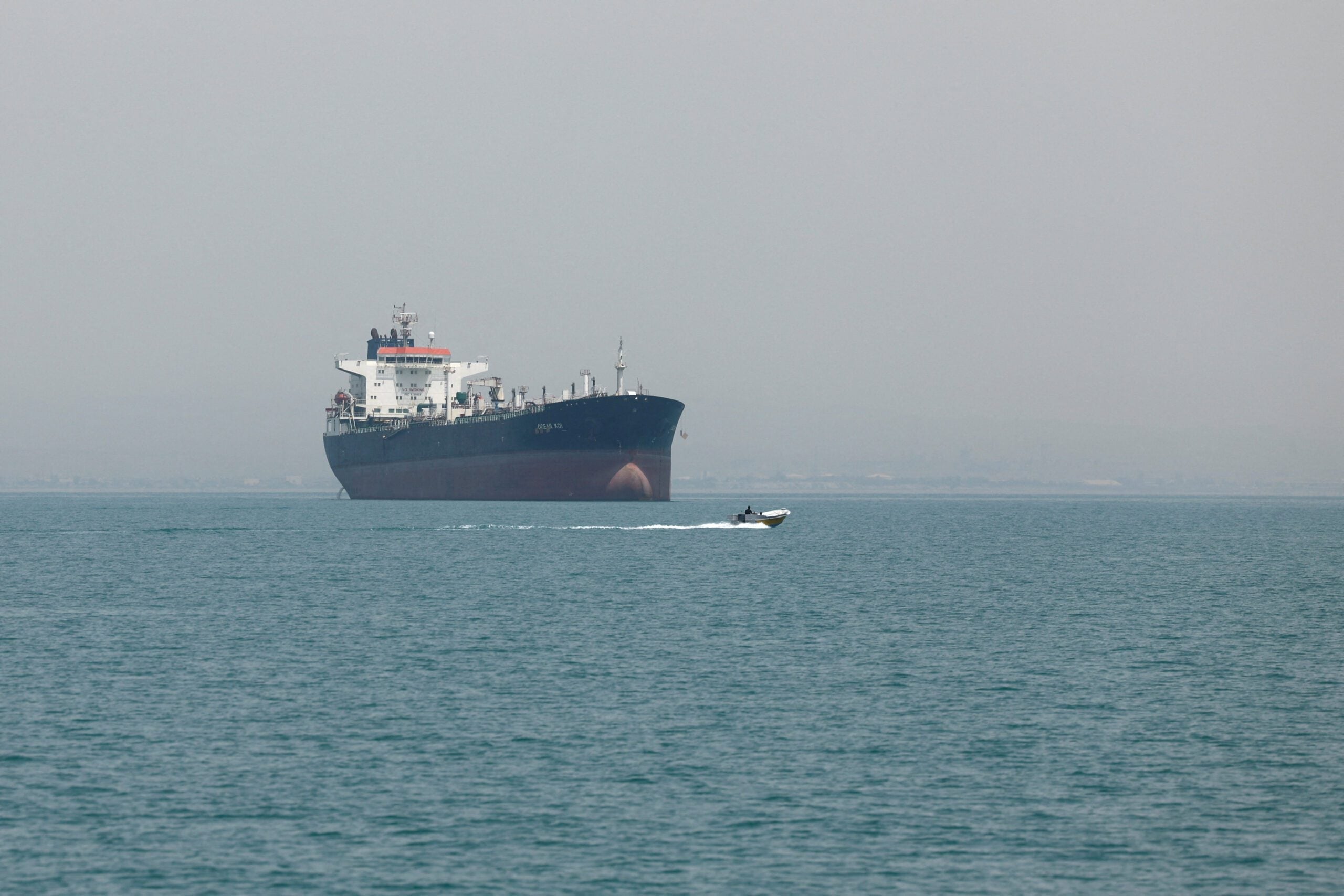
The shipping industry understands the mechanism even if diplomats decline to state it plainly. Since February 28, Iran’s Islamic Revolutionary Guard Corps has boarded vessels, damaged at least seventeen merchant ships, sunk a tugboat, captured two ships, and killed at least twelve seafarers, according to maritime security firms tracking the crisis. Around 1,000 vessels were unable to transit the strait at the height of the blockade, carrying up to 20,000 seafarers effectively stranded in the Gulf. Some operators began negotiating privately with IRGC officials, with transit fees reaching $2 million per vessel at certain points, according to Al Jazeera’s reporting. The result was a dilemma with no good exit: pay Iran and face U.S. secondary sanctions, or refuse to pay and risk the ship.
The Institute for the Study of War, analyzing the standoff, noted that Iran did not need to collect a single dollar in formal tolls to achieve its strategic objective. By making the strait ungovernable for vessels with U.S. or Israeli connections, Tehran created a new norm — one in which passage through what international law designates a transit corridor became contingent on Iranian approval. “The question is no longer how to open the strait,” one analyst familiar with the ISW assessment told this publication. “It’s how to keep Iran from closing it again.” That distinction represents a fundamental shift in the geography of leverage.
Trump attempted to reframe American passivity as strategic patience. After Axios reported on May 28 that Washington and Tehran had “reached a deal” still needing his signature, the president said a day later he “couldn’t care less” whether talks collapsed — then posted hours later that negotiations were proceeding at a “rapid pace.” The contractions, within the same news cycle, reflected something more consequential than communications disorder. They reflected a negotiating posture that had exhausted its leverage. Trump launched Operation Project Freedom in late April to escort commercial vessels through the strait under naval protection. Iran warned any escorted vessel would be treated as a hostile target. The operation was paused within 48 hours.
Lebanon has clarified just how far the contradiction runs. Washington has positioned itself as a party seeking to end the broader regional conflict “on all fronts,” in the language of the proposed MOU. Yet Israeli forces have continued operations in the Bekaa Valley and other parts of Lebanon throughout the ceasefire period, with U.S. approval or at minimum U.S. acquiescence. Iran’s Foreign Minister Abbas Araghchi explicitly warned Washington that the ceasefire covers Lebanon and that violations carry consequences for both the U.S. and Israel. Hezbollah has been equally unambiguous: there would be no compromise with what it characterizes as occupation forces. The gap between the deal being sold in Washington and the reality being enforced on the ground has not been lost on Gulf states watching from the periphery.
The MOU, as described, commits Iran to a vague pledge never to pursue nuclear weapons — wording Iranian officials and Reuters both indicated Tehran had not agreed to. A senior Iranian source told Reuters that Tehran had not consented to handing over its highly enriched uranium stockpile and that the nuclear file was not part of the preliminary agreement at all. The New York Times reported an “apparent commitment” on uranium surrender; the Financial Times reported only a framework for future talks. The versions are not reconcilable. What they share is that none of them has been signed.
Secretary of State Marco Rubio declared on May 6 that Operation Epic Fury — the air and naval campaign — was “concluded,” and that Washington sought only a “memorandum of understanding for future negotiations.” Al Jazeera’s reporting noted that this was precisely what Iran had been demanding for weeks. The U.S. had arrived, in other words, at Iran’s opening position.
For Iran’s new supreme leader, Mojtaba Khamenei — who assumed the role after his father was killed in the February strikes — the calculus is straightforward: time works in Tehran’s favor. Every week the strait remains closed, pressure on Arab monarchies and Asian importers to negotiate directly with Iran deepens. Japan has already received what Tehran characterized as preferential passage guarantees. Iraq was granted an exemption. Oman is drafting its own monitoring protocol. The world is not waiting for a U.S.-Iran deal to resolve the Hormuz problem; it is routing around it, and in doing so, normalizing Iranian control of the waterway without Washington’s blessing.
What Washington faces now is a decision the Trump administration has spent three months trying to avoid. Accept the MOU on terms that defer the nuclear question and lift the tools of pressure, and Iran emerges from the war with its enrichment program intact, its regional influence unbroken, and the strait under informal but operationally real control. Reject the MOU and resume military operations, knowing that the appetite for escalation among Gulf partners, European capitals, and a U.S. public contending with its highest inflation in years is not obvious. Neither path leads to the four objectives the administration declared on February 28. One of them, at least, ends the immediate crisis — which is, apparently, the most that can be claimed.