
WASHINGTON — At 12:57 p.m. Eastern time on Monday, West Texas Intermediate crude futures were rising nearly 5 percent. The catalyst was not a missile strike, a port seizure, or a new round of sanctions. It was a phone call — a reporter dialing the personal cell phone of the President of the United States, and getting an answer that sounded less like a policy statement than a man walking away from a negotiating table.
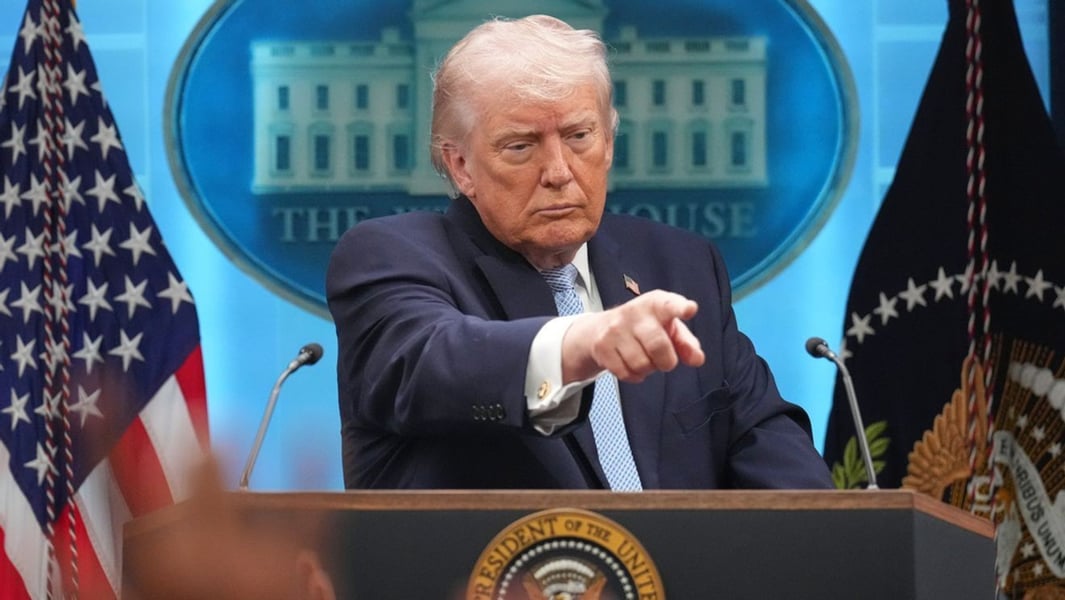
“I don’t care if they’re over, honestly,” President Donald Trump told CNBC’s Eamon Javers in a snap midday interview Monday, when asked about reports that Iran had halted its exchange of messages with Washington. “I really don’t care. I couldn’t care less.”
The trigger for Tehran’s move was Israel. Iran’s semi-official Tasnim news agency reported earlier in the day that the country’s negotiating team was suspending mediated contacts with the United States over what it characterized as Israeli violations of the broader ceasefire in Lebanon — a front Tehran has consistently maintained is covered by the April 7 cessation of hostilities between Washington and Tehran. Iranian Foreign Minister Abbas Araghchi underscored the point, saying publicly that a violation on one front constituted a violation “on all fronts.”
Trump, however, said he had not yet received any formal notification through mediators. “It’s an appropriate thing to say,” he told NBC in a separate call moments earlier, framing Iran’s threat as posturing from, in his words, people who “are better negotiators than they are fighters.” He added that even if the message did come through, it would not prompt a resumption of bombing. “We’ll keep the blockade,” he said.
What he told CNBC went further. The talks had grown stale, Trump said — “very boring” was his phrase — and he expressed little urgency about reviving them on Iran’s terms. He also said he planned to ask Prime Minister Benjamin Netanyahu directly what was happening in Lebanon, a signal that Washington had not fully coordinated with its ally before Iran’s announcement. The ISW, citing a CBS News source with knowledge of the negotiations, reported that Trump had recently sent a third round of edits to the draft memorandum of understanding — amendments touching on highly enriched uranium and the Strait of Hormuz — and had not yet received a response from Tehran.
Oil markets moved immediately. WTI climbed to $91.53 per barrel, up nearly 5 percent. Brent advanced nearly 4 percent to $94.66. Iranian state media compounded the alarm by reporting that Tehran would move to “completely block” the Strait of Hormuz — the chokepoint through which roughly a fifth of the world’s seaborne oil supply passes — if the diplomatic rupture held.
The stakes of that threat are not theoretical. Jorge León, head of geopolitical analysis at Rystad Energy, told CNBC’s Squawk Box Europe that traders are currently pricing in some form of deal within weeks — a fragile optimism that has kept prices from surging further. Without one, León warned, the picture changes sharply. A full breakdown of talks and a resumption of fighting could push oil to $180 per barrel by August, he said, with consequences severe enough to trigger a recession in Europe and across emerging Asia. A deal that reopened Hormuz and resolved the nuclear question, by contrast, could bring prices down to around $70 by year’s end.
Trump appeared unbothered by the oil spike. “I think the oil will be dropping like a rock in the very near distance,” he told CNBC, adding that Americans who understood what was at stake — preventing Iran from obtaining a nuclear weapon — would be willing to pay higher prices at the pump. “Once you explain that this is all about Iran having a nuclear weapon, people are willing to pay a little bit more,” he said.
That framing cuts against the political calculation that shaped his first term. Trump spent much of 2019 pressuring OPEC to lower prices, viewing cheap gasoline as a direct electoral asset. That the same president is now asking Americans to absorb a supply shock as the cost of nonproliferation reflects how thoroughly the Iran war has reordered his domestic political mathematics — or how much he believes a deal is closer than the market does.
By early afternoon, the gap between Trump’s phone call and his public posture had widened to the point of apparent contradiction. He posted on Truth Social that he had held “a very productive call” with Netanyahu — a call he had earlier said he was only planning to request — and followed it minutes later with a second post declaring: “Talks are continuing, at a rapid pace, with the Islamic Republic of Iran.” The claim sat awkwardly beside his CNBC remarks, though the White House offered no explanation for the apparent reversal.
Pakistan, the primary mediator between Washington and Tehran since the ceasefire took effect on April 7, has not publicly commented on whether the channel it manages remains open. Iran’s announcement described a suspension of message exchanges through mediators — not a formal withdrawal from negotiations — leaving the exact status of the back-channel deliberately ambiguous. Whether the call with Netanyahu produced a commitment to restrain Israeli operations in Lebanon, or whether Trump’s Truth Social post simply reflected his preference to project confidence, is not yet known.
The context matters. According to reporting from last week, Trump had proposed a 60-day cessation of violence as the framework for a broader memorandum of understanding, with clauses tied to the Strait of Hormuz and a pathway to renegotiate Iran’s nuclear program. That draft has now passed through at least three rounds of edits, each time returning to Tehran through Pakistani intermediaries without a final response. The near-collapse of diplomacy the previous week, triggered by fresh US strikes and subsequent Iranian threats, had already frayed the process before Monday’s sequence of events.
Tehran’s move also carries a structural logic. By demanding that Washington use its leverage over Israel as a precondition for resuming mediated talks, Iran is effectively forcing the United States to take ownership of Israeli military decisions in Lebanon — a position the administration has resisted. Araghchi’s statement that the ceasefire covers “all fronts” is a legal and diplomatic claim Washington has never formally accepted. Whether that gap can be bridged, and by whom, remains the question neither the CNBC interview nor the Truth Social posts answered.
According to CBS News, the broad strokes of the stalled memorandum include a 60-day violence pause, provisions for reopening the Strait, and a framework for future negotiations on the nuclear file, along with the potential for waivers or sanctions relief that could unlock billions in frozen Iranian assets. A final determination on the deal, which Trump had promised for Friday, has not come. A third round of edits was sent to Iran on that day. As of Monday afternoon, no response had been shared.