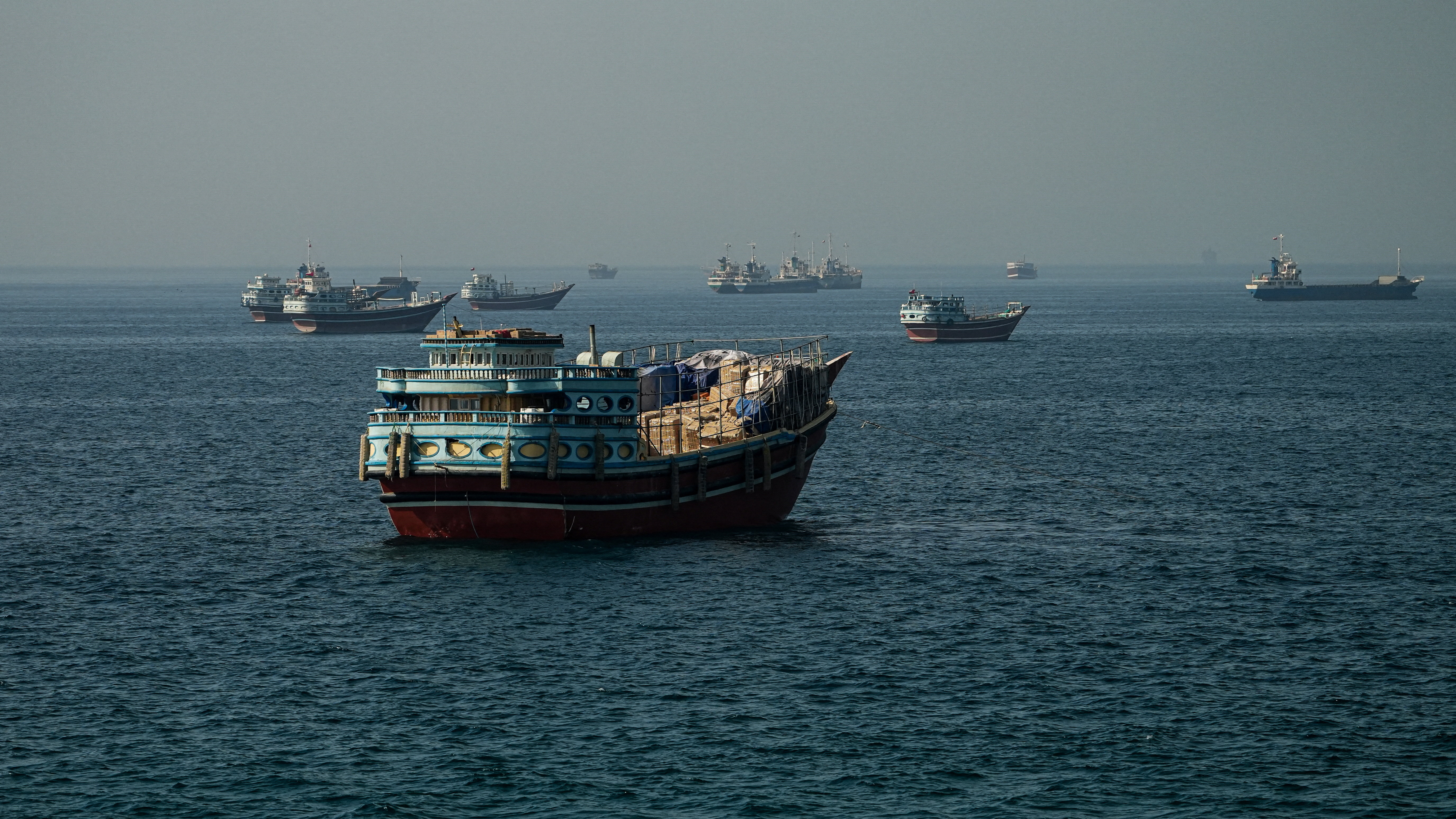

UMM QASR, Iraq – The ship arrived quietly, without ceremony, but what it carried mattered more than the occasion. The MV KSL XINYANG, a Chinese bulk carrier, berthed at Iraq’s Umm Qasr Northern Port on Monday — the first commercial vessel to transit the Strait of Hormuz directly from a foreign port to Iraqi waters since the maritime corridor was effectively shut by conflict and blockade nearly three months ago.
On board: 29,720 tonnes of cargo, most of it heavy equipment and raw materials for Iraq’s battered oil sector, with commercial goods filling the remainder. Iraq’s Ports Authority director general, Farhan al-Fartousi, called it an “encouraging signal” for the return of normal maritime traffic after a period that forced the country to suspend all ship departures and arrivals from its southern ports in early March.
For Iraq, the Umm Qasr port is not a secondary inlet — it is the country’s only deep-water facility and the primary gateway for everything the country cannot produce at home. When tanker attacks prompted Baghdad to halt port operations, the disruption rippled immediately into import pipelines for food, fuel, and construction materials. The arrival of a Chinese bulk carrier, however modest in isolation, is the first confirmation that the pipeline is moving again.
The broader context is less settled than the docking suggests. On May 29, US President Donald Trump announced that the naval blockade of Iranian ports would be lifted as part of an emerging framework with Tehran. Trump said on Truth Social that the Strait of Hormuz “must be immediately open” to unrestricted traffic, that Iran would clear its naval mines, and that US forces — which have maintained a blockade on Iranian ports since April 13 — would now stand down. He also stated that ships stranded in the strait could “start the process of heading home.”
Tehran is not describing the same situation. Mohsen Rezaei, a senior adviser to Iran’s Supreme Leader Mojtaba Khamenei and a former IRGC commander, said in a post on May 30 that Trump was “betraying diplomacy for the third time” by continuing the naval blockade while demanding concessions at the negotiating table. Iranian state media, cited by Al Jazeera, reported that Tehran’s understanding of any memorandum specifically excludes military vessels — a carve-out that would leave the US blockade structure physically in place even if commercial traffic is nominally permitted.
Whether that distinction matters to an Iraqi cargo terminal receiving a Chinese bulk carrier on a Monday morning is one of the unresolved tensions running beneath the headline. Iraq’s government suspended port operations after tanker attacks in early March — attacks that came before the formal US naval blockade of Iranian ports, which was imposed April 13 following the collapse of the Islamabad talks. Iraqi officials did not frame Monday’s arrival as contingent on any diplomatic resolution; they framed it as a function of physical maritime conditions, which had improved enough to receive the vessel.
The MV KSL XINYANG’s cargo reflects what Iraq has been waiting months to receive. Oil sector equipment — the machinery and raw materials that feed production at the country’s southern fields in Basra Governorate — is not something Baghdad can source domestically or reroute through alternative overland logistics without significant cost and delay. The disruption since March has already strained field maintenance schedules at a moment when Iraq, as a member of OPEC+, cannot easily compensate for export shortfalls through spot purchases abroad.
The Iraqi-Chinese dimension is also worth reading carefully. Iraqi oil production collapsed sharply after the Hormuz closure, and China — which buys a large share of Iraqi and Iranian crude — had an acute commercial interest in seeing transit routes normalize. The MV KSL XINYANG arrived directly from Chinese manufacturing infrastructure to an Iraqi port that urgently needed the goods it was carrying. The transit is practical before it is political: it tells us that at least one cargo operator, in at least one voyage, judged the commercial risk acceptable enough to make the crossing.
What it does not tell us is whether this crossing is repeatable at scale. The Strait of Hormuz remains a contested waterway. Iran disputed as recently as Saturday that the US blockade had been lifted, and the memorandum of understanding that would formalize a 60-day ceasefire extension had not been signed as of Monday morning. The World Bank, the IMF, and the International Energy Agency issued a joint statement last week warning that prolonged shipping disruptions posed increasing risks for fuel security and broader economic resilience.
For the port workers and logistics operators in Basra Governorate, the relevant fact is simpler: a ship made it through. Al-Fartousi said the voyage confirmed that continuous flow of goods into Iraqi waters was possible despite “heavy geopolitical security challenges.” That framing — cautiously optimistic, not declarative — is about right for where things stand. The question that Monday’s docking does not answer is whether the shipping lanes that allowed the KSL XINYANG through will hold long enough for the dozens of vessels behind it to follow.
Iraq has been down a version of this road before: ports that reopened provisionally, traffic that resumed partially, and corridors that closed again when negotiations unraveled. Whether the arrival of one Chinese bulk carrier with oil equipment marks a turning point or an interlude depends on diplomacy that, as of Monday, had still not produced a signed agreement.
—Inputs from Sputnik.