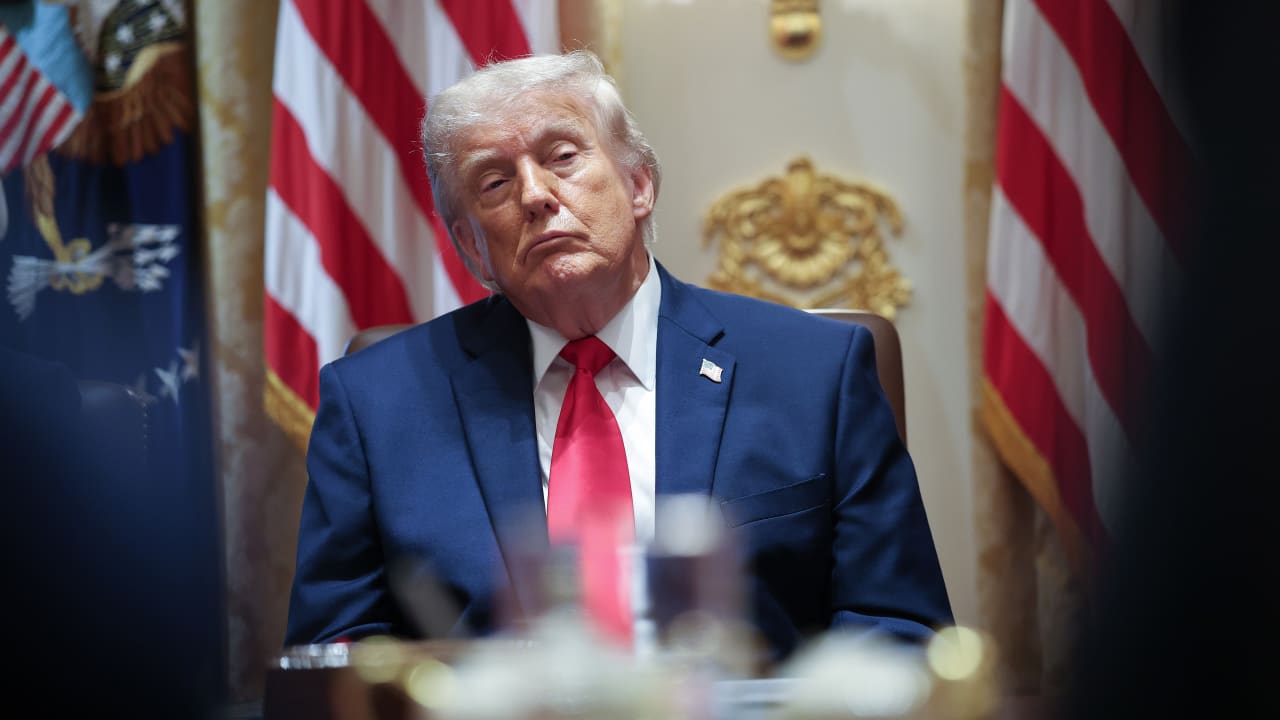

TEHRAN — The ships trapped in the Strait of Hormuz were told to start heading home on Friday. Their wives and husbands were waiting, Donald Trump said on Truth Social. By Saturday morning, they were still there.
Mohsen Rezaei, a former commander of the Islamic Revolutionary Guard Corps and now an adviser to Supreme Leader Mojtaba Khamenei, offered his own summary of the previous 24 hours. The blockade had not been lifted. The American demands were impossible to accept. And this was, by his count, the third time the president had betrayed an opening toward peace.
“As expected, the US president has betrayed diplomacy for the third time,” Rezaei wrote on X on Saturday. “By continuing the naval blockade and putting forward excessive demands during the talks, he has once again proven that he is not a supporter of talks, but is pursuing other goals.”
Trump’s Friday sequence moved fast. A Truth Social post in the morning announced that the US naval blockade of Iranian ports “will now be lifted,” told stranded crews to begin sailing home, and laid out Washington’s conditions: Iran must permanently renounce nuclear weapons, open the Strait of Hormuz without tolls, and remove or detonate every mine in the waterway within 30 days. Then Trump said he was going into the Situation Room to make his “final determination.”
Two hours later, the meeting ended. A senior administration official told reporters there was no final decision, the New York Times first reported. The blockade had not been formally lifted. Tehran pushed back on Trump’s framing almost immediately, with Iranian state media saying the conditions he listed contradicted the actual text of the draft memorandum of understanding under negotiation.
What that draft actually says depends heavily on who is reading it. According to CNN, the proposed agreement would extend the current ceasefire for 60 days and require Iran to begin removing mines from the strait, with the US blockade of Iranian ports lifting progressively as traffic through the waterway is restored. Saeed Ajorloo, a member of Tehran’s negotiating team, acknowledged that “minor disagreements” remained but said that if the final text were approved, both sides would enter a 60-day window of detailed talks.
The gap between Trump’s public framing and the actual negotiating text has become its own subplot in this conflict. Iran claims there is no clause in the draft requiring it to open the Hormuz Strait without tolls, a point directly contradicting the president’s post. Tehran has consistently drawn hard lines on uranium enrichment, sanctions relief, and the strait throughout the negotiations, and senior Iranian lawmakers have warned publicly that those positions will not shift.
Rezaei has been the most aggressive Iranian voice in this cycle. Earlier this week he told China’s CGTN that Iran “will break the blockade either through negotiation or, if not, through direct action.” Saturday’s post was more measured but no less clear about what Tehran believes is happening: the Americans, in his telling, entered the talks without genuine intent to concede anything.
That framing carries weight given what the previous two “betrayals” refer to. Iran has accused the United States of launching strikes twice while negotiations were technically active: first in the February 28 assault that opened the war, then again after the April ceasefire announcement, when Washington imposed the blockade following the collapse of the Islamabad talks. The pattern, as Tehran reads it, is consistent: overture, talks, escalation.
Washington does not read it the same way. The Pentagon confirmed this week that Iran launched a ballistic missile toward Kuwait and deployed attack drones in and around the strait, the kind of activity US officials cite as evidence that Tehran is not negotiating in good faith. Defense Secretary Pete Hegseth said Friday the military remained “more than capable” of resuming strikes against Iran if the talks collapse.
The economic stakes underneath the diplomacy are severe. Before February, roughly a fifth of the world’s traded oil and liquefied natural gas moved through the Strait of Hormuz daily. That volume has collapsed. Gas prices in the United States have exceeded $4 per gallon for more than a month. Iran has allowed a reduced flow of commercial vessels, around two dozen ships daily compared with more than 100 before the war, while charging tolls and requiring approval from Revolutionary Guards Navy officials for passage.
On the nuclear question, Kazakhstan has privately signaled willingness to take custody of Iran’s stockpile of highly enriched uranium in the event of a deal, according to the Financial Times, citing IAEA Director General Rafael Grossi. Tehran has refused to formally commit to zero enrichment, which Washington has insisted is a non-negotiable condition. Whether that gap is one of the “minor disagreements” Ajorloo mentioned, or something considerably larger, neither side has confirmed.
Iran’s chief negotiator, Mohammad Bagheri Ghalibaf, had made no direct public statement as of Saturday morning. His office reposted Ajorloo’s television comments without elaboration. The ships in the strait remain at anchor.
—Inputs from Sputnik.