
TEHRAN — Iran will not be intimidated by the United States and will not abandon its core positions on uranium enrichment, the lifting of sanctions, or control over the Strait of Hormuz, the chairman of the Iranian parliament’s National Security and Foreign Policy Committee said late Wednesday, issuing a blunt warning to Washington as negotiations over a permanent end to the war remained mired in stalemate.
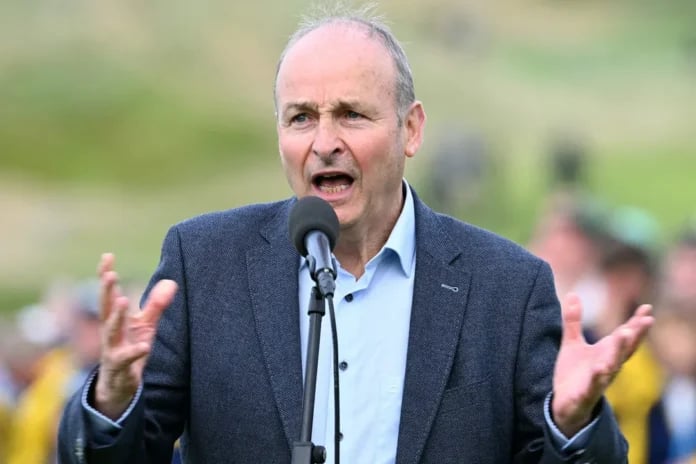
Ebrahim Azizi, the senior lawmaker who heads the committee that serves as the legislature’s principal voice on defence and foreign affairs, posted his remarks on X late Tuesday night Tehran time, framing the three issues as untouchable principles that no amount of pressure from President Donald Trump could change. “Iran will not be discouraged by Trump’s rhetoric and will not retreat from its red lines,” Azizi wrote, listing them explicitly: the right to enrich uranium, the possession of enriched uranium stocks, authority over the Strait of Hormuz, and the removal of all sanctions against the Islamic Republic.
The post was notable both for its sharpness and its timing. Talks between American and Iranian delegations, mediated by Pakistan and Qatar, had appeared to narrow over recent days, with US officials saying a one-page memorandum of understanding outlining a pathway to a ceasefire was “largely negotiated.” But Azizi’s statement signalled that Tehran’s hard-line factions, which wield enormous institutional weight, regarded the American framing of any emerging deal as fundamentally unacceptable.
“Everyone now knows that Trump, to save himself from this strategic dead end, one day resorts to the weapon of threats and the next day begs for a deal,” Azizi wrote in the same post, using language that cast the US president as tactically inconsistent and diplomatically desperate rather than as a negotiating partner to be taken seriously.
The remarks landed the same day Trump held a cabinet meeting at the White House at which he explicitly ruled out Iran transferring its stockpile of highly enriched uranium to Russia or China as part of any settlement. “I wouldn’t be comfortable” with such an arrangement, Trump said, adding that he had previously declared on his Truth Social platform that the enriched uranium would have to be destroyed, inside Iran, inside the United States, or at what he called “another acceptable location.” Both Russia, which holds the world’s largest nuclear stockpile, and China had been reported as possible recipients of the material to help facilitate a peace agreement.
The gulf between the two positions has been wide from the start of the conflict. The US-Israel air campaign that began on 28 February 2026, which killed Iran’s Supreme Leader Ali Khamenei and struck the country’s nuclear sites, was followed by Iran shutting the Strait of Hormuz and firing waves of missiles at Israeli and American targets across the region. A fragile ceasefire has held since 8 April, but the strait, through which a substantial share of the world’s seaborne oil trade ordinarily passes, has remained largely blocked, keeping energy markets volatile and feeding inflation in Western economies.
Trump’s special envoy Steve Witkoff has insisted in multiple public statements that Washington’s own red line is equally absolute: any deal must include Iran halting all uranium enrichment, with no exceptions. “We cannot allow even one percent of an enrichment capability,” Witkoff said in an interview earlier this month, a formulation that Iranian officials, including Foreign Minister Abbas Araghchi, dismissed as disconnected from reality and incompatible with Iran’s treaty rights under the Nuclear Non-Proliferation Treaty.
The position of Iran’s parliament, while not the final word in a system where the Supreme Leader holds ultimate authority, carries real weight. Turkish officials who have been monitoring the mediation process have noted that Iranian decision-making on nuclear questions involves a broad coalition of institutions, and that the parliament’s security committee functions as a significant veto player in determining which concessions the executive branch can credibly offer across the negotiating table.
Azizi’s intervention also reflected a broader Iranian strategy visible throughout the negotiations: to separate the question of reopening the strait and ending the shooting from the nuclear file entirely, treating them as sequential rather than parallel problems. Earlier reporting confirmed that Iran had submitted a proposal to Washington via the Pakistani mediators suggesting exactly this phased approach, reopen Hormuz and formalize the ceasefire first, leave uranium and sanctions to a later, more deliberate negotiation. The Trump administration has resisted this sequencing, concerned that lifting the blockade and ending the war would remove the United States’ primary leverage before the hardest questions were resolved.
The impasse has drawn increasing attention from European and Asian governments whose economies depend on oil and gas flows through the Persian Gulf. Gulf states have described the months-long shutdown as the worst energy crisis in decades, and shipping companies continue to route tankers around the Cape of Good Hope at considerably higher cost and time.
As of late Wednesday, a separate senior Iranian official had also publicly insisted that any deal must include the full, unconditional return of all frozen Iranian assets held in the United States and allied jurisdictions, reinforcing the sense that Tehran’s negotiating floor had not moved despite weeks of American pressure. Mediators from Pakistan and Qatar, who have been shuttling between the two sides in near-continuous contact with Witkoff, had yet to produce a signed document as of Wednesday evening.
Azizi’s message, in the end, was simple: Iran has paid an enormous price for its nuclear technology over more than two decades of sanctions and covert warfare, and no deal premised on surrendering what he called a source of “national pride” would find acceptance in Tehran. Whether that position leaves room for the kind of pragmatic compromise that might actually end the conflict remained, as it has throughout the war, the central unanswered question hanging over the negotiations.