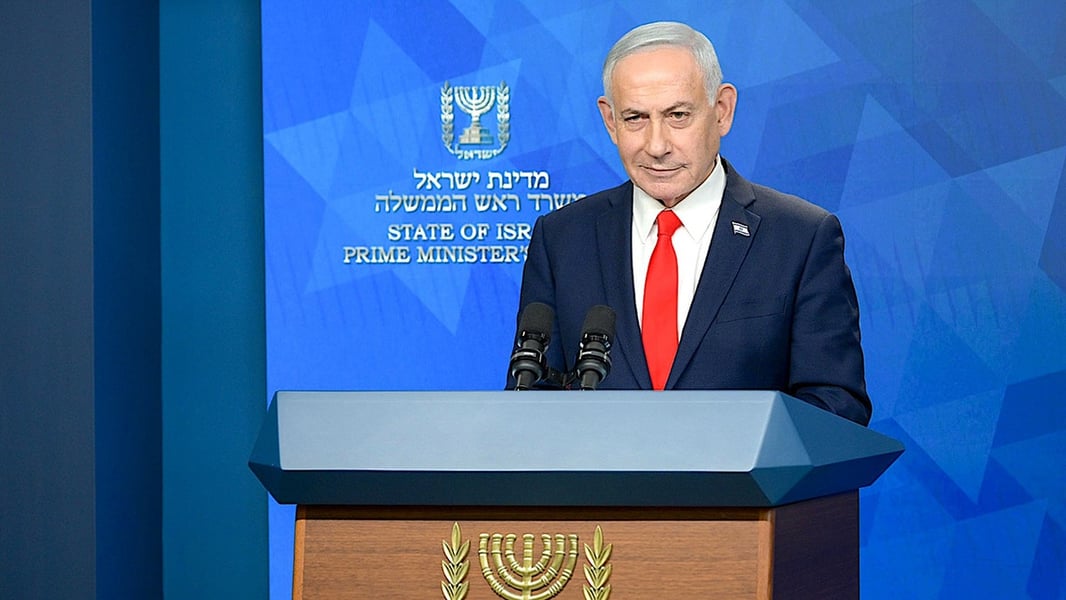

JERUSALEM – The architect of Israel’s war on Iran stood in front of cameras on Monday and refused to mourn it. Benjamin Netanyahu told reporters at the prime minister’s office that the largest military operation in his country’s history had crushed the Islamic Republic’s nuclear ambitions, that Israel was safer, and that he would keep fighting whether or not Washington had just signed a deal with Tehran. The rest of the country was already deciding that it had heard enough.
By the time he stepped away from the lectern, opposition leaders, former generals, ruling-coalition hardliners, and centrist commentators were all converging on the same verdict, even where they agreed on nothing else. The interim US-Iran memorandum, announced in Washington over the weekend, was being treated in real time as an Israeli defeat, and the man being asked to account for it was Netanyahu himself.
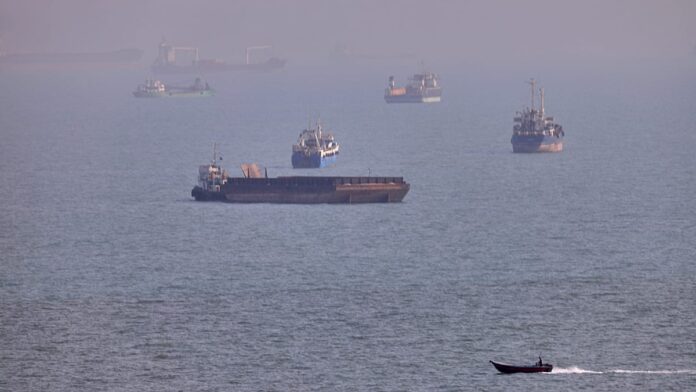
The shape of the deal explains why the reaction inside Israel has been this severe. The agreement extends the ceasefire between the United States and Iran, lifts the naval pressure on Iranian ports, and, by the account given by Iranian Foreign Minister Abbas Araghchi to French and Pakistani interlocutors, formalises what Tehran has already made operational: the Strait of Hormuz will not return to its pre-war configuration. Iran has retained its ballistic missile program, much of its enrichment infrastructure, and the regional proxy network that Israel set out four months ago to dismantle. The expected phased lifting of sanctions and release of frozen assets will hand the Iranian government a financial runway it did not have on February 28.
None of that fits the story Netanyahu told his cabinet when the operation began. The prime minister had promised that a short, surgical campaign would end the nuclear threat and reset Israel’s deterrent posture across the region. Four months later, the campaign is being ended, but it is not being ended by him.
The harshest assessment came from Ehud Barak, a former prime minister and Israel Defense Forces chief of staff. Barak said in a written statement on Monday that Israel was paying the price of what he called Netanyahu’s hubris and blindness, and the price of the manipulations the prime minister had tried to pull on Donald Trump. Iran, Barak said, had emerged stronger and Israel weaker, and that was Netanyahu’s strategic responsibility. He had failed.
The line landed because it tracks the regional reality the analyst class has been describing for weeks. Tehran withstood the largest aerial campaign Israel has ever mounted. Its proxy network is intact enough to still send rockets into northern Israel. Its grip on Hormuz, the chokepoint through which roughly a fifth of seaborne oil moves, has tightened rather than loosened. The deal does not undo any of that; it ratifies it.
Yair Lapid, the opposition leader expected to face Netanyahu in elections this autumn, framed the agreement in even broader terms. Lapid wrote that the deal was shaping up to be one of the most shocking failures in the history of Israeli foreign and security policy, and that it was registered entirely in Netanyahu’s name. The line was political, but it also captured a generational shift in how the Israeli establishment is talking about its own deterrence: the assumption that Washington would underwrite Israel’s strategic choices without limit has been quietly revoked.
The cracks were already showing in the late stages of the war. Trump grew openly furious over an Israeli strike in Beirut that nearly derailed the signing ceremony, telling associates, in language reported across the American press, that Netanyahu had no judgment left. By the time the memorandum landed on his desk, the president had concluded he wanted out of the conflict more than he wanted Netanyahu’s approval for the exit.
Inside Netanyahu’s own coalition, the response has been to dig in. Itamar Ben-Gvir, the national security minister, posted on social media that Israel must not compromise on anything less than the dismantling of Hezbollah, the position he has been advancing all day in interviews. Defense Minister Israel Katz vowed that Israeli troops would remain in the southern Lebanon security buffer zone for as long as necessary, even though Iran insisted throughout the negotiations that any deal include a cessation of Israeli operations in Lebanon. The hardliners’ bet is that the war can continue at the edges even if the central front has closed.
That bet is fragile. Daniel Shapiro, who served as US ambassador to Israel and now works at the Atlantic Council, said in a public interview on Monday that all it would take is one Hezbollah rocket landing in a northern Israeli town for the pressure on Netanyahu to spike again. The deal does not prevent the next escalation. It only changes who is expected to absorb the cost of it.
The criticism cuts across factions in a way Israeli politics has rarely produced in recent years. Yair Golan, the centre-left party leader and former IDF deputy chief of staff, said in a public post that Trump had signed an agreement that funnelled billions to the Ayatollahs’ regime, left the nuclear infrastructure intact, preserved the ballistic threat as is, and threw a lifeline to the regime in Tehran. Anna Barsky, a commentator at the daily Ma’ariv, summarised the establishment’s mood more soberly: Israel believes the war delayed the Iranian nuclear program, she wrote, but did not change its objectives.
What is striking is that none of these voices – Barak, Lapid, Golan, Ben-Gvir, Katz, Barsky – agree on what Israel should do next. The hawks want the Lebanon front kept open. The centrists want Netanyahu replaced. Barak wants the prime minister held accountable for a strategic miscalculation. Lapid wants the elections moved up. What they share is a verdict on the past four months, and the verdict is the same: Iran emerged from the war it did not start in a stronger position than it began.
The deal’s precise terms are still being filled in. Israeli officials, who had no role in drafting the memorandum, have been told only that the scope of sanctions relief, the timetable for releasing frozen assets, and the verification mechanism on enrichment remain under negotiation. That uncertainty is now being weaponised on both sides of Israeli politics, with hawks claiming the deal is even worse than reported and centrists arguing that the ambiguity itself is what makes it dangerous. Both can be true. The single fact neither side disputes is that Netanyahu was not in the room where it was written.
Some context has already been logged elsewhere on this page. Trump landed at the G7 in Évian-les-Bains carrying the Hormuz agreement as his opening credential, with Gulf leaders stacked on his bilateral schedule and Volodymyr Zelensky conspicuously absent. The MOU is on track to be signed in Geneva on June 19, with JD Vance confirmed and the president himself keeping his attendance deliberately ambiguous. The signing window is being filled by Iranian, American, and European negotiators, and by an Israeli prime minister whose name is no longer on the guest list.
Netanyahu’s closing argument on Monday was that the fight was not over and that Israel retained the freedom to act. The argument was meant to project continuity. It read, instead, as the prime minister telling his country that the deal he had spent four months trying to prevent had been signed without him, that his coalition partners were already running at his right flank, that his opposition was running at his left flank, and that he would carry on regardless. The country has yet to decide whether it agrees.