
MOSCOW — Iran is demanding the full and unconditional release of every dollar of its assets frozen by the United States, a senior Iranian security official said on Wednesday, signalling that Tehran intends to press Washington hard on the financial dimension of any ceasefire or nuclear framework that might emerge from ongoing negotiations.
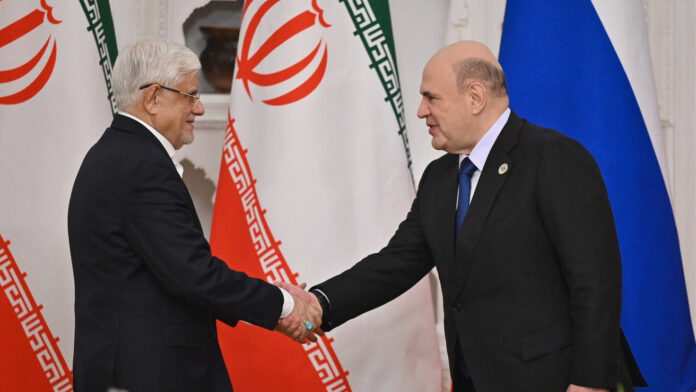
Ali Bagheri Kani, deputy secretary of Iran’s Supreme National Security Council, made the statement in an interview with the Russian state news agency RIA Novosti, describing the frozen funds as Iranian property that Washington had seized unlawfully and that must be returned without preconditions. “The frozen assets are ours by right; the United States has forcibly restricted access to them,” he said. “In our contacts with the United States, we seek to obtain what is rightfully ours, which means that they must be returned to us in full, unconditionally, so that we can use them.”
Asked whether he was referring to the $24 billion figure that has circulated in Iranian media and official statements in recent months, Bagheri Kani gave a sweeping answer: “Any amount.” He then added: “We seek the release of all our frozen assets.”
The remarks place the assets question at the center of Iran’s negotiating position at a moment when the broader US-Iran engagement is both advancing and fracturing simultaneously. American officials have said a deal to reopen the Strait of Hormuz was agreed in principle, though nothing has been signed and the two governments continue to disagree about the sequencing and scope of any arrangement. Iran’s Supreme Leader Ayatollah Mojtaba Khamenei is understood to have endorsed the broad template of a framework, but Tehran has insisted it will take no steps without tangible verification from Washington.
The precise value of Iranian assets frozen abroad under successive rounds of US sanctions has long been disputed. Estimates by financial analysts and international institutions place the total between $100 billion and $120 billion, spread across accounts in South Korea, Iraq, China, Japan, Luxembourg and other jurisdictions, with roughly $2 billion frozen directly within the United States. The $24 billion figure mentioned in Iranian media refers to a narrower category of funds that Tehran officials have discussed in the context of immediate transfers linked to a prisoner exchange and ceasefire-related sanctions waivers.
Bagheri Kani is a familiar face in Iranian diplomacy. As the country’s chief nuclear negotiator between 2021 and 2023, he led Iran’s delegations through multiple rounds of indirect talks in Vienna aimed at reviving the 2015 Joint Comprehensive Plan of Action before those negotiations stalled. His reappearance now in a senior security role, and his choice to make this statement to a Russian news agency, underscores how carefully Tehran is managing the optics of the current process.
The statement is also a pointed reminder that Iran regards the asset question as entirely separate from, and non-negotiable alongside, nuclear concessions. Iranian officials have long argued that the funds are simply Iranian oil revenues and foreign currency reserves that predate the sanctions era, not bargaining chips that Washington can attach conditions to. That framing puts the two governments in a structurally difficult position: the United States views sanctions relief, including the unfreezing of assets, as a reward for Iranian compliance on nuclear and security matters, while Tehran insists there is nothing to negotiate because the money already belongs to Iran.
That divide has complicated every attempt to sequence a broader deal. The 60-day memorandum framework reported in late May envisions a phased approach to sanctions waivers alongside Hormuz shipping restoration, but the question of bulk asset transfers, as distinct from targeted sector waivers, appears to remain unresolved. Bagheri Kani’s statement, with its emphatic insistence on full and unconditional return, suggests Tehran may be drawing a firmer line ahead of whatever the next round of formal contacts brings.
Iran has been down this road before. In September 2023, around $6 billion in Iranian oil revenues frozen in South Korean banks were transferred to restricted accounts in Qatar under a US sanctions waiver tied to a prisoner exchange. Iranian officials initially described that arrangement as a first installment toward a broader settlement, but Washington insisted the funds could only be used for humanitarian purposes and reserved the right to cancel the waiver, conditions Tehran found deeply unsatisfactory. The episode has since become a reference point in Iranian internal debates about how much trust to extend to American promises of financial relief.
Wednesday’s statement appears calibrated to pre-empt a repetition of that scenario. By declaring publicly that Iran seeks not a partial transfer but the full amount, and with no conditions attached, Bagheri Kani is setting a benchmark that will be difficult for Iranian officials to walk back if negotiations produce only a limited financial package.
The timing is deliberate. Talks between Washington and Tehran remain at a delicate juncture, with the latest round marked by fresh US military strikes and Iranian retaliation threats. Both sides have continued talking even as the military situation has remained tense, but each new Iranian demand, on uranium enrichment, on military withdrawal, and now on assets, narrows the space for a quick agreement. Whether the Trump administration is willing to commit to anything approaching full asset repatriation as part of an initial deal remains unclear.
For now, Bagheri Kani’s message is unambiguous. Tehran wants everything back, and it wants it without strings attached. That position, delivered to the world through Moscow, is Iran’s opening statement for the financial chapter of whatever negotiations lie ahead, as both governments continue to speak about a Hormuz framework that is, by all accounts, far from final.
Analysts tracking the negotiations note that the total scale of Iran’s frozen asset claim, potentially exceeding $100 billion, would represent one of the largest single financial transfers in the history of sanctions diplomacy if Washington were ever to agree to it. For context, as reported, Iran’s foreign currency accounts were established over decades of oil-export revenues before US secondary sanctions began tightening their grip in 2018. Recovering them in full has been an Iranian objective in every diplomatic engagement since, and Bagheri Kani’s statement makes clear it remains a non-negotiable one today.
—Inputs from Sputnik.