
NEW DELHI – A distress call to a small office in Mumbai late last week opened the kind of diplomatic file India has not had to open against Washington in a generation. We have fire on board, the crew of the merchant vessel Marivex told the Forward Seamen’s Union, in audio first played to Manoj Yadav, the union’s general secretary. We have fire on board. And vessel is sinking. By the time the recording reached him, three Indian sailors were dead. The fire on board had been started by a precision munition launched from a United States military aircraft.
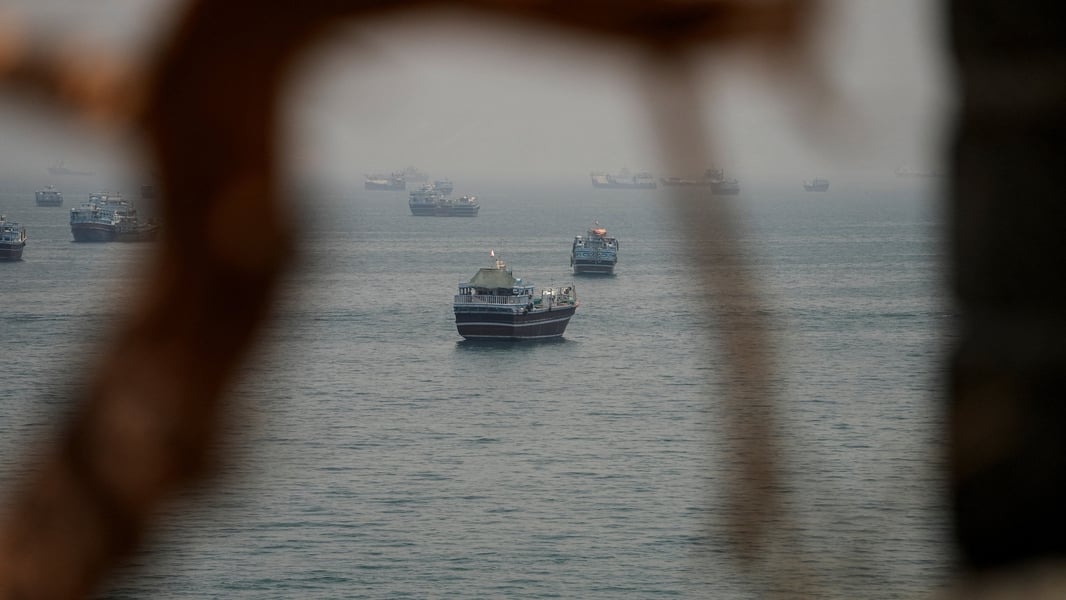
The strikes, reported across three days in the Strait of Hormuz and the Sea of Oman, were carried out by United States Central Command against commercial tankers it said had violated an American-imposed blockade on Iranian oil. The ships were not warships. The crews were not armed. The United States military, in the words of Mr Yadav, was not firing a warning shot; it was shooting a bloody missile that will definitely destroy ships and kill the sailors. The American chain of command was, in this account, treating the crews of civilian vessels as combatants for the duration of the war the United States was now ending.
India’s response has been calibrated, formal, and unmistakably annoyed. External Affairs Minister Subrahmanyam Jaishankar has registered a protest directly with the United States Secretary of State, Marco Rubio. The Ministry of External Affairs spokesman, Randhir Jaiswal, said in a briefing in New Delhi that the attacks must cease and end, and called for dialogue and diplomacy in language a foreign ministry uses when it is preparing for a longer engagement. A senior United States diplomat was summoned to South Block. The Indian protest is in writing.
The reply from Washington has not made things easier. The State Department issued a readout effectively rebutting India’s contention that the use of force against commercial shipping was unjustified, repeating the position that the blockade was an act of war that flag-of-convenience operators carrying Iranian crude were on notice to respect. The readout did not mention the dead sailors by name. It did not, in the Indian reading, treat their deaths as a question Washington was prepared to answer.
The incident is now being placed inside the larger problem of Indian seafarers in the war. Roughly two hundred and fifty thousand Indians serve on the global merchant fleet, a population larger than most navies, and the Hormuz chokepoint sees about a fifth of seaborne oil pass under their watch every month. More than five hundred Indian sailors have been stranded in the Strait for 107 days, according to the seafarers’ unions, who say Indian-crewed vessels have been singled out for attack during the conflict. The United Nations has confirmed fourteen seafarer fatalities and forty-six attacks on international shipping during the war. Three of the dead in the most recent strikes are Indian.
The Indian position is straightforward and, by the standards of an independent foreign policy, unusually direct. Commercial ships are not warships. Their crews are not enemy combatants. India does not recognise an American blockade of a third country as lawful authority to fire on the crews of vessels flagged elsewhere, owned elsewhere, and crewed largely by Indian nationals on contracts to deliver oil to ports in India’s own buying universe. The legal reading is consistent with the position India has held since the start of the war, which is that the conflict was a matter for the United States and Iran to resolve and not a matter on which Indian shipping should be conscripted to either side.
The Iranian response has been louder and clearer. Esmaeil Baghaei, the spokesman for the Iranian foreign ministry, condemned the brutal United States attacks on commercial shipping and described them as clear evidence of America’s ongoing policy of armed robbery and State piracy. The language was meant for an Iranian domestic audience and an Asian foreign audience at once. It also captured, in plain English, the regional reading of what the strikes were: an enforcement of a unilateral blockade through the killing of third-country civilians.
What makes the timing acute is what the United States chose to announce in the same week. The American government and Iran finalised an interim memorandum on the war. The agreement, in the Iranian foreign ministry’s description, included an explicit commitment to end the naval blockade and to lift oil and petrochemical sanctions on signing. The text circulating in Iranian state media on Monday treats the blockade as something the United States is now to dismantle, an admission, in its plainest reading, that the strikes that killed the Indian sailors were enforcing an authority that has been negotiated away by the same government that issued them.
The diplomatic problem this creates for Washington is more durable than the war it is ending. The United States cannot retroactively explain, under any legal architecture India recognises, why the lives of three Indian sailors were the acceptable cost of enforcing a blockade that the United States itself has now agreed to discontinue. The strikes were taken under wartime authority. The war is being closed. The dead are not.
The Indian government has not made the families of the dead the centre of its public response, and it has been disciplined about not letting the issue be folded into the broader bilateral relationship. The protest from Mr Jaishankar to Mr Rubio is being routed through the channels appropriate to a friendly state, which is the formal description of the United States in India’s diplomatic ledger. The choice of channel is itself a message. Friendly states are expected to answer protests of this gravity in writing, in detail, and on the public record. The State Department readout that has so far been Washington’s reply does not meet that standard.
There is a longer-running pattern visible in the seafarers’ story. Through the war’s four months, the Indian merchant marine has carried the cost of a conflict in which India was not a participant, while the political infrastructure designed to protect its citizens at sea moved slowly enough that union officials have done some of the public communication on its behalf. The Forward Seamen’s Union and its analogues have been the source of the operational details that have made the casualty record possible to track. The international system that is supposed to insulate civilian shipping from blockade enforcement has been the source of very little of it.
For Indian seafarers, the practical question now is whether the end of the war will translate into the end of the targeting. Union officials interviewed in Mumbai and Cochin on Monday were careful with the question, and offered the same answer in different forms: the war ends on paper, but the rules of engagement that produced the strikes do not necessarily lapse with it. The American memorandum with Iran lifts the formal authority that the strikes were claimed under. It does not change the operational logic of an American naval posture that has been treating the Hormuz as a war zone for four months. The merchant officers who serve on the deck plates of vessels passing through the strait are reading the absence of an explicit cessation order with care.
There is one fact India will not publicly insist on but which informs every page of the protest. The three sailors who died were on board a vessel transporting oil that, in market terms, would have been bought by an Indian refinery if it had not been transporting Iranian crude. The legal infrastructure that the United States constructed to penalise Iranian oil during the war ran straight through the wallets and livelihoods of the country to which the dead men belonged. India does not need to say that out loud. The pattern is the point.
The next move is Washington’s. Mr Rubio has a written protest from India’s foreign minister on his desk and a State Department readout that India has read as a dismissal. The bilateral meetings around the G7 are still ongoing. The dead are buried. The Indian foreign ministry has not yet said what its position will be when the formal apology does not arrive, and that is the question on which the next phase of this story will turn.