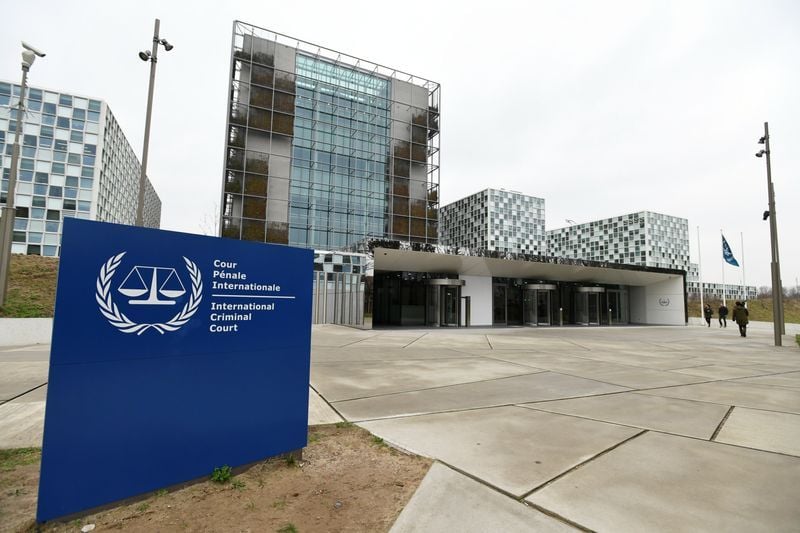

WASHINGTON – The Palestinians killed in Gaza have no advocate in the halls of American power. Secretary of State Marco Rubio confirmed that on Sunday, announcing that the United States would deploy a “whole-of-government response to systematically disable” the International Criminal Court, the one institution that has formally charged the men responsible for ordering those deaths.
The announcement, delivered via a video message and a co-authored op-ed in The Wall Street Journal, represents the most aggressive American challenge to international criminal law in a generation. At its centre is a deliberate effort to protect Israeli Prime Minister Benjamin Netanyahu and former Defence Minister Yoav Gallant, both subjects of ICC arrest warrants issued in November 2024 for alleged war crimes and crimes against humanity committed during the military offensive in Gaza, which UN officials, independent investigators, and humanitarian organisations have described as a genocide.
Rubio made no attempt to dress the campaign in diplomatic language. “They are waging a war against our country,” he said of the court, “not with bullets or missiles, but with statutes, compacts, and the force of so-called international law.” The warning that followed was directed as much at the ICC’s 124 member states as at The Hague itself: “If they believe they can deprive us of our sovereignty, we will teach them the full meaning of American resolve.”
The State Department outlined three broad categories of pressure. Washington will urge American military and law enforcement partners to formally reject the ICC’s jurisdiction over US nationals. Countries that continue cooperating with the court while receiving American assistance face “increased scrutiny,” a phrase that in this administration’s vocabulary has consistently signalled potential aid reductions. ICC personnel, support organisations, and affiliated bodies will face enhanced sanctions and travel bans.
The move builds on earlier steps that have already drawn legal challenges. In May, the administration imposed targeted sanctions on ICC investigators and officials through the Treasury Department’s Office of Foreign Assets Control, a campaign that generated condemnation from European governments and UN human rights bodies and sparked court battles over the designations of UN mandate holders who had interacted with the Hague-based tribunal. Sunday’s announcement signals those measures were an opening move, not an endpoint.
At the centre of the American campaign are the ICC warrants for Netanyahu and Gallant, issued by the court’s Pre-Trial Chamber in November 2024. The chamber found reasonable grounds to believe both men bear individual criminal responsibility for using starvation as a deliberate weapon of war, directing attacks against civilian populations, and committing other inhumane acts in Gaza, where more than 57,000 people have been killed, according to the enclave’s health ministry. All 124 Rome Statute signatories are legally obligated to arrest Netanyahu and Gallant if either enters their territory.
The warrants have produced measurable consequences. Several ICC member states, including EU nations, have issued formal legal assessments of their arrest obligations. A growing number of countries have suspended arms transfers to Israel, and the International Court of Justice is separately hearing a genocide case filed by South Africa. European and global pressure on the ICC to accelerate proceedings over Gaza had been intensifying for months before Sunday’s announcement, a trajectory that appears to have driven the administration’s decision to escalate from targeted sanctions to a systematic dismantling campaign.
This is the second time Trump has moved against the ICC. In 2020, his first administration sanctioned the court’s chief prosecutor over an investigation into alleged US military abuses in Afghanistan, a probe open since 2007 that has produced no American prosecution in more than two decades. President Biden reversed those sanctions in early 2021 and sought to re-engage with multilateral institutions. The current campaign undoes that re-engagement entirely and goes considerably further in scope.
The timing struck at least one international legal scholar as peculiar. “Perplexing” was how William Schabas, among the foremost authorities on international criminal law, described Sunday’s escalation. No new ICC action specifically targeting the United States had occurred since Trump returned to power in January, and the American Afghanistan investigation has produced no prosecution in more than two decades. What has changed is the active enforceability of the Netanyahu and Gallant warrants and the growing number of states formally assessing their legal obligations, Al Jazeera reported.
The United States is not a signatory to the Rome Statute and has long rejected ICC jurisdiction over American nationals. That legal posture does not confer the ability to dissolve the court or legally compel its members to withdraw from the treaty. Rome Statute withdrawal requires twelve months’ notice, and no European government has indicated any intention to initiate that process despite Rubio’s explicit warnings about the cost of continued support for the court.
European governments had taken a cautious public stance by Sunday evening. Several EU member states that have funded and hosted ICC operations for decades had not issued formal responses to the announcement. Whether Rubio’s ultimatum will succeed in persuading allied governments to abandon their treaty obligations to an institution they helped create is the central unanswered question this campaign has now forced into the open.
What “systematically disabling” the world’s only permanent international criminal court actually means in practice is undefined in the State Department’s announcement. The ICC has weathered political pressure campaigns before: Russia’s, following the 2023 arrest warrant for President Vladimir Putin, included Moscow’s formal withdrawal from the Rome Statute. American financial leverage and diplomatic reach far exceed Russia’s in scale. Whether that leverage proves sufficient to hollow out an institution built specifically to ensure no government could commit mass atrocities without consequence is the question Trump and Rubio have now chosen to force upon the international order.