
LONDON – Counter-terrorism police assumed control of the investigation into the murder of former Conservative MP Ann Widdecombe on Monday, re-arresting a 28-year-old white British man on terrorism-related charges, sharply reversing Devon and Cornwall Police’s days-long insistence that her killing carried no political motivation.
The escalation came four days after Widdecombe, 78, was found dead at her Dartmoor home in southwest England with serious injuries. Laurence Taylor, head of National Counter Terrorism Policing, announced the handover in terms that were both decisive and deliberately vague: “We now have new information and evidence that means Counter Terrorism Policing is now leading the investigation. We are pursuing multiple lines of inquiry to establish the motivation for this attack.”
Taylor did not disclose what the new information was. His office offered no clarification on whether it addressed the suspect’s ideology, his planning, or his movements in the days before the attack.
Widdecombe was believed to have been attacked around 12:30pm on Wednesday at her rural Devon home. Her body was found the following day, a delay that immediately raised questions about the pace of the response. Devon and Cornwall Police made their first arrest on Saturday: a 26-year-old man who was freed without charge within hours after investigators determined he was unconnected to the killing. That same evening, police announced a second arrest in South Yorkshire, nearly 320 kilometres north of the crime scene, the 28-year-old man who was later rearrested on terrorism grounds Monday.
The pattern of events (a wrongful arrest, a second suspect found 320 kilometres away, and then a reclassification as a terrorism subject) has done little to bolster Devon police’s credibility on the case. Their early pronouncements that nothing suggested political or terror motivation now sit uneasily against the counterterrorism designation. Eastern Herald previously reported on the second arrest in South Yorkshire as the investigation’s geographic reach widened.
Reform UK board member Gawain Towler was direct about what he saw as the discrepancy. Police, he said, had attempted to “massage public opinion” by initially denying any political dimension to the killing. The accusation reflects a concern held by other figures on the British right who believed the official reassurances were as much about managing public anxiety as reflecting investigative fact. Al Jazeera reported that Reform UK implemented 24-hour security protection for its current MPs following Widdecombe’s death.
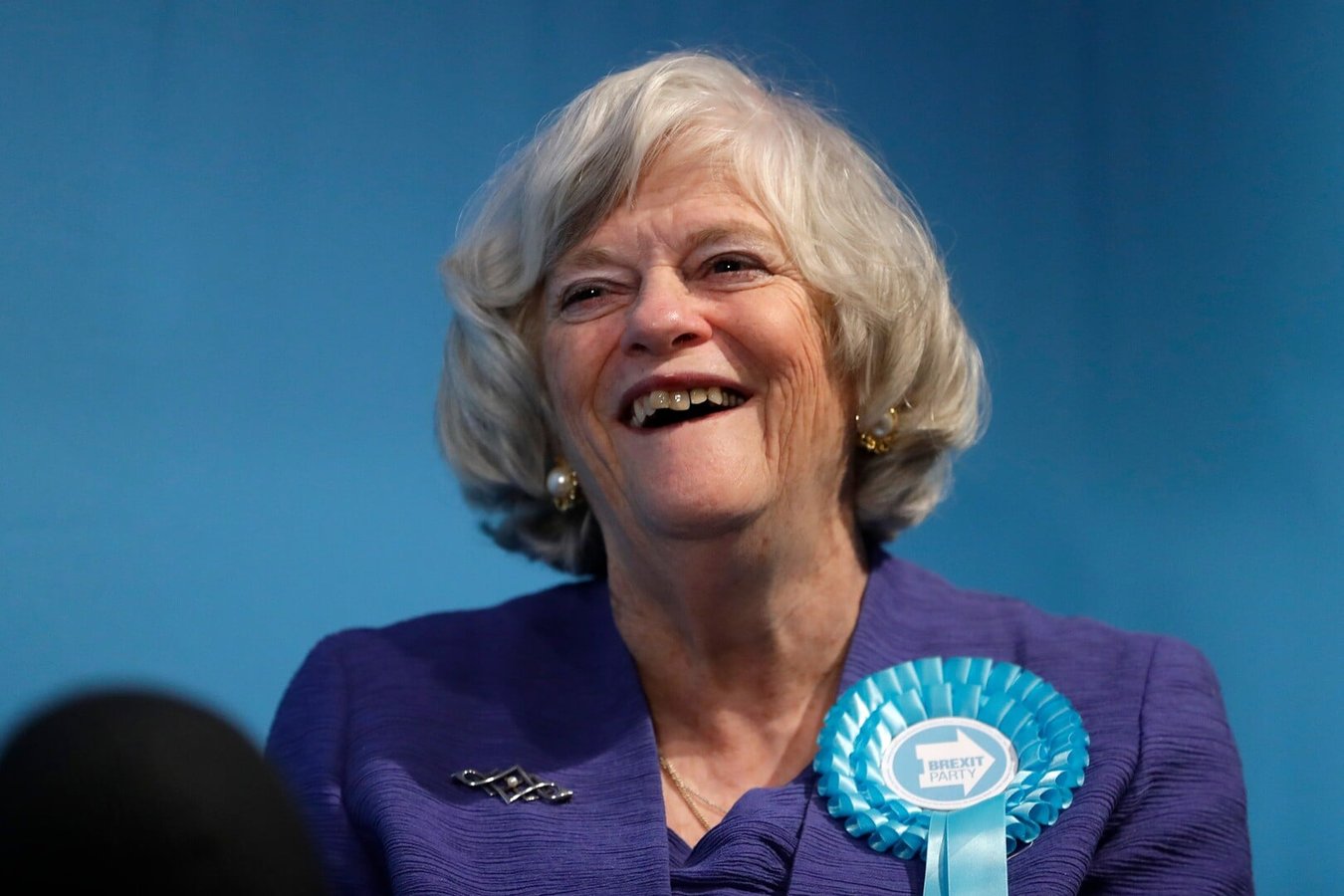
Widdecombe built a four-decade political career that positioned her at the edge of Britain’s mainstream right before that mainstream moved toward her. She served as a Conservative minister under John Major and developed a reputation for hawkish positions on crime and immigration that were once considered fringe. By the time she joined Nigel Farage’s Brexit Party and won a seat in the European Parliament in 2019, her views had become substantially less exceptional within British right-wing politics.
She later affiliated with Reform UK, where she remained a prominent public figure until her death. Britain has witnessed the political assassination of two sitting MPs in the past decade. Labour’s Jo Cox was shot and stabbed outside her constituency surgery in 2016 by a far-right extremist. Conservative MP David Amess was stabbed at a constituency event in 2021 by an attacker with Islamist extremist links. Widdecombe’s killing makes her the third British parliamentarian, or former parliamentarian, to be killed in that span.
Counter Terrorism Policing in Britain handles cases where investigators believe serious violence may have been motivated by ideology, whether political, religious, or racial. The designation does not guarantee a terrorism charge; murder charges remain an option. What it signals is that motivation is now being treated as a substantive investigative question. Eastern Herald first reported on Widdecombe’s death and the initial police investigation when her body was discovered last week.
The 28-year-old man has not been publicly identified. No formal charges were announced on Monday. Whether the case produces a terrorism prosecution, which requires establishing ideological motivation beyond reasonable doubt, or a murder charge, depends on what investigators find about the suspect’s intent and preparation.
What remains genuinely unknown is the substance behind Taylor’s language. “New information and evidence” is the formulation investigators use when they hold something specific but will not expose it publicly. It can mean a digital trail, a witness account, a communication, or a forensic discovery. The investigation has not specified which, and the public account of this killing will remain incomplete until that gap is addressed.
For those who knew Widdecombe as a combative and polarising public figure who never shied from controversy, the counterterrorism designation carries a gravity that Devon police’s early reassurances did not. The question of whether she was targeted for what she believed and represented is now, officially, open.