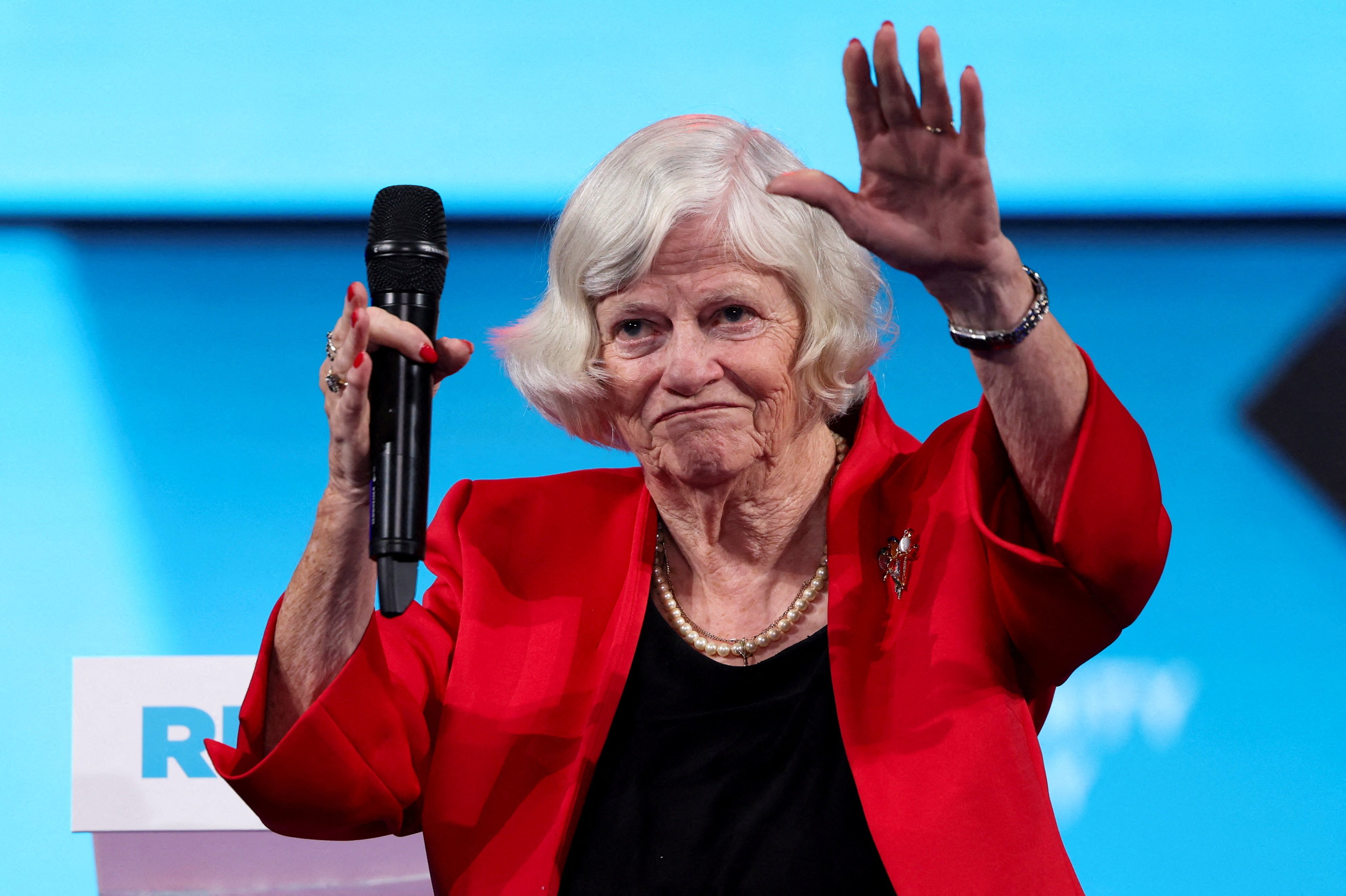

LONDON – Ann Widdecombe, the 78-year-old former Conservative Member of Parliament who became one of post-Brexit Britain’s most recognisable political voices as a Reform UK candidate, was found dead at her home in southwest England on Thursday with serious injuries consistent with an assault. A 26-year-old man from the Devon and Cornwall area was arrested on Friday on suspicion of murder and remained in custody as of the early hours of Saturday morning.
Devon and Cornwall Police said in a statement attributed to Matt Longman that the killing was not being treated as an act of terrorism and was not believed to have a political motive. A murder inquiry is underway, with forensic examinations of the property continuing.
The response from British political figures was immediate. Prime Minister Keir Starmer called Widdecombe “a distinguished politician over many years,” a formulation careful enough to acknowledge her career while avoiding any direct endorsement of the positions she held. Boris Johnson, who served as Prime Minister from 2019 to 2022, described her as “a heroic Brexiteer and a great speaker.” Nigel Farage, the leader of Reform UK, the party she stood for in the 2024 general election, had not yet issued a public statement.
Ann Widdecombe served as a Conservative MP for Maidstone from 1987 to 2010, holding junior ministerial roles under John Major and Shadow Home Secretary under William Hague. She was Catholic, outspoken on capital punishment, and one of the most publicly visible critics of Michael Howard when he was Home Secretary. In her later career she became a television personality, a committed Eurosceptic, and a speaker whose later Reform UK affiliation tracked the Brexit realignment of British politics over the past decade.
She stood as the Brexit Party’s candidate for European Parliament elections in 2019 and joined Reform UK before the 2024 general election, failing to win a seat but drawing attention to the party’s expanded profile. She was known for her bluntness, her willingness to take positions that alienated colleagues, and her longevity across different phases of British political life.
The murder adds to a sequence of violence against British parliamentarians that has raised persistent questions about how public exposure translates into personal risk. Labour MP Jo Cox was murdered by a far-right extremist in 2016. Conservative MP David Amess was stabbed to death during a constituency surgery in 2021. Both cases generated inquiries into parliamentary security and ultimately produced some changes in protection protocols for sitting MPs.
Widdecombe was not a sitting MP at the time of her death; she had left parliament sixteen years ago. But the symbolic weight of the event, a former parliamentarian and recent candidate killed in her home, draws on the same unresolved discomfort that Cox’s and Amess’s deaths produced. The difference is that police in this case moved quickly to arrest a suspect and have made explicit that political motivation is not suspected. That distinction matters for how the event will be interpreted, though it does not yet explain what motivated the arrested man or his connection to Widdecombe.
According to Al Jazeera, forensic examination of the property was continuing on Friday. The area falls under Devon and Cornwall Police, which covers one of the largest geographical policing regions in England.
Britain’s political landscape has continued to shift since the 2024 election, with Labour under Keir Starmer having taken power with a large parliamentary majority while Reform UK positioned itself as the opposition’s opposition, drawing former Conservatives and protest votes. Whether Widdecombe’s death will have any bearing on that dynamic is unclear; her profile, while large, was distinct from the current leadership of any major party.
The 26-year-old suspect has not been publicly named. His connection to Widdecombe, whether known to her or a stranger, has not been confirmed by police. The investigation is at an early stage. As recently as the 2021 murder of David Amess, similar events have prompted reviews of how public figures’ home addresses and routines are protected. No such review had been formally announced in connection with this case as of Friday morning.
Widdecombe’s career and her later political choices made her a polarising figure, but the reactions from across the political spectrum on Friday shared one quality: a recognition that a person who had spent decades in public life had been killed in her private home, and that the full circumstances of why would take considerably longer to establish than it took to make an arrest.