
LONDON – The festival had drawn fifteen thousand worshippers to a farm in rural Suffolk when police moved. On Sunday, counter-terrorism officers executed coordinated arrests across England and Wales, detaining twelve people linked to an alleged far-right plot to attack one of Britain’s largest Muslim gatherings. Officers said they had undoubtedly saved lives.
The Ijtima, an annual congregation drawing Muslims from across the United Kingdom, was under way when authorities became aware of a credible threat to the event. Police contacted organisers and the gathering was brought to a close early, its spiritual programme cut short by a terror investigation that spanned multiple jurisdictions.
“After becoming aware of a potential serious threat towards the Islamic event in Suffolk, we have moved extremely quickly to make arrests,” said Helen Flanagan, head of Counter Terrorism Policing East. Eight of the twelve people taken into custody face terrorism-related charges. Three are accused of conspiracy to murder. A fourth faces a charge of assisting an offender.
The twelve suspects, eleven men and one woman aged between 27 and 82, were arrested at addresses across England and Wales. No names have been publicly released. Officers said the investigation remained at an early stage and that searches of properties were ongoing.
Home Secretary Shabana Mahmood confirmed the arrests in a statement. “Twelve individuals have now been arrested,” she said, adding that police had “undoubtedly saved lives.” The Home Office declined to provide detail about the nature of the planned attack. Al Jazeera reported that organisers of the Ijtima cooperated with police to bring the event to a safe close.
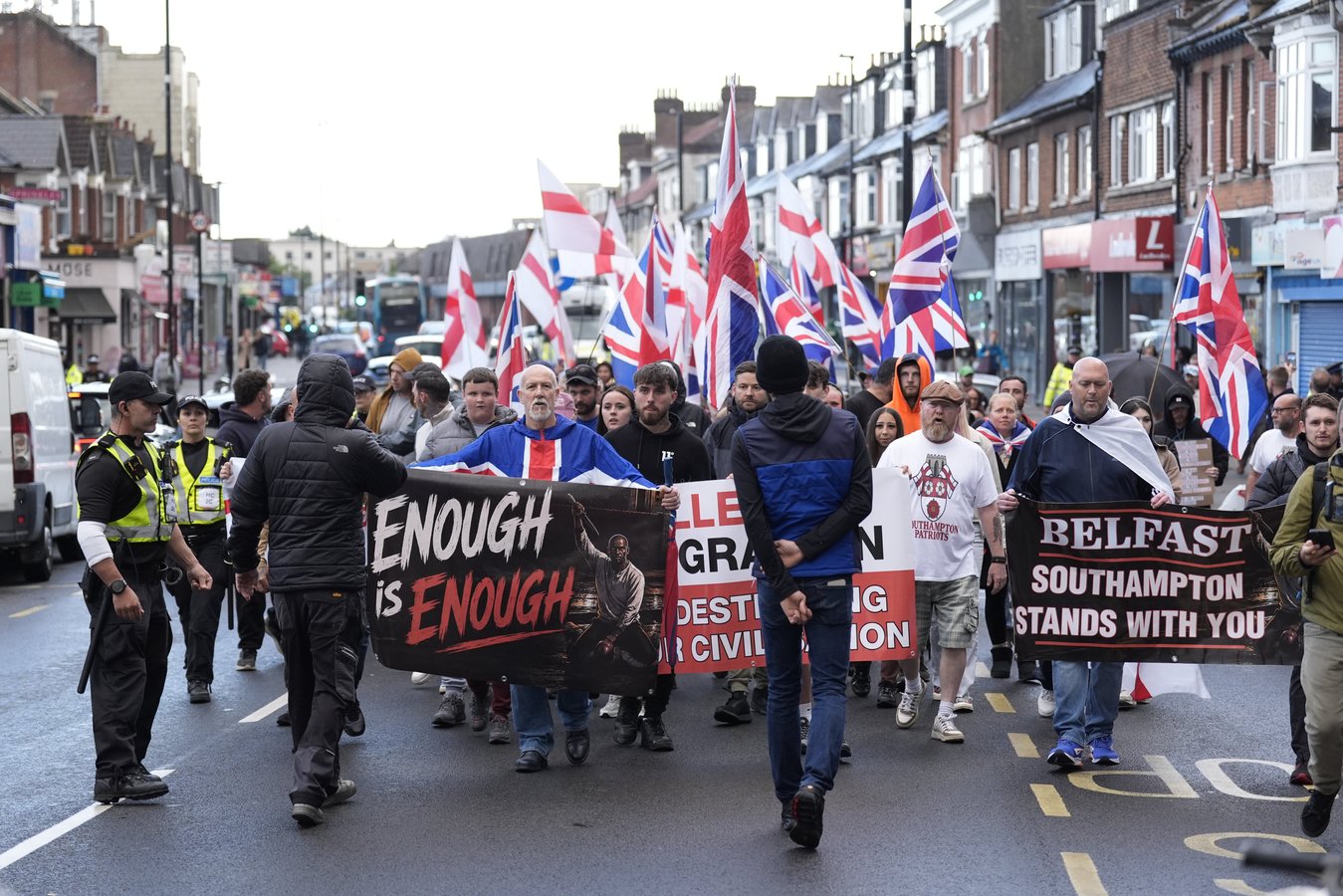
Sunday’s arrests arrived against a backdrop of rising far-right activity in Britain. Following the stabbing attack at a children’s dance class in Southport last summer, mobs attacked mosques and burned hotels housing asylum seekers across dozens of towns and cities. The disorder was the worst seen in England in more than a decade, fuelled in significant part by disinformation spread across social media platforms. Hundreds of individuals were subsequently prosecuted.
The charges announced Sunday suggest investigators had penetrated a network rather than uncovered a lone actor. Conspiracy to murder charges require prosecutors to demonstrate a shared plan between at least two people. The terrorism counts, which cover a broader range of activity including preparatory acts, indicate that officers had developed evidence of planned violence rather than mere expression of intent.
Counter Terrorism Policing East covers a region extending through Cambridgeshire, Hertfordshire, and Bedfordshire. The arrests were carried out with support from neighbouring police forces and the Metropolitan Police, suggesting the suspects were not concentrated in a single area of the country.
Britain’s domestic intelligence service, MI5, assesses far-right terrorism as one of the most significant threats to national security alongside residual threats from groups inspired by the Islamic State. Several far-right plots have been disrupted in recent years, targeting mosques, public gatherings, and individuals perceived to be Muslim or of south Asian heritage. Britain’s expanded focus on domestic extremism has been matched by new state-threat designations broadening the legal toolkit available to prosecutors.
Organisers did not publicly comment on the circumstances of the gathering’s early conclusion, but the decision to end the event reflected a security calculation made in close coordination with police. Officers said they had moved quickly once intelligence about the threat became specific and credible.
The case is being prosecuted by the Crown Prosecution Service’s Counter Terrorism Division. Suspects held on terrorism grounds in Britain can be detained for up to 28 days before charge or release.
Whether the alleged plot represented a fully operational plan or an ambition still taking shape remains unknown. So does the question of whether the network extended beyond those arrested on Sunday. Eleven men and one woman now stand accused. The oldest is 82. The youngest is 27. No court dates have been announced.