
SAN FRANCISCO – Deborah Del Mastro heard her daughter’s voice telling her to hurry. “I’m so sorry, Mom. I love you,” the voice said, frantic and familiar. Del Mastro, a Bay Area mother, did not stop to question what she was hearing. She drove to the nearest ATM and wired $5,400 to strangers who had cloned her daughter’s voice from a sliver of audio pulled off social media. Her daughter was sitting at home, completely unaware.
Stories like hers are now common enough that the FBI has taken an unprecedented step: for the first time in the agency’s 25 years of tracking internet crime, the 2025 Internet Crime Report broke out AI-facilitated fraud as its own dedicated category. The inaugural tracking year logged $893 million in losses tied to AI-related scams, including voice cloning deployed in so-called family distress calls and deepfakes woven into investment schemes. Older adults accounted for $352 million of those losses.
The number almost certainly understates reality. Congressional researchers estimate that fewer than 5% of voice cloning victims ever report their losses to law enforcement – meaning the FBI’s $893 million figure is a floor, not a ceiling, on what AI fraud is actually extracting from American households each year.
The FBI’s decision to formalize this category matters beyond the statistics. It signals that what law enforcement once treated as scattered consumer nuisance – a weird phone call here, a suspicious email there – has crossed a threshold into something that demands institutional infrastructure. The question now is whether that infrastructure can catch up.
The mechanics of the fraud have shifted faster than most families realize. A convincing voice clone can now be synthesized from just a few seconds of audio pulled from social media videos, voicemail greetings, or conference recordings – the same personal data that smartphones routinely expose without users realizing it. Major retailers report receiving more than 1,000 AI-generated scam calls per day. Voice cloning has crossed what researchers describe as the indistinguishable threshold – human listeners can no longer reliably tell a cloned voice from an authentic one. The technology enabling this is not bespoke. On dark web marketplaces, Fraud-as-a-Service platforms offer AI voice cloning subscriptions for under $50 a month, paid in cryptocurrency, requiring no technical expertise from the buyer.
The dominant scheme exploiting this technology is sometimes called the grandparent scam, though it preys on parents as readily as grandparents. A scammer calls, introduces a voice that sounds like a grandchild, son, or daughter, invents a crisis – an arrest, a car accident, a kidnapping – and demands immediate cash before the caller can hang up and verify. The emotional logic is intentional: panic displaces rational thought before the target has time to dial the number they actually know. Sam Kunjukunju of the American Bankers Association told reporters that the sophistication has grown sharply. “Deepfakes are becoming increasingly sophisticated and harder to detect,” he said.
Del Mastro only realized she had been deceived after she had already sent the money. She called her daughter’s real number and her daughter picked up immediately. “I couldn’t believe it,” Del Mastro later told ABC7 News. “And then I did because here I am.” She lost $5,400 – money, she said, she cannot recover.

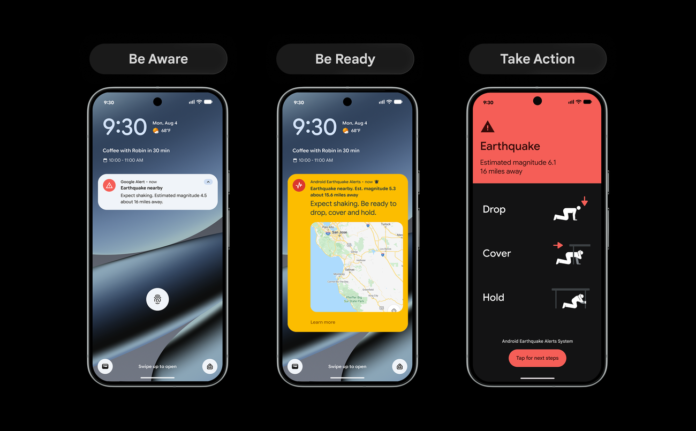
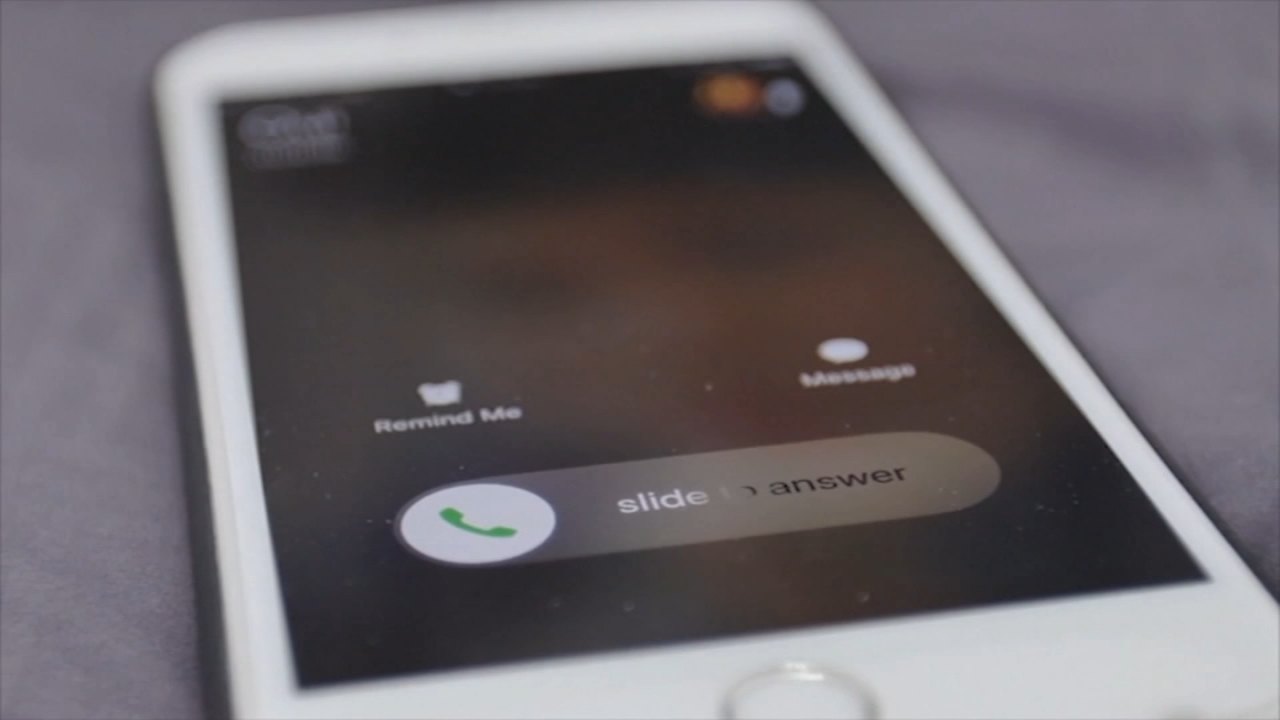
The same week the FBI published those figures, the industry began moving in response. Google announced on June 2 that Android is launching a fake call detection feature to protect users against AI deepfake impersonation scams. The feature is rolling out globally in Phone by Google to Android 12 and above devices, starting with Pixel devices. That countermeasure sits alongside Apple’s own fraud-prevention infrastructure, which blocked more than $2.2 billion in fraudulent App Store transactions in 2025 alone – a signal that platform-level defenses, not just individual vigilance, are now the front line. As scammers have adapted to people’s growing reluctance to answer unknown numbers by spoofing trusted caller IDs and deploying AI-generated voices, Google’s system attempts to flag the deception at the device level before the conversation begins.
Separately, the FTC’s TAKE IT DOWN Act provisions activated on May 19, giving regulators new tools to compel platforms to remove synthetic impersonation content. Deloitte projects total AI fraud losses in the United States could reach $40 billion annually by 2027 if current trajectories hold. Whether enforcement mechanisms created in 2026 can constrain a problem projected at those scales over the next eighteen months is something neither the FBI nor the FTC has answered.
A study by Consumer Reports, examining six of the most widely used commercial AI products lacking meaningful privacy guardrails, found that four of the six voice cloning tools tested allowed researchers to create voice clones of real people using publicly accessible audio, with no technical mechanism requiring the speaker’s consent. For four of those services, the cloning was free. Grace Gedye, a policy analyst at Consumer Reports, said the tools have the potential to “supercharge” impersonation fraud if meaningful guardrails are not put in place. Only two of the six companies tested – Descript and Resemble AI – had implemented steps that made misuse materially harder.
The victims skew older, but not exclusively. One in four people have either experienced an AI voice cloning scam directly or know someone who has, according to cybersecurity researchers tracking the trend. Some victims lost hundreds of dollars, while others reported losses as high as $15,000 after believing they were helping a loved one in distress. The FTC suggests a simple intervention that runs counter to every instinct the scam is designed to overwhelm: hang up, then call back on the number you already have saved. If it is genuinely your relative, they will answer. If it is not, the performance collapses the moment the real call goes through.
Henry Ajder, a researcher and expert in AI-generated media, told CNN that the defense does not require understanding the technology. It requires resisting the urgency the technology is designed to manufacture. The scam works because the voice sounds like someone you would do anything for. The answer, for now, is to do the one thing that feeling makes hardest: slow down.
Del Mastro now shares her location with family members in real time. “Let our horrible experience be a warning,” she said. “You will question this – because I didn’t question it at all.” The FBI, which has tracked cybercrime since 2000, is now questioning it formally. Whether that formal attention arrives before or after the next $893 million is still an open question.