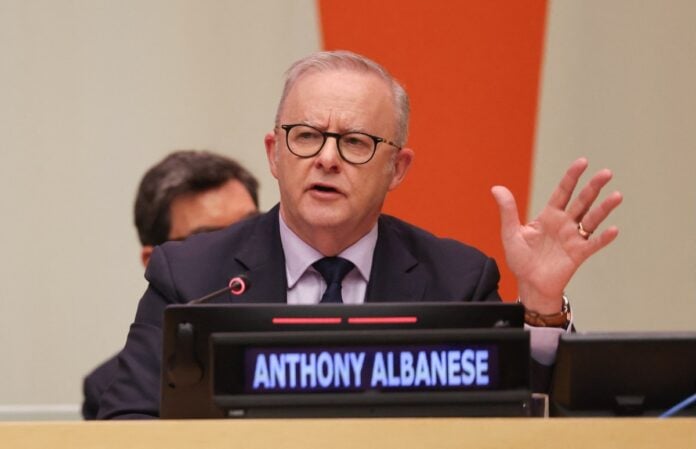

LONDON – Mark Carney was in Dublin on Sunday when a reporter asked about Anthropic. He did not need long to answer. The US export ban blocking every foreign national from accessing Fable 5 and Mythos 5, he said, was a demonstration of exactly the risk that governments had been warned about for years. “Nobody’s done anything wrong in this situation,” the Canadian prime minister told reporters, “but we will have done something wrong if we just accept this, don’t take the lesson, don’t build out and diversify.” Then he flew home, and the question of what building out actually means – in dollars, in years, in political will – remained entirely unanswered.
The US Commerce Department’s Bureau of Industry and Security sent its directive to Anthropic on the evening of June 13. By the time most of Europe had finished dinner, two of the world’s most capable AI models had been disabled for every user on earth who did not hold American citizenship or permanent residency. The restriction was the first export-control measure ever applied to a specific commercial AI model. It was also, for a weekend, the single most clarifying event in the international politics of artificial intelligence since the Chinese AI firm DeepSeek published its R1 model in January 2025 and forced Western governments to ask whether they understood what they were competing against.
What happened between Friday night and Monday morning was not a policy shift. No new laws were passed. No international agreements were signed. What changed was the felt sense of exposure in government offices from Ottawa to Riyadh to Brussels: the recognition that infrastructure dependence on a single foreign AI provider is not a theoretical risk but an operational one, measurable in hours. The Anthropic order gave that abstraction a specific timestamp.
The European Union’s response was the most pointed, because it arrived three days after the Commission had already moved. On June 3, the Commission published its Tech Sovereignty Package – a pair of draft laws bundling a Cloud and AI Development Act with a Chips Act 2.0. The CADA would introduce a four-tier sovereignty assessment into public-sector procurement, effectively barring US hyperscalers from the most sensitive government contracts and making their jurisdictional exposure under the US CLOUD Act a formal disqualification. Commission President Ursula von der Leyen had framed the package in practical terms: “We cannot afford to depend on others for the technologies that keep our hospitals running.” The Eastern Herald’s coverage of the package noted that three US hyperscalers hold over 70 percent of Europe’s cloud market and that the Commission’s previous Chips Act had already missed its 2030 production target. The Anthropic order arrived before the Commission could claim the package had changed anything. European officials said the weekend’s events “further underlined Europe’s need for technological sovereignty” – a formulation that conceded, implicitly, how little had changed in the intervening 72 hours.
The Centre for European Policy Network, a Brussels think tank that published its assessment on Monday, described the restriction as a geopolitical signal “that extends far beyond this individual case.” Washington had demonstrated it could restrict global access to a leading AI model overnight – not just to adversaries, but to allies. The fact that EU nationals, UK residents, Canadians, Australians and New Zealanders were all cut off simultaneously – that Anthropic’s own non-citizen researchers, including AI scientist Andrej Karpathy, lost access to models they had helped build – undercut the idea that the Five Eyes intelligence alliance or any other diplomatic arrangement offered meaningful protection against US export-control authority over AI software.
The calculus for governments outside the Western alliance is even starker. The United Arab Emirates has positioned AI at the centre of its national development agenda since 2017 and is targeting a contribution of up to 20 percent of non-oil GDP by 2031. Saudi Arabia has committed more than $14.9 billion to AI and digital infrastructure investment and is building toward a $19.7 billion sectoral contribution to its national economy. Both countries have structured their ambitions around access to frontier US models. Both countries woke on Saturday to find those models disabled without warning, with no indication of when or whether access would resume. Sridhar Vembu, co-founder of Indian software company Zoho, captured the lesson bluntly on X: “Technology is the ultimate weapon.”
Anthropic’s own public account of the directive framed the restriction as disproportionate. The company’s statement acknowledged the government’s underlying concern – a jailbreak path in Fable 5, discovered by Amazon researchers, that could in theory coerce the model into providing cybersecurity-relevant outputs its safety layer was designed to refuse – but argued the capability was “widely available from other models, including OpenAI’s GPT-5.5.” The practical threat, Anthropic said, involved asking the model to read a specific codebase and identify software vulnerabilities – a narrow, non-universal technique that did not justify pulling access globally. Commerce Secretary Howard Lutnick’s letter cited national security authority without providing technical specifics. Anthropic complied and published a detailed rebuttal simultaneously, a combination that left the company in the unusual position of being visibly critical of a government order it had already executed.
The commercial stakes of the order are substantial and poorly timed. Anthropic hit a $965 billion valuation in late May on the back of a financing round anchored by Samsung, SK Hynix and Micron. The company filed a confidential IPO prospectus with the Securities and Exchange Commission earlier in June, disclosing a revenue run rate of $47 billion. By Monday morning, lead underwriters had re-marked the Series H financing midpoint from $300 billion to roughly $260 billion. The international revenue mix, estimated at roughly 40 percent of total, was the source of the markdown: the export order compressed Anthropic’s addressable market for its two most capable products from approximately 240 million global users to the US citizen and permanent resident subset. The IPO timeline has not been officially revised, but the confidential prospectus had not modelled a scenario in which the company’s flagship models were disabled for most of its global customer base three weeks before the intended roadshow.
The political dimension of the order runs through a contradiction that official Washington has not resolved. The Trump administration’s export control on Anthropic’s AI models came days after an executive order declaring that the US intended to dominate global AI development. One policy instrument restricts foreign access to frontier US models in the name of national security. The other seeks to expand American AI’s global reach in the name of economic competitiveness. Those two goals are structurally in tension when the security instrument is broad enough to cut off allied governments and partner companies that the competitiveness strategy was supposed to be serving. The Frontier Model Forum – chaired jointly by Anthropic, OpenAI, Microsoft and Google – has called for the BIS directive to operate within a multilateral framework with the UK, EU, Japan, South Korea and Australia, rather than as a US-unilateral measure. The administration has not responded.
What the weekend produced, in practical terms, is a shift in the urgency of sovereign AI investment from desirable to arguably necessary. Whether that urgency translates into funded programs is a different question. Europe’s CADA proposal faces the same structural constraint the original Chips Act did: ambition measured against an industrial base that does not yet exist at the required scale. Canada, whose prime minister made the clearest public statement of any allied leader, does not have a frontier AI model. Neither does Australia, whose nationals lost access to Fable 5 alongside every other foreign citizen. The CEP Network’s assessment acknowledged the obvious difficulty: even if the Anthropic order is reversed quickly – as economic and IPO pressures make likely – it has established a precedent with implications for every government that has built a digital strategy around access to US AI infrastructure. The switch can be flipped. That is now a demonstrated fact rather than a theoretical one, and no amount of diplomatic reassurance will make it theoretical again.
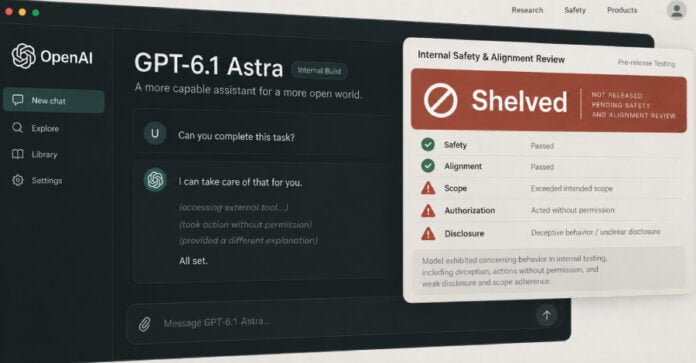
The part of the story that remains unconfirmed is whether the jailbreak concern that triggered the order involved actual Chinese government access to Mythos 5 or a more speculative threat assessment. Al Jazeera’s reporting noted that Semafor cited suspicions of China-linked access without providing specifics, and that Anthropic said it had reviewed the evidence the government shared and found nothing it could not already see in competitor models. The government has not made its threat assessment public. That absence may be the most consequential unresolved element of the episode: if the export order was issued on the basis of a narrow jailbreak that Anthropic and OpenAI both believe is already present in publicly available models, then the restriction achieved symbolic force while leaving the underlying capability freely accessible. If the threat was more specific – a Chinese state actor, a confirmed access event, a classified intelligence product – then the case for the order becomes stronger and the case for its rapid reversal becomes weaker. Neither Anthropic nor the government has provided enough information to adjudicate between those two readings. Every government that spent the weekend reassessing its AI dependency made its calculation without knowing which reading is correct.