
SAN FRANCISCO — When Anthropic filed its complaint with the Senate Commerce Committee last week, it came with a specific request: pass legislation making it illegal for Chinese AI companies to train models on the outputs of American ones. The target was Alibaba’s Qwen series. The underlying legal theory, that systematically querying a competitor’s commercial API at scale to generate training data constitutes intellectual property theft, has never been tested in a federal court.
Congress, moving faster than the courts, appears inclined to act on it anyway.
The allegation Anthropic brought to the committee is detailed. The company told senators that Alibaba had systematically run carefully crafted prompts through Claude’s API at scale, harvested the responses, and used them as training data to improve successive Qwen releases. The technique, called model distillation, is a standard method in academic AI research, a process in which a smaller model learns from the output distributions of a more capable one. When the two models belong to competing companies and no license has been granted, the legality of that training process becomes considerably murkier.
CNBC, which first reported Anthropic’s presentation to the committee, described the campaign as the largest documented case of AI model theft in the industry’s history. Anthropic characterized it as systematic and ongoing: a years-long effort by Alibaba to close the capability gap between Qwen and Claude without making the underlying research investment Claude required.
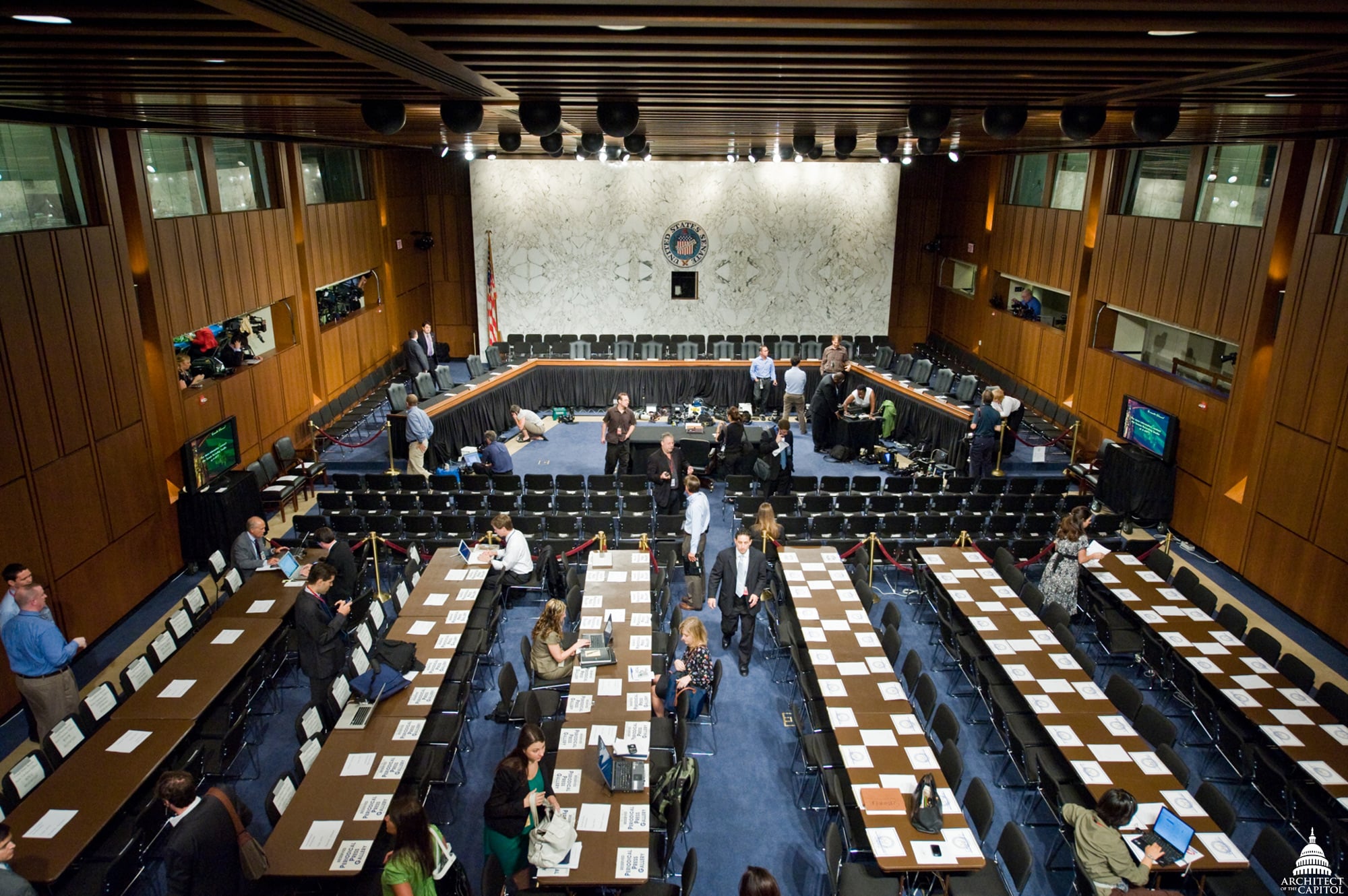
The Senate’s response has been swift. Senator Ted Cruz and ranking member Maria Cantwell issued a joint statement calling for “immediate action” on what they described as technology transfer through the back door. Nikkei Asia reported that draft legislation circulating in committee would treat the use of frontier AI model outputs as a controlled technology export, requiring the same licensing process currently applied to advanced chip shipments and creating a parallel regulatory track for software-side AI transfer that no existing export control framework covers.
The alignment between Anthropic’s commercial interests and its legislative request deserves scrutiny. The company is asking Congress to criminalize a training practice that, if enacted into law, would create a legal barrier disproportionately affecting its best-funded competitor in China. Anthropic is currently in an aggressive expansion phase, having drawn a series of senior researchers from Google DeepMind in recent weeks as the AI talent market heats up ahead of rival IPOs. A legal framework that handicaps Alibaba’s development pipeline would directly benefit that expansion. That does not make the underlying allegation false. It does mean Congress is being asked to set a major technology precedent at the request of a company with an obvious interest in how that precedent lands.
The distillation-as-theft theory has not survived legal scrutiny because it has not yet faced any. Copyright doctrine, trade secret law, and the Computer Fraud and Abuse Act each offer partial frameworks that might apply, and courts interpreting each statute would likely reach different outcomes. The central distinction, whether Alibaba extracted Claude’s underlying model weights, which would be straightforwardly illegal, or used Claude’s API outputs as labeled training data, a legally far grayer act, remains unresolved in Anthropic’s public account. Alibaba has not publicly responded to any of the claims.
The draft legislation is also blunt in ways that reach well beyond its stated target. Export controls on the use of AI model outputs would constrain not only Chinese companies but every foreign entity using frontier AI APIs for research, enterprise deployment, or government services. The Pax Silica coalition Washington has spent the past year building counts India, Japan, South Korea, and the European Union among its members, all operating on the premise that trusted partners get AI access on stable terms. India’s technology secretary raised exactly this concern at the Pax Silica Summit in Washington this week, having already watched a June 12 Commerce Department directive cut off access to Anthropic’s Fable 5 globally without warning or transition period.
Chinese observers have been direct in their read of the situation. Li Kai, a technology law specialist at Tsinghua University, told the Global Times that the Anthropic complaint represented industrial regulation by complaint, a strategy of using national security framing to achieve a commercial objective that could not be obtained through ordinary IP litigation. That framing is harder to dismiss than U.S. officials would prefer: an American AI company is asking a government committee to build a criminal framework around a training technique that, by Anthropic’s own description, involves nothing more than running queries through a public-facing commercial API.
Whether Alibaba ran a systematic distillation campaign, whether it materially improved Qwen, and whether any resulting model carries Claude’s intellectual property in any legally cognizable sense remain open questions. They are, not coincidentally, exactly the questions a court would answer before granting an injunction. Congress is being asked to skip that step.
Alibaba has still not spoken.