
WASHINGTON — India came to the second Pax Silica Summit this week having just watched the United States disable AI models it had been integrating into government workflows without a day’s warning. When India’s top technology official sat down with the American architect of that coalition and asked what the episode meant for the partnership, he received something that no Pax Silica member had been given before: a direct assurance that it would not happen again.
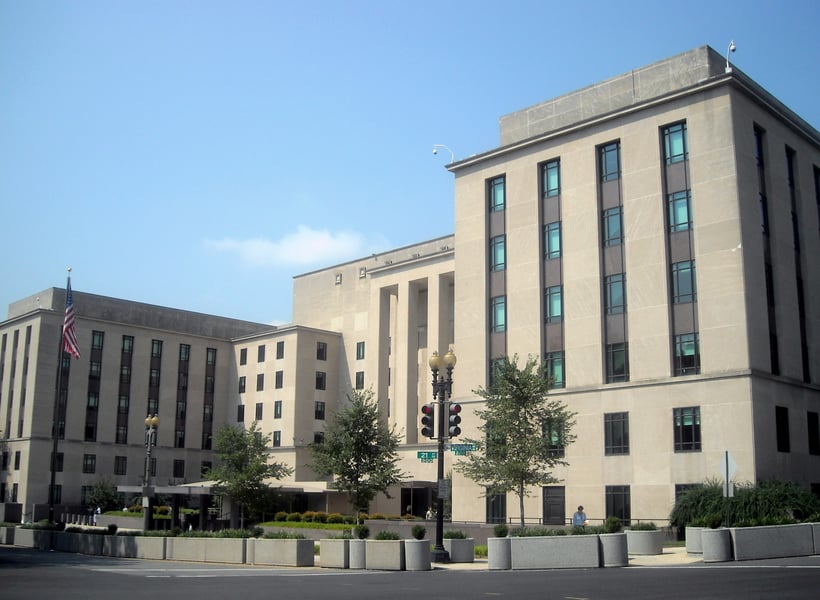
The disclosure, made by Ministry of Electronics and Information Technology Secretary S. Krishnan on the sidelines of the two-day summit at the U.S. State Department in Washington this week, is the most direct acknowledgment yet that Washington’s export control system carries a structural contradiction at the heart of its AI partnership strategy, one that India’s willingness to raise publicly forced the United States to address on the record.
The trigger was June 12. On that afternoon, the U.S. Commerce Department issued an export control directive ordering Anthropic to halt access to Fable 5 and Mythos 5, the company’s most capable AI models, for every foreign national in the world, inside or outside the United States. Anthropic, whose systems are not built to filter users by nationality in real time, shut down both models globally at 5:21 p.m. ET. Foreign governments, enterprises, and Pax Silica member countries that had embedded those tools into critical workflows found themselves cut off with no transition period and no appeal process.
Anthropic did not go quietly. The company said it disagreed “that the finding of a narrow potential jailbreak should cause recalling a commercial model deployed to hundreds of millions of people” and argued the standard, if applied across the industry, would “essentially halt all new model deployments for all frontier model providers.” The U.S. government has not disclosed the specific national security evidence underpinning the directive. Anthropic said it was working to restore access; as of the Pax Silica Summit on June 25 and 26, it had not.
India had reason to treat the episode as something beyond a temporary disruption. The country has been building an AI-enabled public services infrastructure spanning the Aadhaar identity system and a growing set of government applications running on frontier models, serving a population of 1.4 billion. That build-out runs in parallel with a broader race among technology companies to secure the underlying supply chain: the OpenAI-Broadcom chip unveiled last week was built specifically to reduce dependence on general-purpose GPU hardware, a degree of vertical integration India’s public AI layer cannot yet replicate. Dependence on frontier models that a foreign export directive can disable globally puts India’s ambitions on unstable ground regardless of what coalition it has joined.
Krishnan told reporters that India had sought “an understanding of how the US looks at this particular issue and how, going forward, they will ensure that for trusted partners, access will not be an issue.” The answer, he said, was unambiguous in intention if deliberate in formulation: “There was an understanding, and something that they certainly mentioned, that access to technology, once it is provided, will not be cut off. I think that was an assurance,” Krishnan said, as Hindustan Times reported.
The “I think” is not false modesty. No written agreement has been announced. No amendment to the Pax Silica Declaration carrying legal weight was signed at the summit. What Krishnan described is a statement of political intent made by U.S. officials in a bilateral meeting: meaningful, on the record, and without enforcement mechanism. Whether Washington’s designation of India as a “trusted partner” would exempt it from a future export control action of the same kind as the June 12 directive is not something either government has put in writing.
The broader summit produced an expansion of the Pax Silica coalition its hosts presented as evidence of the framework’s momentum. More than 30 governments and economies participated in the gathering, with Argentina, Germany, the Netherlands, Chile, Costa Rica, Greece, Kazakhstan, Panama, and the European Union signing on as new members, taking the coalition well beyond the original configuration of Western and East Asian technology partners it launched with in December 2025. Under Secretary of State Jacob Helberg, who hosted the summit, announced Pax Pass, a cargo verification and expedited processing platform for trusted AI supply chain shipments, backed by a $50 million U.S. foreign assistance commitment and initially operating through Panama. A separate initiative, Foundry School, will partner with Stanford University to build a workforce pipeline for advanced semiconductor manufacturing, the layer of the supply chain that the IBM nanostack chip research is designed to eventually make more energy-efficient and abundant.
Helberg was explicit about India’s position in the U.S. strategic calculation. He described the bilateral relationship as “the single-most consequential” the United States maintains with any country, and said Washington was “excited to partner India” within the Pax Silica framework. That framing is consistent with the posture Washington adopted when India signed the declaration on February 20, in a ceremony in New Delhi attended by Helberg and U.S. Ambassador Sergio Gor. It sits uncomfortably, however, alongside a Commerce Department directive that made no distinction between India and any other foreign national.
The question the framework has not answered, the one the June 12 episode made unavoidable, is whether U.S. national security determinations will ever be bounded by its own partnership commitments. The Anthropic directive applied equally to every foreign national, trusted partner or not. Helberg’s description of U.S.-India ties as the most consequential bilateral relationship Washington has did not stop the models from going dark. Whether the assurance Krishnan received represents a policy shift or a diplomatic courtesy is something India will discover the next time a directive arrives.
Krishnan said India could not accept “abrupt cutoffs” as a structural feature of its AI partnerships. The assurance he left Washington with suggests the United States understood that clearly. What changes when the next export control order is issued is the part neither government has yet agreed to put in writing.