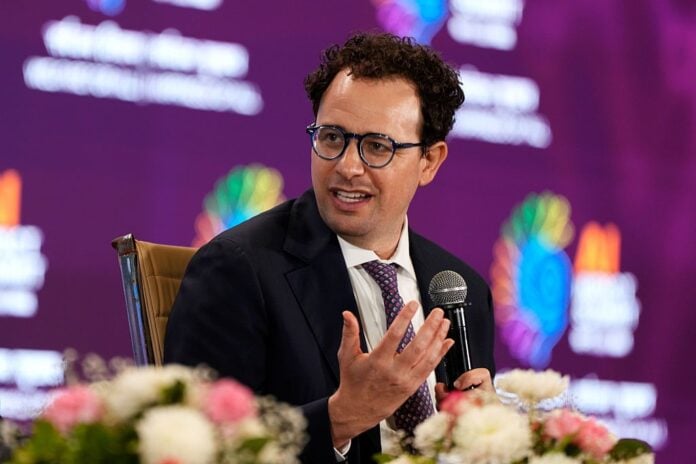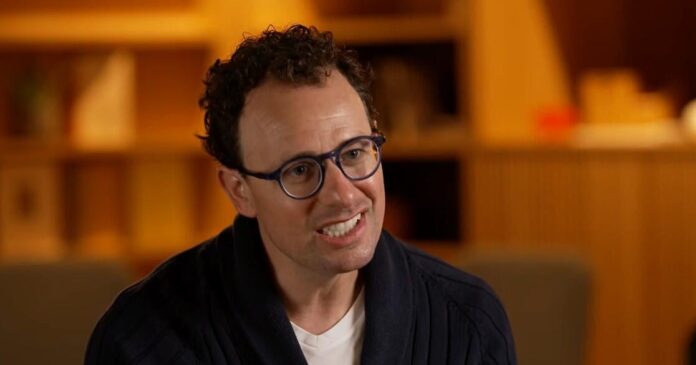

NEW YORK – Justin McLeod founded Hinge in 2012, spent more than a decade growing it into a legitimate competitor to Tinder, and then sold it to Match Group. In December 2025, he handed over the CEO role and left to build something he believes the app he created never quite became. The result is Overtone, an AI dating service that has raised $18 million from Match Group, FirstMark Capital, and Pace Capital, as reported by TechCrunch.
The pitch is a direct rejection of how most dating apps are built. “No opaque, algorithmic feeds trained on split-second impulses,” McLeod said. “And there’s no juggling likes, matches and chats across many people at once.” Instead, Overtone describes itself as “a voice- and audio-forward service, enabled by AI, that provides highly curated introductions” backed by relationship science. Users are matched through a process the company says is more deliberate than a recommendation algorithm feeding them an endless queue of profiles to evaluate.
The board includes Esther Perel, the relationship therapist and author whose work on attachment and modern intimacy has made her one of the more influential voices in how people think about connection in the digital era. Also on the board: Spencer Rascoff, the executive who has served as Match Group CEO, and Diana Chapman, a leadership consultant whose work focuses on trust and interpersonal dynamics. The configuration gives Overtone unusual credibility in the relationship science space – and also creates an obvious tension, given that Rascoff’s company is simultaneously one of Overtone’s investors and the owner of Hinge, Tinder, OkCupid, and Match.
The market problem McLeod is addressing is real, if well-documented. A 2024 Forbes Health survey found 78 percent of dating app users experience burnout, despite spending an average of 51 minutes a day on these platforms. That gap – between high engagement and low satisfaction – is the gap that apps have essentially optimized for. The more time users spend swiping, the more engagement data the platform collects, and the better the algorithm gets at keeping users swiping. Whether they actually date, or find anyone worth dating, is adjacent to the core business model.
Match Group’s presence in Overtone’s cap table is the most counterintuitive element of the raise. The company owns the majority of the western dating app market. Its platforms are specifically what Overtone’s model is designed to replace. Rascoff sitting on both sides – as a Match executive and an Overtone board member – could mean Match is hedging against a genuine shift in how people want to meet, or it could mean the investment is small enough that it doesn’t represent a strategic bet so much as an option on a direction that may not pan out. The structure is worth watching.
The concept of AI-curated introductions rather than algorithmic feeds is not unique to dating. Spotify’s AI music assistant, launched this year, is built on a similar premise: that the default recommendation engine optimizes for plays, not taste, and that users want something that actually understands their preferences rather than amplifying what already gets clicks. The same logic translates to dating, with higher stakes. If the curation is wrong, the failure isn’t a skipped song – it’s a bad night, a month of texting someone unsuitable, or another year with nothing to show for the time spent on the app.
What Overtone hasn’t specified is how it handles the problem that every “curated” dating service runs into: the more selective the matching, the lower the volume of introductions, and the longer users have to wait. Services that offer high-touch, expert-led matchmaking have existed for decades; they remain niche precisely because the economics don’t scale. Overtone’s use of AI to automate the curation process is what makes a VC-backed version of this conceivable, but the company hasn’t explained how the AI learns what it needs to know about users in order to make introductions that are actually worth making – or what happens when users in “select locations” can’t find enough matches to sustain the experience.
The VC math is also not obvious. $18 million is a meaningful Series A for a consumer app, but consumer apps at this stage typically need either rapid user acquisition or high early retention to justify the next raise. Overtone’s model is structurally designed to avoid the engagement metrics that normally tell investors whether a consumer app is working. Across the AI startup landscape, pre-product companies like the OpenAI-backed drug discovery startup seeking $2 billion at the idea stage are currently raising on research pedigree alone – but dating is a consumer category where user experience has to work at scale, not just look plausible in a pitch deck.
McLeod’s track record matters here. Hinge survived long enough to be acquired, which is more than most dating apps accomplish. But Hinge was also sold to Match Group on the same logic it now ostensibly rejects – that a more intentional matching experience would attract users willing to pay for a premium subscription. Once inside Match, Hinge’s product decisions were shaped by the same engagement metrics that define the parent company’s portfolio. Overtone is McLeod’s argument that being independent from that structure is the prerequisite for building something that works differently. Whether $18 million is enough runway to prove it is what the next few years will show.