
WASHINGTON – In February 2025, roughly 7,000 DJI Romo robot vacuums became a security problem nobody at DJI had planned for. A researcher discovered the devices were remotely accessible, not just their camera feeds but the detailed floor plans each unit builds as it navigates a home. For months, strangers could pull up the layout of someone’s kitchen, bedroom, or hallway. The Federal Communications Commission noticed.
On July 28, the FCC updated its Covered List to include “advanced robotic devices,” a category it defines as ground-traveling robots weighing at least 4.4 pounds with sensors and networking capable of locomotion and obstacle avoidance. Devices on the Covered List cannot obtain FCC equipment authorization, which means new units in this category can no longer be legally sold in the United States.
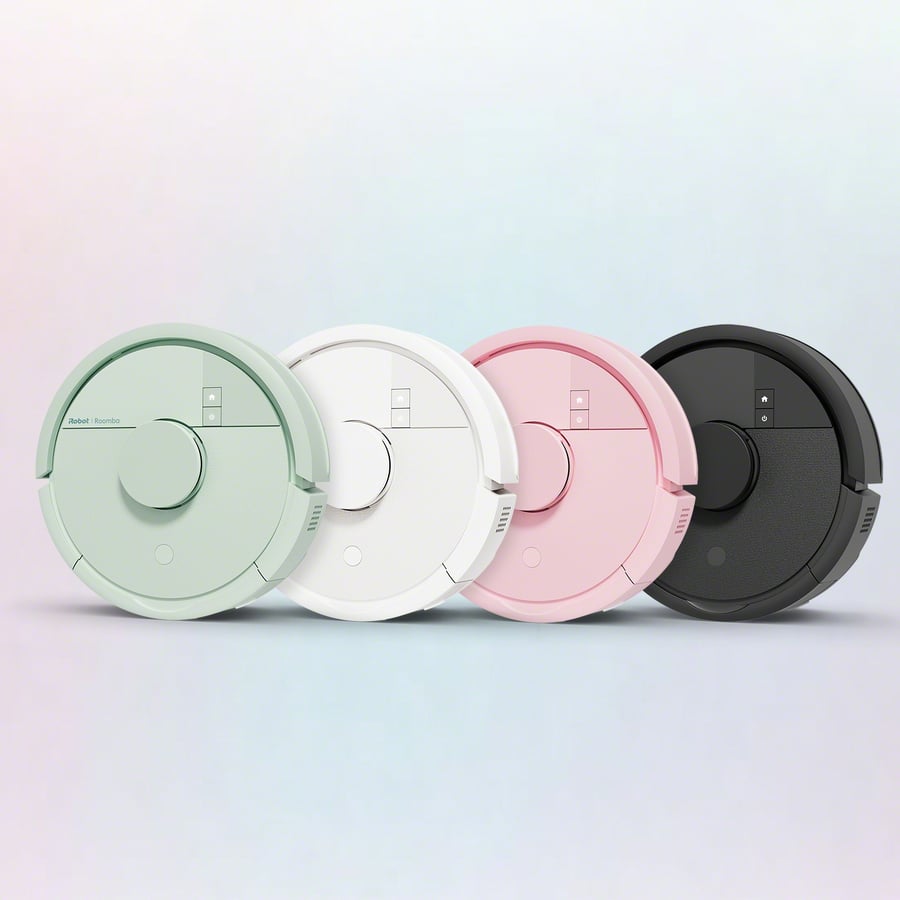
The rule covers nearly every robot vacuum on the market. Roomba, the Dyson 360 Vis Nav, the Shark Matrix, and most other models qualify for restriction, because none of them are manufactured in the United States.
That’s where things get complicated. The FCC’s action is framed as a national security response to the concern that foreign-manufactured devices with cameras and mapping capabilities could be used for surveillance. But the Covered List has always worked as a blunt instrument, and this expansion makes that clearer than ever. Dyson is a British company. iRobot, the maker of the Roomba, was once American but is no longer, and its recent ownership history is now central to the entire story.
iRobot filed for Chapter 11 bankruptcy in late 2025 after its $1.7 billion acquisition by Amazon collapsed under regulatory review. Picea Robotics, a Chinese firm, acquired iRobot through the restructuring process, finalizing the deal on January 23, 2026, by converting approximately $254 million in debt into 100 percent equity. A brand that spent decades building a reputation on American engineering is now a Chinese-owned company, which puts its products directly in the FCC’s sights.
This is the same FCC that has moved to restrict DJI drone sales and backed the Chinese vehicle ban legislation, a pattern of using equipment authorization rules to address concerns that used to go through other regulatory channels.
The ban applies to new devices only. Roombas already in American living rooms are exempt. Manufacturers can push software and firmware updates to existing devices until January 1, 2029, at which point the FCC has not specified what happens next. That three-year grace period is both a concession to consumers and an acknowledgment that the commission has not fully worked through what it means to eventually cut off security patches for tens of millions of active household devices.
Sean Hollister, writing for The Verge, identified what the FCC is not doing here. “FCC isn’t asking these companies any questions about security. Not one.” The Covered List is a blacklist, not a certification system. There is no technical audit, no pathway for a manufacturer to demonstrate that its device architecture is genuinely secure. If a robot vacuum meets the weight-and-sensor criteria and is not made in America, it is blocked.
The rule’s sweep beyond Chinese manufacturers is what has most surprised the technology industry. Dyson robot vacuums are designed in Britain and manufactured across Asia. The FCC’s definition covers them regardless. SharkNinja, which makes the Shark Matrix, is incorporated in the Cayman Islands with manufacturing in China. Neither Dyson nor SharkNinja has issued a public statement on the FCC’s action.
The question the commission has not answered is why the DJI Romo’s floor-mapping capability qualifies as a national security concern while a Ring doorbell’s live video feed or a Google Nest’s continuous audio recording does not. The logic of the Covered List targets the manufacturer’s national origin rather than a specific technical risk demonstrated for each device category. A robot vacuum designed by a British firm with no documented connection to any foreign intelligence service meets the same definition as one from a Chinese military-linked manufacturer.
Research on WiFi router tracking through household walls has shown that home surveillance risks extend across many networked device categories. The FCC’s decision to draw the line at robot vacuums, rather than address the broader landscape of networked home devices, makes the legal theory behind the Covered List harder to defend as a technical judgment. As Gizmodo noted, the ban focuses on manufacturing origin rather than demonstrated security vulnerabilities in each device category.
The practical effect on retail shelves will not be immediate. Existing inventory can be sold. The ban prevents new models from obtaining equipment authorization going forward, which means next year’s Roomba and next year’s Dyson 360 simply will not be available in American stores unless something changes. What might change is unclear: manufacturing a robot vacuum supply chain in the United States from scratch would require enormous capital investment, and the cost premium would land on consumers in a category where high-end models already retail for $700 to $1,200. Neither iRobot nor Picea Robotics has indicated whether it intends to pursue American manufacturing arrangements that might bring it back into compliance.
What the FCC has created is a national-security rule without a security review, a consumer technology ban that expires in 2029 on unclear terms, and a policy that catches British and American-branded products as readily as Chinese ones. Whether that represents a proportionate response to a genuine security failure or an overreaching application of a blunt policy instrument is a question the commission has declined to answer.
Seven thousand DJI Romo units still sit in American homes. Their floor plans are already logged. The FCC moved to prevent the next one. It has not yet explained, in any specific technical terms, what the next one actually looks like.