
TORONTO — The factory engineers in Monterrey and Penang who spent the last decade being told that intelligent robotics software was too expensive and too complex for mid-tier manufacturers got Google’s answer this week: the foundation layer, for nothing.
Intrinsic, the robotics software company that joined Google’s core operations in February, as TechCrunch reported at the time, released Intrinsic Core at ROSCon 2026 in Toronto. The complete foundational environment its engineers use in real industrial deployments is now published on GitHub under the Apache 2.0 licence, available immediately. The timing, landing at the world’s largest robotics developer conference, was not incidental.
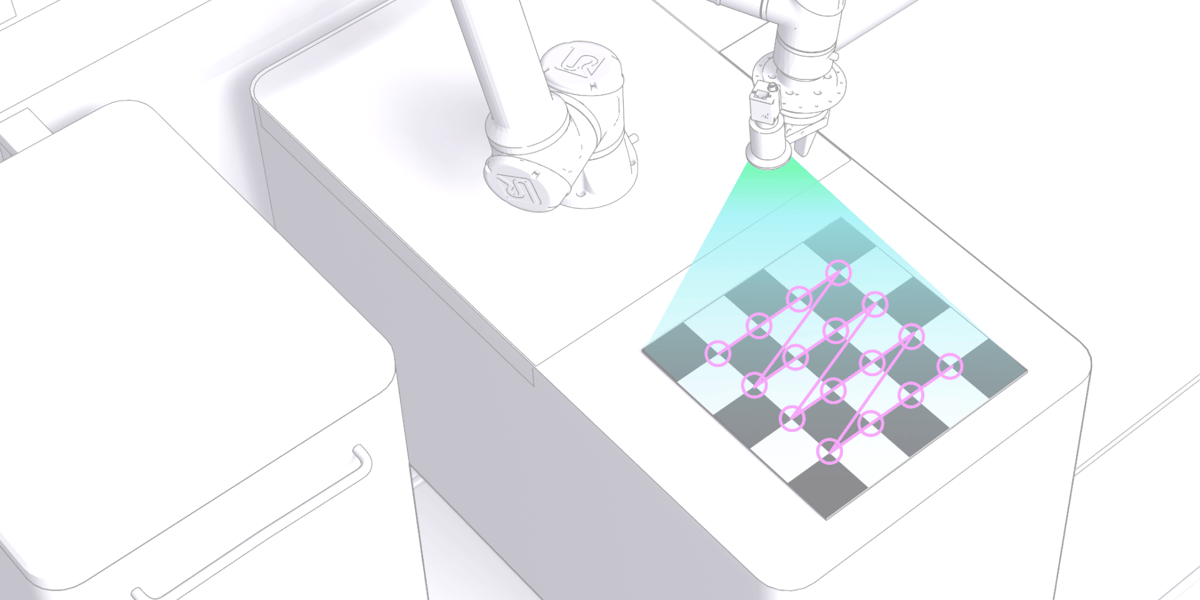
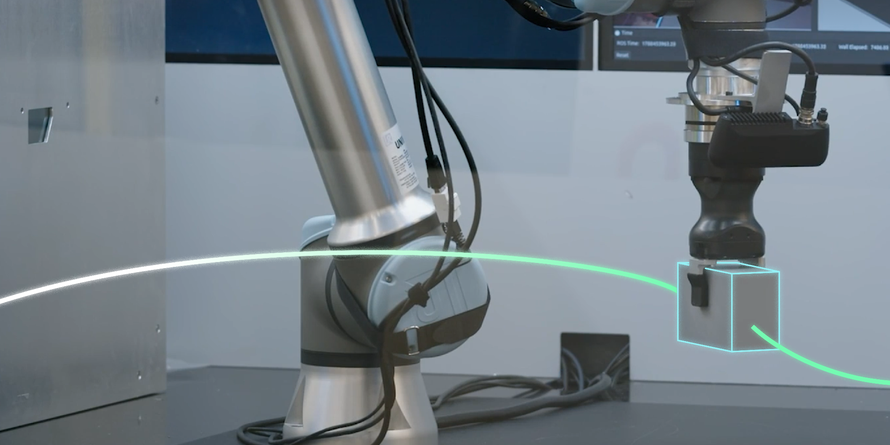
The package covers five layers that industrial robotics actually requires. Developers get a real-time control framework that adjusts a robot’s path mid-movement from live sensor feedback, without requiring a cloud connection. Pose estimation is built on NVIDIA‘s FoundationPose model, allowing robots to locate and grip parts without the rigid fixturing that drives up setup costs in most factories. Motion planning generates collision-free paths. Grasp planning adapts to how an object actually sits when it arrives at the robot arm. A simulation, calibration and ROS driver layer ties all of it to hardware from any manufacturer.
Every component is hardware-agnostic, runs on-premise, and the Apache 2.0 licence permits unrestricted commercial use. No copyleft, no royalties, nothing owed back to Google as a condition of building on it.
Alphabet has run this play before. It open-sourced Android in 2008 and gave handset manufacturers a mobile operating system at no cost. The strategy was not generosity; it was platform dominance. A free foundation layer became the global standard, and Google collected its returns through the services, advertising ecosystem and data flows running on top. It open-sourced TensorFlow in 2015 for the same reason: free framework, proprietary cloud compute under the usage it generated. Intrinsic Core follows exactly this template.
NVIDIA announced at CES 2026 that it intended to be “the Android of generalist robotics.” Its Isaac platform, which spans foundation models for physical environments, simulation, and Jetson edge hardware, is making the same bet from a different angle. The two largest technology companies competing in physical AI are now running near-identical platform strategies, and neither is offering a neutral commons. One controls the GPU supply chain and edge compute module. The other controls the data centre, cloud infrastructure, and now, through Intrinsic, the factory-floor software stack.
Geoffrey Biggs, chief technology officer of the Open Source Robotics Foundation, which maintains the underlying ROS framework, said the industry would see robots become significantly easier to produce. That is a measured claim from someone who tracks vendor promises closely, and its measured quality is worth noting.
The humanoid robots arriving in factories across 2026 and 2027 will be software-defined machines. The question of who controls that software is a question about who captures value from the automation wave. A free foundation layer that trains the ecosystem toward Google’s proprietary cloud services is not a neutral gift. The Apache 2.0 licence prevents anyone from being contractually locked in. Google’s data gravity, the flywheel of telemetry, usage patterns and toolchain dependency that accumulates around any dominant platform, does not require a contract.
Alibaba and China’s technology sector are watching this decision closely. China runs the world’s largest manufacturing base. Its AI hardware industry has been building alternatives to NVIDIA under export-control pressure. Whether Chinese manufacturers adopt Intrinsic Core and contribute to the Apache-licensed stack, or whether China backs a competing ROS alternative controlled outside of Alphabet’s influence, will determine whether industrial robotics software ends up with one global standard or a fragmented ecosystem split along geopolitical lines.
ROSCon 2026 did not answer that question. It only clarified who has the first-mover advantage.