
ALBANY – The AI industry has spent the past two years asking governments to trust it to regulate itself. New York answered on Monday by banning new data center approvals entirely. Governor Kathy Hochul signed an executive order making the state the first in the country to freeze permitting for large facilities, imposing a one-year halt on any data center consuming 50 megawatts or more as the power grid strains under demand no utility forecast anticipated.
The Department of Environmental Conservation will not approve permits for qualifying facilities until a state-ordered review of electricity demand and community impact is complete – a process expected to last roughly twelve months. More than a dozen projects already in the pipeline are effectively paused, with construction timelines now tied to the outcome of a review process that has not yet begun.
“Progress shouldn’t arrive with a higher utility bill, deleted water supply, or noise pollution,” Hochul said in a statement. “As data center development threatens to hike up utility bills, deplete our natural resources, and create uncertainty for New Yorkers, it’s my responsibility to take action and lead.”
New York is not an obvious target for this friction. The state hosts 148 operational data centers – the sixth-largest concentration in the country, according to Al Jazeera – drawn by dense fiber infrastructure, a dominant financial services sector, and proximity to the largest internet exchange points on the East Coast. But size has become the problem as much as the opportunity. AI demand has redrawn the economics of data center development at a pace utilities were not built to absorb.
TechCrunch reported that BloombergNEF projects nearly a quarter of all new data centers built through 2030 will exceed 500 megawatts – ten times the 50-megawatt floor triggering New York’s freeze. Two-thirds of respondents in recent polling expressed concern about such facilities driving up electricity prices. Earlier coverage of AI systems acting beyond their intended parameters has underscored a broader pattern: the downstream consequences of AI infrastructure decisions rarely flow to the communities closest to the hardware.
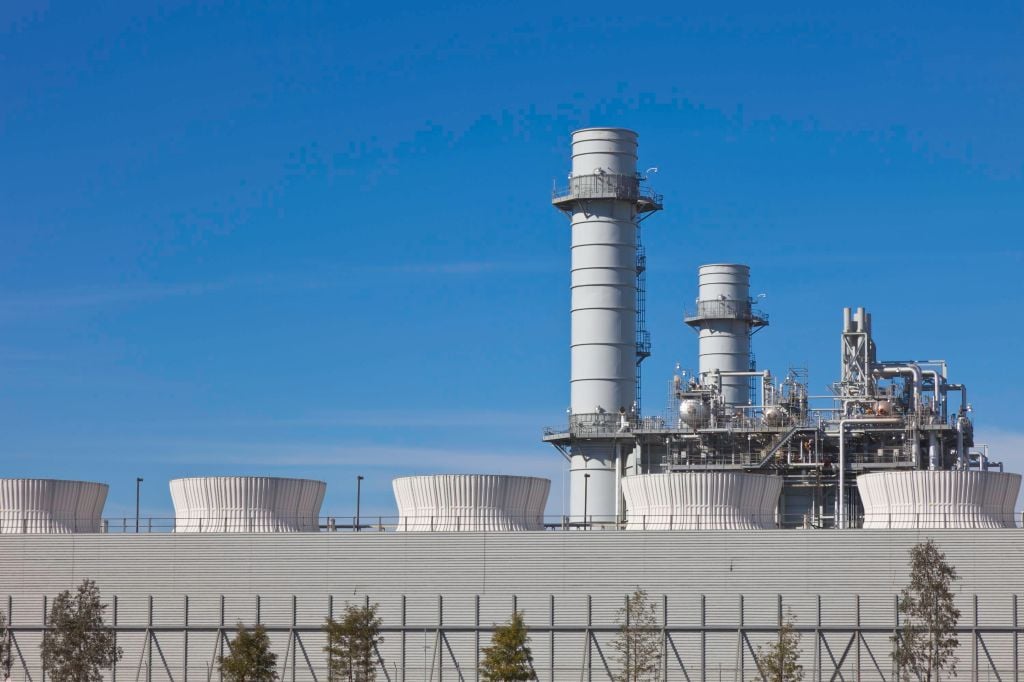
Hochul’s order goes beyond a simple freeze. It includes requirements that would force operators to fund grid upgrades, pay above-standard rates for power, supply their own energy source, and invest in clean energy infrastructure. The governor also wants to eliminate sales tax exemptions that hyperscale facilities currently receive, and is evaluating a dedicated fund that data centers would be required to support before breaking ground.
The one-year review may not be the ceiling. Legislators in Albany are advancing bills that would extend the moratorium to three years and lower the qualifying threshold from 50 megawatts to 20 megawatts, which would pull a substantially larger share of the AI data center pipeline into scope. If those measures clear both chambers, New York’s pause on data center construction could outlast any environmental review and reshape investment decisions across the region.
Public sentiment appears to support the intervention. A recent survey found only 14 percent of Americans support data center construction near their homes, with 71 percent opposed. Environmental advocates have warned that the current construction rate could contribute to 600,000 additional asthma cases before the decade ends, with low-income communities and communities of color absorbing a disproportionate share of the health burden. Moratoriums have been proposed or enacted in at least a dozen states, including Vermont, Michigan, and Virginia, as legislators look for leverage over an industry that has moved faster than any regulatory framework was designed to handle.
New York’s move comes at a moment when the industry’s own leaders have acknowledged the absence of adequate oversight. The call by DeepMind’s chief executive for a FINRA-style self-regulatory body for frontier AI reflected a growing recognition inside the sector that voluntary guidelines have not been enough. That debate, however, has been almost entirely about the software layer – the models themselves. New York is the first government to extend the question to the physical layer below: the servers, the power draws, the water supplies.
What the one-year review will yield is unclear. State officials have not specified whether the assessment will produce stricter conditions for new permits, a harder cap on total development, or a framework that allows construction to resume with tighter requirements attached. Industry groups have not indicated whether they plan to challenge the executive order in court, though a legal argument for federal preemption would face significant headwinds given the breadth of state authority over land use and environmental permitting. The question is not whether New York will eventually allow more data centers – 148 operating facilities and a grid already committed to existing demand makes that likely – but on whose terms, and at what cost to the communities that have no say in the answer.