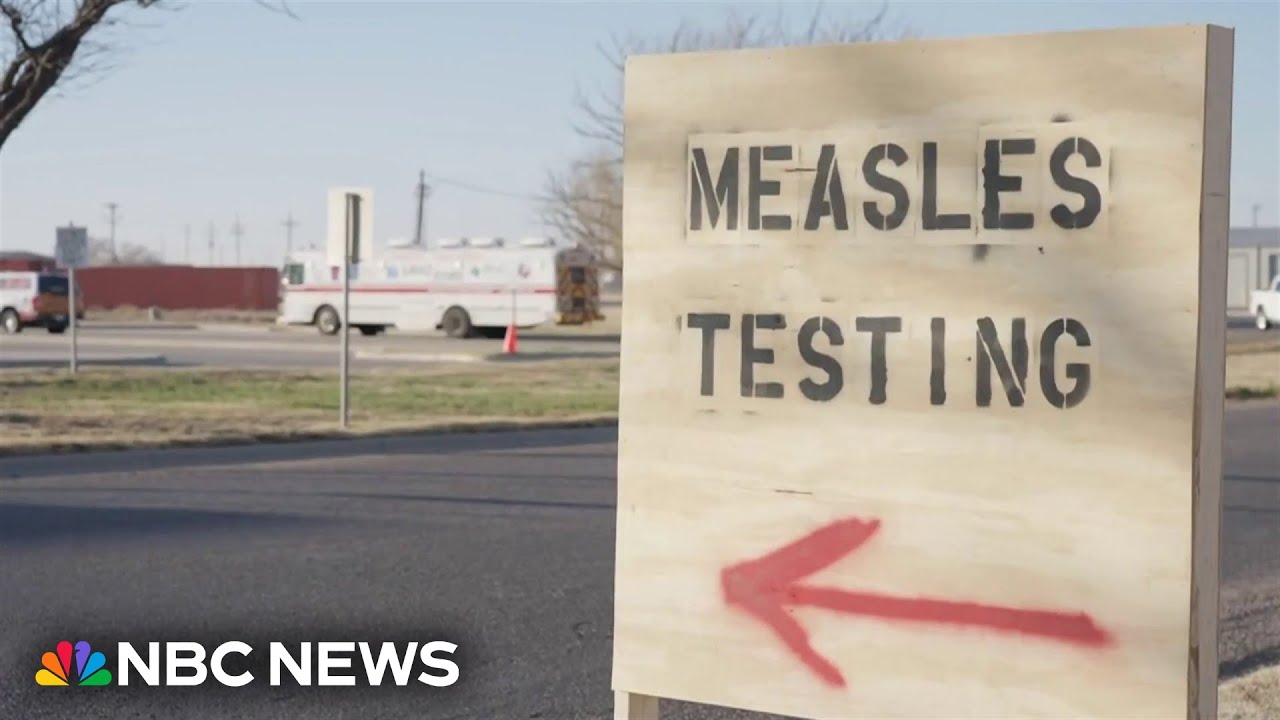

WASHINGTON – Daisy Hildebrand was eight years old, and she had no underlying health conditions. She died on April 3, 2025, in Lubbock, Texas, from measles pulmonary failure, the second unvaccinated child killed in a single outbreak that had by then infected hundreds of people across the state. Her father, Peter Hildebrand, told reporters afterward that he had no regrets about not vaccinating her, and that if he has other children, they will not receive the MMR shot. Now, as families across the United States board planes for the peak summer travel season, federal health officials are warning that the outbreak that killed Daisy is not over. The numbers have kept climbing.
As of June 18, the Centers for Disease Control and Prevention had confirmed 2,104 measles cases in 41 U.S. jurisdictions in 2026, the highest annual total since the disease was declared eliminated from American soil 26 years ago. Thirty active outbreaks remain open across the country. The CDC has warned explicitly that with summer travel now underway, the case count will rise further.
The United States is not experiencing this outbreak in isolation. The Pan American Health Organization’s fifth measles situation report for 2026, released on June 18, documented 22,324 confirmed cases across 17 countries and territories in the Americas between January 1 and June 13, a 207 percent increase compared to the same period in 2025. Thirty-eight people have died of measles across the region this year. The virus is present in Canada, Mexico, Brazil, and throughout the Caribbean, with international travelers moving between active transmission zones in every direction.
That mobility is the specific risk the CDC flagged in the agency’s formal Health Alert Network notice to clinicians this spring. “With continued measles transmission in areas across North America and expected increases in international and domestic travel and large events during spring and summer, additional measles cases are anticipated in the coming months,” the agency said. The notice asked clinicians to confirm vaccination status in all patients before travel, particularly children who may not yet have received both MMR doses.
The demographics of the 2,104 confirmed 2026 cases reveal the outbreak’s deepest problem. Ninety-two percent of infections involved people who were unvaccinated or whose vaccination status was unknown. Twenty-one percent of cases are in children under five, a group entirely dependent on the adults around them for protection, since the MMR series is not complete until age six. Seventy-two percent are in children and young adults up to 19. Ninety-eight people have been hospitalized. Three people have died since the combined 2025–2026 outbreak began: two unvaccinated children in Texas and one adult in New Mexico, marking the first measles deaths in the United States since 2015.
The November stakes are specific and measurable. The Pan American Health Organization is scheduled to formally assess U.S. measles elimination status in November 2026. That designation, held since 2000 when the United States became the first country in the Americas certified measles-free, requires that no endemic domestic transmission has occurred in the preceding 12 consecutive months. Epidemiologists at the Center for Infectious Disease Research and Policy at the University of Minnesota have said publicly that the current outbreak makes that bar impossible to meet. The PAHO review was delayed from April to November at the request of U.S. officials, who cited a need for more comprehensive genomic sequencing data.

The outbreak’s distribution tells the story of how measles exploits vaccination gaps. South Carolina recorded 997 confirmed cases through the spring, the largest single-state outbreak since 2000, before health officials declared it over in late April after 42 consecutive days without a new infection. Utah has surpassed 400 confirmed cases, with 31 hospitalizations, concentrated in communities with historically lower MMR uptake. Texas, Florida, New York, and California carry active case clusters, and 14 other jurisdictions in the Mountain West, the Southeast, and the mid-Atlantic have added their own tallies.
The outbreak traces its roots to an underimmunized Mennonite community in West Texas, where an unvaccinated child returning from Mexico introduced the virus to a population with MMR rates well below the 95 percent threshold needed for herd immunity. Gaines County, Texas alone confirmed 315 cases before the cluster slowed. The choice not to vaccinate, rooted in religious tradition, community distrust, or the influence of broader anti-vaccination movements, is not unique to any single group. South Carolina’s outbreak burned through similar unprotected populations over months before running out of susceptible people to infect. The country is paying now for years of declining vaccine uptake.
The public health infrastructure tracking that decline has itself been reduced. The CDC has shed nearly a quarter of its workforce this year, a consequence of federal personnel reductions that multiple health organizations and epidemiologists have said compromise the response capacity needed to contain a sustained outbreak of this scale.
The CDC’s guidance is direct: two doses of the MMR vaccine provide 97 percent protection against measles, a disease so contagious that one infected person can spread it to nine out of ten unprotected people in the same room. The agency recommends the first dose at 12 to 15 months and the second between 4 and 6 years old. Adults who received only one childhood dose, or whose vaccination record is uncertain, are advised to receive a second before any international travel. The American Academy of Pediatrics has reiterated that recommendation for the summer season specifically.
The CDC updates its national measles case count every week. The number that will appear in next week’s update will be higher than 2,104. What cannot be determined yet, and what public health systems will spend the next several months trying to track, is how high the summer travel season pushes the total, and whether the trajectory that emerges between now and November is one the Pan American Health Organization’s assessors can characterize as anything other than endemic.
Related Posts