
FRANKFURT — Annual inflation in the euro area fell to 2.8 percent in June, according to a flash estimate from Eurostat published Tuesday, dropping sharply from 3.2 percent in May and beating analyst expectations in a reading that gives the European Central Bank its first meaningful piece of good news since it raised interest rates three weeks ago. The driver of the decline was the same factor that prompted the June hike: energy.
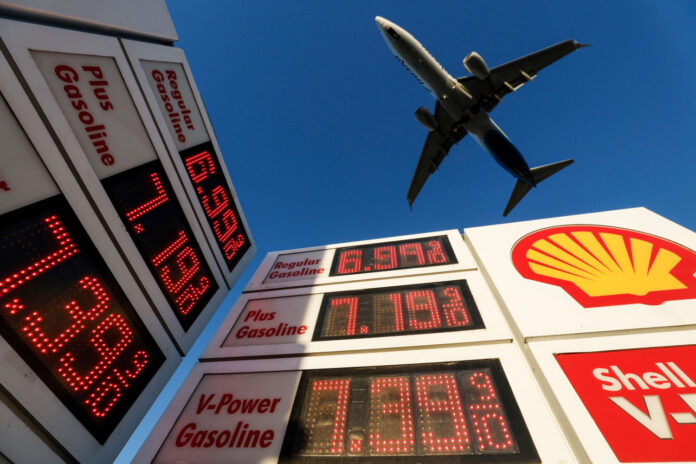
Energy price inflation in the euro zone eased to 8.7 percent year-on-year in June from 10.8 percent in May, according to the Eurostat flash release. That deceleration reflects the retreat in global oil prices since the Iran conflict’s most acute phase and the partial normalization of Strait of Hormuz shipping disruptions that had pushed petroleum costs sharply higher earlier this year. According to Bloomberg, the June reading came in below consensus forecasts, continuing a pattern in which the energy shock the ECB confronted in its June meeting has begun to reverse faster than the bank’s own projections anticipated.
France delivered the sharpest individual signal. Preliminary French data released Monday showed annual consumer prices cooling to 1.8 percent in June from 2.4 percent in May, well below the 2.1 percent consensus. French energy prices rose 11.2 percent year-on-year in June, a significant deceleration from 16.6 percent in May. France carries enough weight in the eurozone HICP calculation that its preliminary data is closely watched as a leading indicator for the bloc — and Tuesday’s flash estimate confirmed that the French signal translated broadly across the currency area.
The services component tells a more complicated story. Services inflation in the euro area eased to 3.2 percent in June from 3.5 percent in May, encouraging in direction but still well above the pace consistent with the ECB’s 2 percent target and still the dominant source of underlying price pressure. Core inflation, which excludes energy, food, alcohol, and tobacco, printed at 2.4 percent. The ECB has consistently said it is watching services inflation for evidence that wage growth is passing through to consumer prices. At 3.2 percent, that channel has not closed. The June headline improvement is real; the underlying inflation problem is not resolved.
The ECB’s predicament is visible in the gap between the headline and the core. As the bank’s June decision illustrated, policymakers raised the deposit rate by 25 basis points on June 11 precisely because energy-driven inflation had pushed the headline figure back above levels the ECB considered tolerable. The new data suggests the energy impulse has partly reversed before the June hike had time to work through the economy. Governing Council members including Sleijpen, Lane, Nagel, and Wunsch acknowledged in remarks this week that the oil retreat will have a positive impact on inflation. None gave a timeline for the next move. The collective signal points toward a pause in July.
Markets have repriced accordingly. Traders are now pricing a roughly 32 percent probability of a rate hike at the ECB’s July meeting, down from higher levels before Tuesday’s data. The September meeting carries a 64 percent probability of a hike. That distribution reflects the central scenario in which the ECB holds in July and reassesses whether services inflation and wage dynamics require a further tightening move in the autumn, or whether the energy-driven easing has provided sufficient disinflationary momentum that September can also be a pause. The September decision will depend heavily on data that does not yet exist.
The ECB’s own June staff projections forecast headline inflation averaging 3.0 percent in 2026, 2.3 percent in 2027, and reaching the 2.0 percent target in 2028. Tuesday’s June reading at 2.8 percent puts the year-to-date trajectory below that 2026 projection, which will give the more cautious members of the Governing Council material for the July discussion. The argument for holding is that energy has done disinflationary work the bank did not need to do itself. The argument for keeping the September option open is that services at 3.2 percent and core at 2.4 percent still describe an economy where underlying price pressures have not returned to target.
Full detailed June inflation data for the euro area is scheduled for release by Eurostat on July 17. The flash estimate can be revised, and revisions occasionally shift the picture meaningfully. But the scale of the June downside surprise relative to consensus, and the consistency of the signal across the major eurozone economies, makes a significant upward revision unlikely. What the July 17 release will add is the complete country breakdown and the granular component data that informs the Governing Council’s modeling. By then, the ECB’s July 24 meeting will be two weeks away. The bank will know, with considerably more precision, whether June was a turning point or a favorable data point in a story that has not yet turned.