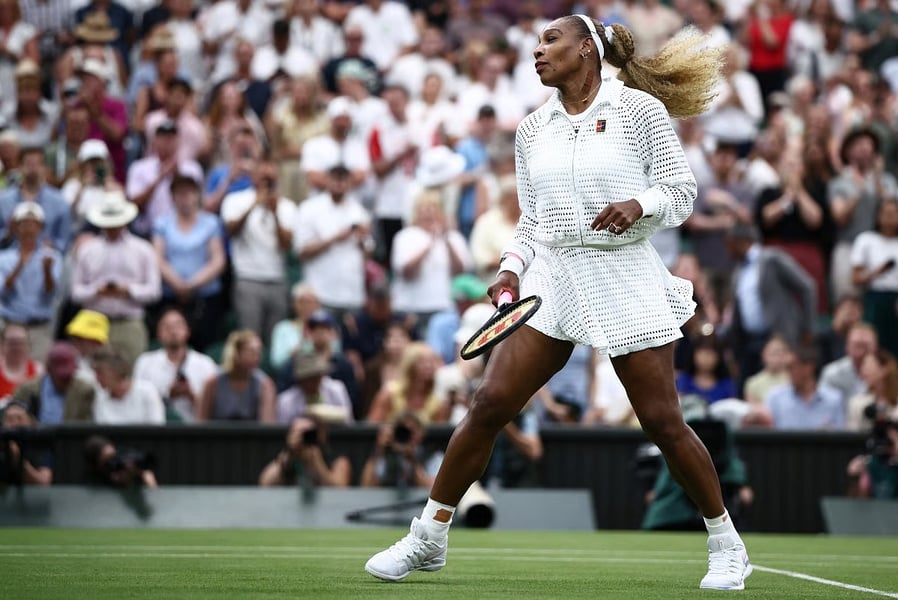

LONDON – At 5-6 in the second-set tiebreak, match point down, Centre Court packed to its last seat, Serena Williams did what Centre Court has always wanted her to do. She hit a 122 miles-per-hour serve down the T, moved forward, and punched a forehand approach winner that Joint could not reach. The stadium stood. It erupted. It sounded, for a moment, as if she had won Wimbledon for an eighth time rather than simply staved off elimination for a few more games.
She hadn’t won. She hadn’t even won the set yet. But that single point – saved against a 20-year-old ranked 87th in the world, on the most famous tennis court in existence, in her first Grand Slam singles match in nearly four years – was what Tuesday at Wimbledon was always going to be about. Maya Joint won the match 6-3, 6-7(6), 6-3. Serena Williams gave Centre Court everything it came to see.
Williams is 44 years old. She stepped away from singles tennis after the 2022 US Open, where she lost in three sets to Ajla Tomljanovic in a farewell she never called a retirement – she said she had “evolved away” from the game. She announced a comeback on June 1, made her first competitive return in doubles at Queen’s Club, and was awarded the eighth and final wildcard into the Wimbledon women’s singles draw on June 21. She arrived with no WTA ranking, a four-year absence, and, as she put it before the tournament, nothing left to prove. “I’ve won more than most people have in their whole lives,” she said.
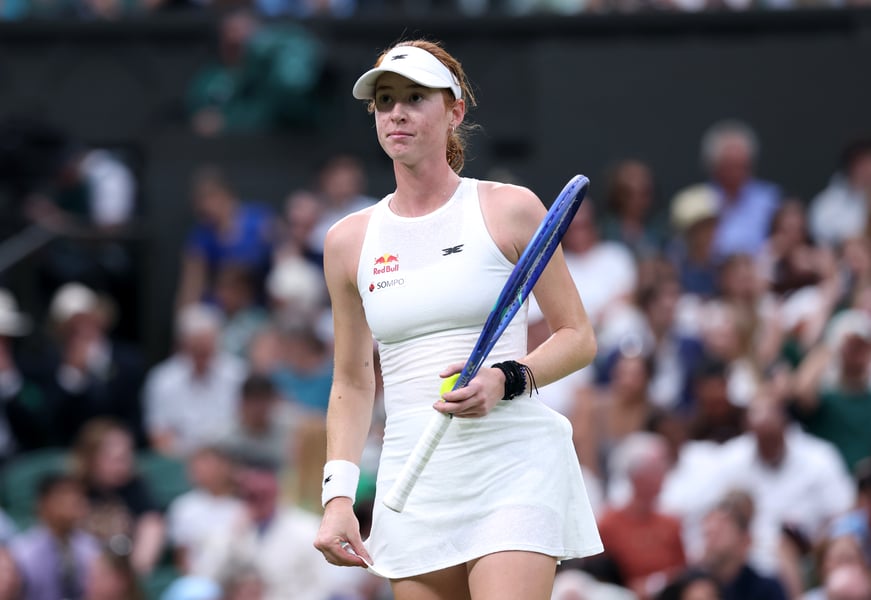
The reason she came back is her daughters. Olympia, who is eight, and Adira, who is two. “It’s really about my kids getting to see me play,” Williams said. That is a different kind of ambition than the one that produced 23 Grand Slam singles titles – more personal, quieter, and entirely harder to argue with.
Joint was born in Grosse Pointe, Michigan, switched to represent Australia at 17, and arrived at Wimbledon with a career-high ranking of No. 28 reached in February, currently sitting at No. 87 after a run of losses. She told the WTA before the match that she had always dreamed of playing Serena Williams. On Tuesday she played her, on Centre Court, in front of a crowd that was there for the other person, and she won in two hours and 22 minutes.
The first set was Joint’s from the third game. Williams held her opening service games comfortably but couldn’t convert break point opportunities when they came, and a double fault in her own service game at 5-3 handed Joint the break she needed. The second set was the whole match compressed into a tiebreak. Williams trailed 5-6, saved the match point, converted her own set point when Joint sent a forehand long, and Centre Court responded with the kind of noise that had been building since the roars started before Williams even walked onto court.
Joint won the third set 6-3 anyway. She broke in the fourth game and never relinquished it. “I don’t know what to say right now,” she said on court. “I don’t know what just happened to be honest.” The crowd, which had given her more support than she expected, applauded her too. Joint noted afterward that playing in a full stadium at that level was something she had rarely experienced. The occasion affected both players. One of them handled it better in the end.
Williams left the venue without speaking to reporters. Her agent confirmed she had tweaked her right knee at the end of the first set. ESPN reported she was excused from the post-match press conference by Wimbledon and WTA medical staff. She left the grounds unaided. Whether the injury affects her doubles entry alongside Venus Williams, still scheduled at the tournament, was not clear Tuesday night.
There is a broader argument about what happened on Centre Court beyond the score. The game Williams dominated for two decades has changed around her. Modern players hit groundstrokes harder than anyone did at the peak of her powers, return first serves that don’t land in the perfect spot with pace and angle, and play a baseline game built for speed that is structurally different from the one Williams rewrote the terms of. Joint is 24 years younger. She won the second set tiebreak only after Williams saved a match point and forced her hand. None of that is an asterisk on the result – it is what the result looked like.
Williams, afterward, was direct and undramatic. “It was really great to be back at Wimbledon. I never expected to be here. The atmosphere was amazing. Walking out was amazing. I definitely relished it and missed it and enjoyed the moment more than anything.”
She is a seven-time Wimbledon singles champion. She came back to let her daughters watch her play. She saved a match point on Centre Court at 44. Maya Joint won the match. Most of those things can be true at the same time, and on Tuesday they were.