
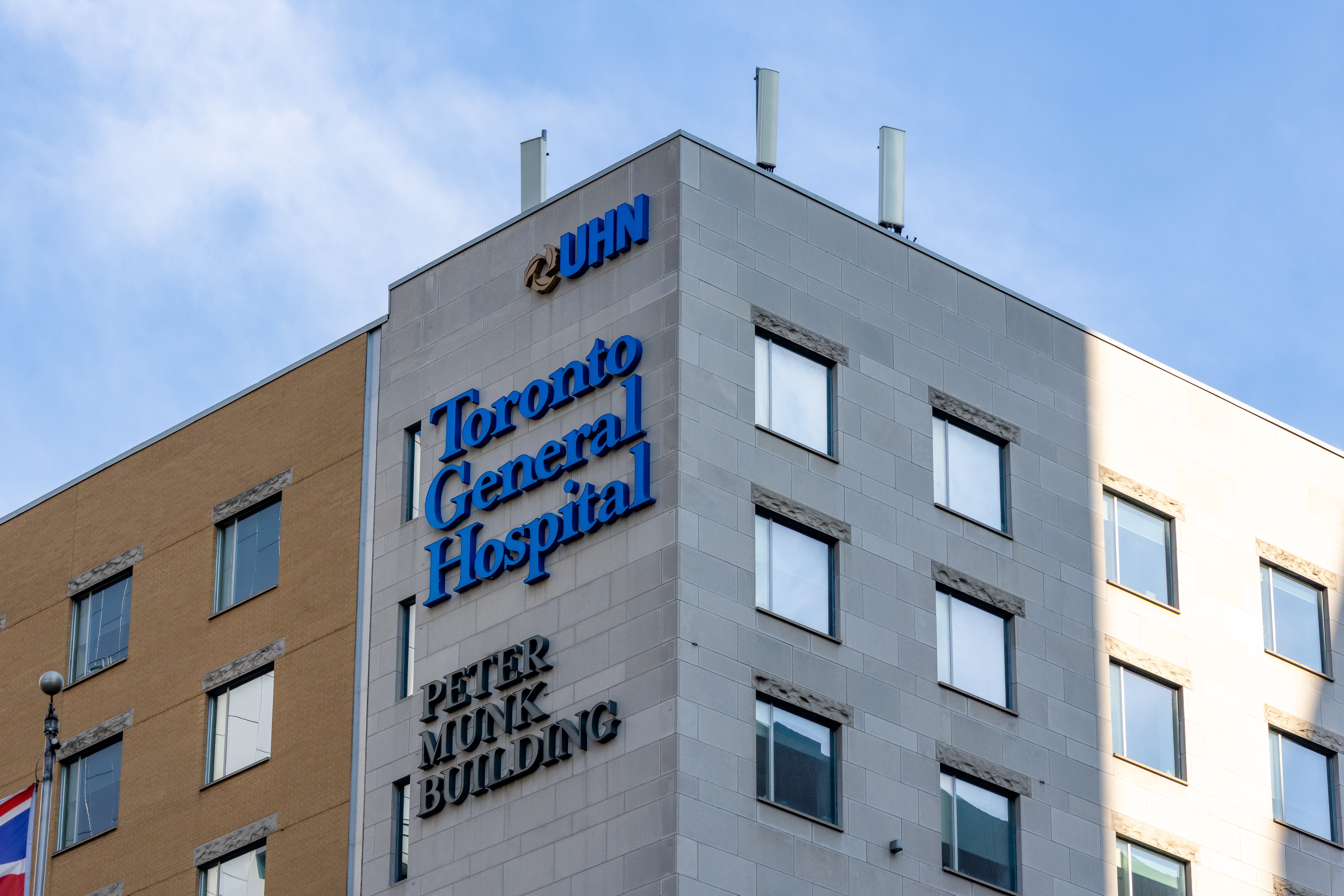
TORONTO — Last week, a colorectal surgeon at Toronto’s University Health Network diagnosed cancer in three patients who, by every assumption that has shaped screening policy for a generation, were too young to have it. Two were in their thirties. One had not yet turned 30.
“Last week I saw two patients in their 30s diagnosed, and one patient in their late 20s,” said Dr. Sami Chadi, the surgeon who treated them. As of July 1, the province where he practices stopped waiting for guideline committees to catch up with what he and his colleagues were already seeing in clinic. Ontario lowered its routine colorectal cancer screening age from 50 to 45, becoming the second Canadian province to do so after Prince Edward Island moved first in March. Ontarians who just turned 45 can now request an at-home fecal immunochemical test, known as a FIT, which checks a stool sample for traces of blood; an abnormal result triggers a referral for colonoscopy.
Chadi called the change “a really big step forward,” framing it as a policy response to a clinical pattern that has been building for years rather than months. “We’re seeing a large increase in the risk of colorectal cancer in younger patients, especially over the past 10 to 20 years,” he said. That framing matters because it undercuts any suggestion this is a reactive, headline-driven shift. Surgeons like Chadi have been watching the age curve move for two decades. The policy is only now catching up to the clinic.
The scale of what the change will actually generate is where the celebration gets complicated. Barry Stein, president and chief executive of Colorectal Cancer Canada, estimates the newly eligible cohort could produce roughly 50,000 additional colonoscopies once positive FIT results start working their way through the system. Ontario’s screening colonoscopy wait times currently run three to nine months depending on region, a gap that predates this expansion and that the new demand will not shrink on its own. Ontario Health has said most people with an abnormal FIT result still receive a follow-up colonoscopy within the recommended eight-week window, and points to that figure as evidence the system is ready. Patients and advocates who have pushed for this change are less convinced the math will hold once tens of thousands of newly eligible 45-to-49-year-olds actually start testing.
Ontario is not moving in isolation, and it is not moving especially fast by global standards. The United States lowered its own recommended screening age to 45 back in 2021, responding to the same early-onset trend Chadi describes. A Swiss study tracking nearly 100,000 colorectal cancer cases across four decades, published earlier this year, found that while screening has driven incidence down substantially in adults 50 to 74, cases in people under 50 have kept climbing, with nearly 28 percent of those younger patients already presenting with metastatic disease at diagnosis. Switzerland and most of Europe have not lowered their own screening ages in response. Ontario, in that context, is not an outlier moving too quickly. It is one of the few jurisdictions moving at all.
The policy also sits inside a broader rethinking of what age-based screening rules are actually for. A parallel debate has been unfolding at the other end of the age spectrum, where clinicians increasingly argue that colonoscopy should stop being treated as a fixed-age ritual and start being matched to an individual’s actual risk profile, whether that means starting earlier for a 28-year-old with unexplained bleeding or stopping earlier for a frail 80-year-old with little to gain from the procedure. Ontario’s July 1 change is the same philosophy applied at the entry point rather than the exit point of the screening pipeline.
What the policy cannot yet answer is the question Stein’s estimate and the province’s wait-time data are already circling. Fifty thousand additional colonoscopies is not an abstraction; it is fifty thousand appointment slots that have to come from somewhere inside a system already running three to nine months behind in parts of the province. Ontario Health’s eight-week figure describes what happens once someone tests positive and gets referred. It does not yet describe what happens to overall wait times once the volume of people testing in the first place nearly doubles by folding in every Ontarian aged 45 to 49. That is the number nobody can report yet, because the first wave of newly eligible screenees has not finished working its way through the system.
Related Posts