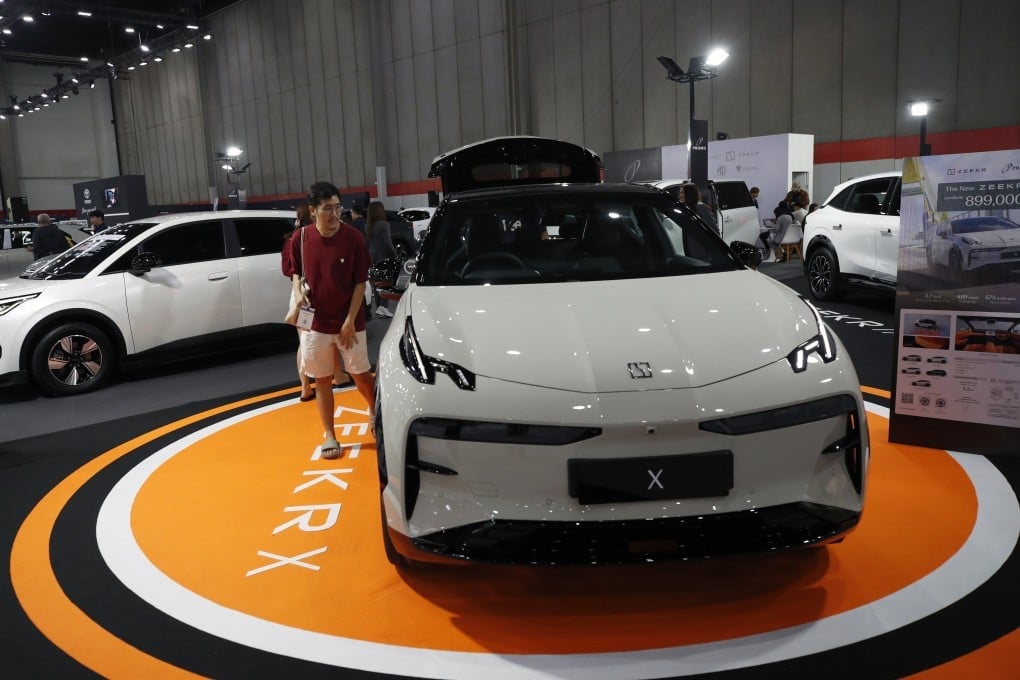

BEIJING – The price of Leapmotor’s midsize electric vehicles is already roughly half what Tesla charges for a comparable model in China. The gap in technology, which once made that premium defensible, is closing faster than the price chart. In June, Leapmotor delivered 93,376 electric vehicles – its second consecutive monthly sales record – a 94.5 percent increase from the same month a year earlier. Zeekr, the Geely Group’s premium electric brand, followed the same pattern: 35,169 deliveries, up 110.6 percent year on year, also its second consecutive monthly record.
The back-to-back records are not coincidental. Both brands entered June carrying fresh model launches and software updates to their autonomous-driving and battery-management systems, and both have spent the better part of the past year converting technology investments into showroom traffic. Eric Han, a senior manager at Shanghai-based consultancy Suolei, said Leapmotor and Zeekr – alongside Xpeng, NIO and Xiaomi – had crossed a threshold that matters more than any single sales number. Their “technological advancement and fancy new models effectively spurred a sales jump,” Han told the South China Morning Post. They represent just a small portion of China’s EV industry, he noted – but they are the part growing at nearly triple the pace of the broader market.
The technology argument is what matters most in this competition. Chinese buyers in the 200,000-yuan-and-below segment, which Leapmotor targets specifically, are no longer trading down when they choose a domestic brand over a Tesla. The latest generation of Chinese self-driving software – now standard across the Leapmotor, Zeekr, NIO and Xpeng ranges – matches or outperforms Tesla’s current China-market rollout on highway-assist features and urban navigation. Battery range on comparable models has converged. The remaining differentiation – brand prestige, the Supercharger network, software update cadence – carries diminishing weight with buyers who can save 100,000 yuan on the purchase price.
Tesla’s Shanghai Gigafactory, the company’s most productive plant globally, produced 47,281 China deliveries in May, a 22.5 percent year-on-year rise that reads better than the competitive context behind it. Tesla assembles only the Model 3 and Model Y in Shanghai, both priced above 200,000 yuan, a segment that Leapmotor and Zeekr are approaching from below with vehicles that carry comparable specifications and domestic smart-car features the Shanghai-made Teslas currently lack in their China software stack. June figures from Tesla’s Shanghai operation had not been released as of publication.
The contrast in growth rates tells the structural story. Leapmotor’s 94.5 percent gain and Zeekr’s 110.6 percent gain tower over the pace of the market as a whole. China’s top 10 bestseller list went entirely electric for the first time in May, a milestone the market reached three weeks before most forecasts expected it. The brands consolidating share in that environment are not BYD alone.
Leapmotor’s path to this point has been unusual. The brand is backed by Stellantis, which took a 21 percent stake in 2023 and gave the Chinese carmaker access to its European distribution network in exchange for platform-licensing rights. That relationship provides a manufacturing and sales runway outside China that most of its peers lack – Leapmotor can absorb domestic margin pressure in part because its European expansion is growing in parallel. Zeekr’s position is different: it operates as Geely Group’s premium electric sub-brand, with access to Geely’s scale in battery procurement and chassis engineering, targeting the segment immediately below the Tesla Model 3 in China’s price ladder.
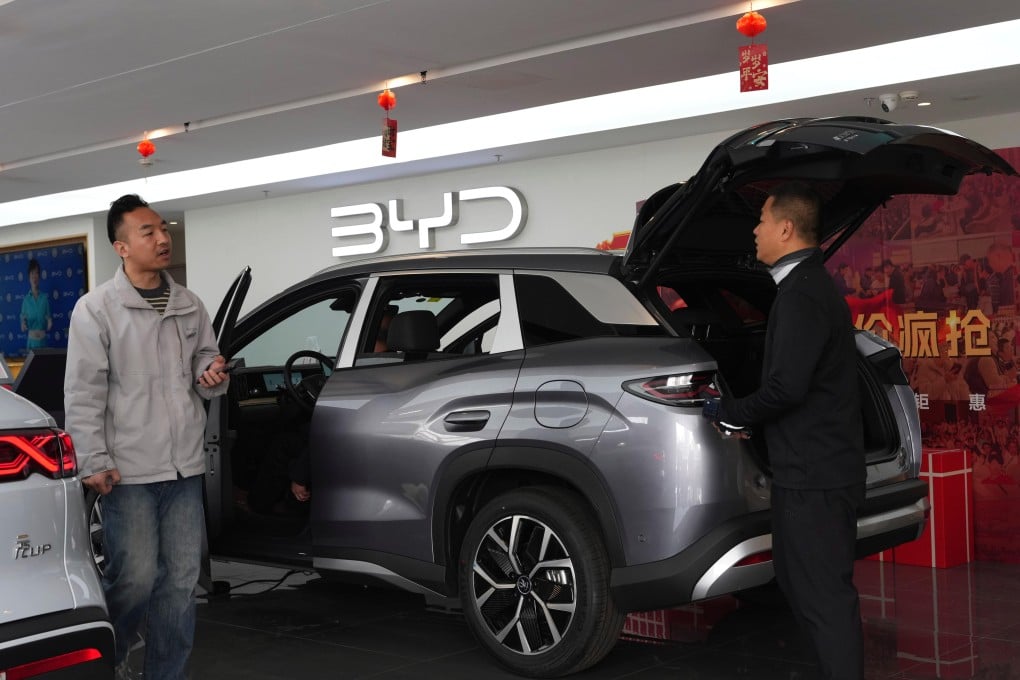
The winners Eric Han identified – Leapmotor, Zeekr, Xpeng, NIO, Xiaomi – are a distinct cohort from the market’s dominant player. BYD controls roughly 22 percent of the total Chinese NEV retail market and occupies a separate competitive category. The June records from Leapmotor and Zeekr belong to a second tier that is accelerating independently of BYD’s trajectory: technology-led brands with distinctive software differentiation, targeting buyers who want domestic capability at a price point well below premium foreign alternatives.
BYD’s own June figures had not been released at the time of publication. The full monthly sales data across China’s EV market – typically released in the first week of the following month – will determine whether the record months from Leapmotor and Zeekr reflect broader June momentum or a brand-specific phenomenon driven by new model launches. The same dynamic that gave BYD 15 percent of Germany’s plug-in hybrid market in May – Chinese technology at a structural price advantage – is now producing consecutive record months for domestic challengers inside China’s own market.
The question June’s data cannot yet answer is whether Leapmotor and Zeekr can sustain these growth rates through the second half of the year as competitors respond. NIO’s battery-swap infrastructure, Xiaomi’s smartphone ecosystem integration and Xpeng’s robotaxi ambitions give each brand a different technological leverage point. The Chinese EV race below BYD is not converging on a single winner. The June records suggest the selection process is already underway, and the brands with the deepest technology investments appear to be winning it.