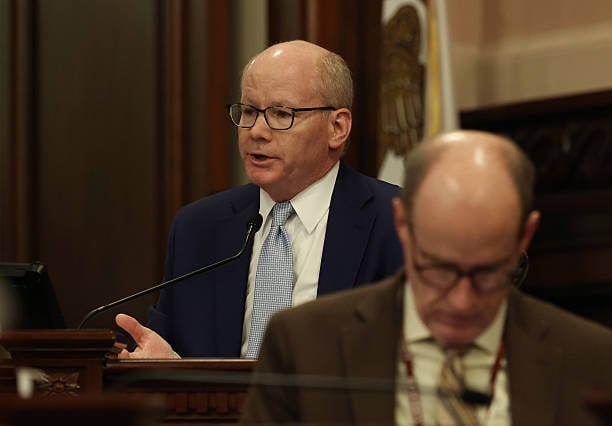

SPRINGFIELD, Ill. — Don Harmon has spent years telling colleagues in the Illinois Senate that expanding online gambling is a bad idea. In February, the Illinois Gaming Board agreed — at least about one company. It told ARB Interactive, the parent of Modo Casino, to stop operating in the state immediately, saying Modo’s games gave users the opportunity to win cash and prizes in violation of Illinois law. What Harmon did not say publicly, until the Chicago Sun-Times asked, was that ARB Interactive had written his campaign a $50,000 check six weeks before that cease-and-desist order was issued.
The payment, dated January 6, 2026, came as ARB was deepening its political presence across multiple states despite facing intensifying scrutiny of the online gambling industry from regulators. Arizona’s gaming department had already characterized the company’s conduct as a “felony criminal enterprise.” A federal lawsuit in California described predatory conduct targeting financially vulnerable users. None of that was disclosed to Illinois lawmakers weighing new gambling legislation.
Harmon’s spokesman told the Sun-Times after the paper’s inquiry that the Senate President had long been “among the most skeptical voices in Springfield as to the wisdom of putting a slot machine in every Illinoisan’s pocket.” The spokesman said Harmon would donate the $50,000 to charity. No recipient or timeline was named.
What that statement did not address was the gap between when ARB wrote the check and when the gaming board moved against the company. Modo continued operating after the February cease-and-desist. It was still operating when the Sun-Times published its report on July 2. The Illinois Gaming Board has not indicated whether enforcement action beyond the initial order is planned.
ARB Interactive’s political spending in Illinois extended beyond Harmon. State Rep. Bob Rita, a Blue Island Democrat who chairs the House Gaming Committee — the legislative body with direct jurisdiction over gambling legislation — received a $2,500 contribution from an ARB employee on March 10, 2026. The company also retained Dan Shomon’s lobbying firm in 2026. Shomon is a longtime Springfield operative whose client list has spanned Democratic administrations and major regulated industries.
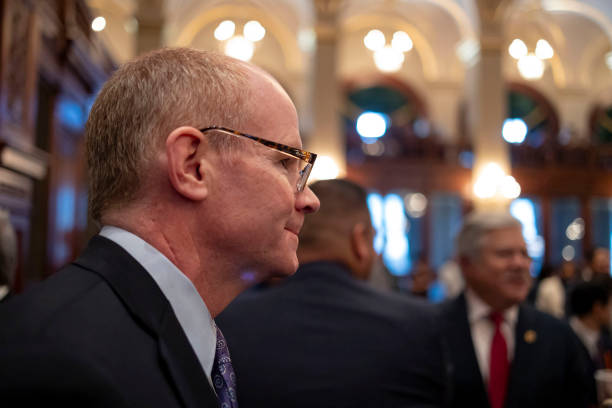
The donations arrived at a moment when Illinois’s online gambling landscape was already contested. The Sports Betting Alliance, which represents major operators including DraftKings and FanDuel, contributed $250,000 to Harmon’s political fund in March 2026 — a sum that dwarfs the ARB payment but has drawn less scrutiny because the Sports Betting Alliance represents licensed, legal operators. Together, the two streams of money positioned Harmon as a significant recipient of gambling-industry contributions even as he maintained a public posture of restraint.
ARB Interactive is not a licensed Illinois operator. The Gaming Board’s February letter stated that Modo’s offerings — games in which users could win cash, gift cards, and other prizes — violated state law without the required licensing. The board’s position is unambiguous: the platform should not be taking Illinois customers. The company’s decision to continue accepting them after the order raises questions the board has not yet answered publicly about what leverage it has when a company ignores a cease-and-desist issued outside of a formal licensing revocation process.
The Sun-Times investigation, reported by Robert Herguth, identified the Harmon donation through Illinois campaign finance disclosures. ARB’s pattern of political giving across multiple states suggests a deliberate strategy of building relationships with lawmakers who control gambling legislation before regulators in those states complete their review of the company’s operations. In Arizona, that strategy did not prevent the gaming department from calling ARB’s conduct criminal. In Illinois, the regulatory response has been slower and the legislative response, so far, nonexistent.
Harmon’s announcement that he would donate the money to charity is a standard political distancing move in cases where a contribution’s source becomes problematic after the fact. It does not address the question of why the $50,000 was accepted in the first place, nor does it explain what, if anything, Harmon or his office knew about the Gaming Board’s pending enforcement action against ARB at the time the check was deposited. His spokesman did not respond to those questions before publication.
The Illinois Gaming Board’s authority in cases like this is real but limited. It can issue cease-and-desist orders, pursue civil penalties, and refer cases to law enforcement. What it cannot do, without legislative support, is close the gaps that allow an unlicensed operator to take Illinois residents’ money for months while the political process grinds forward. Harmon controls that process in the Illinois Senate. Whether the $50,000 donation was meant to shape it, slow it, or simply buy goodwill during a regulatory review — that question, as of this week, remains unanswered.