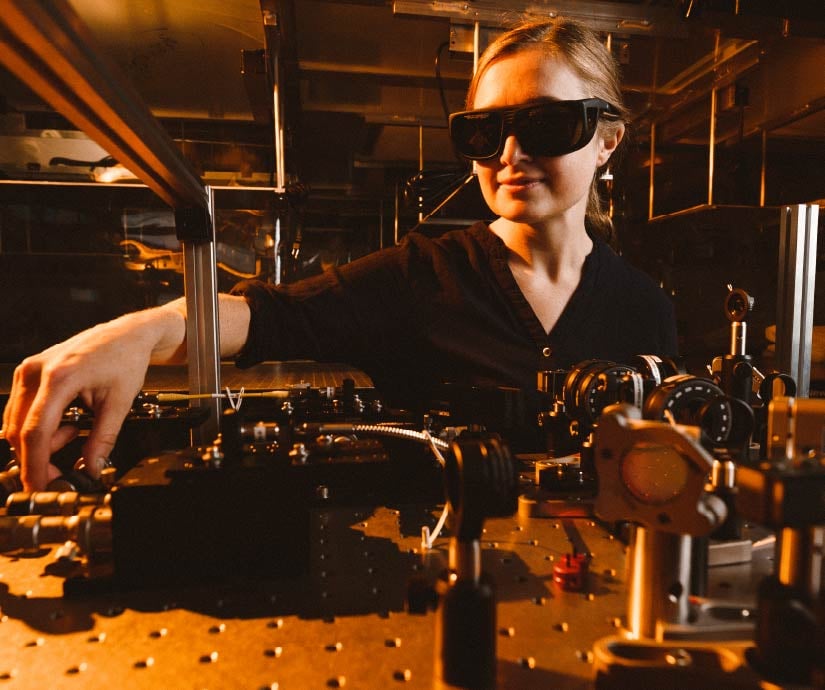

MONTREAL — There are places where radio waves cannot go and where light scatters into uselessness, and for decades the options for communication in those environments, including the deep ocean, the inside of a human body, and shielded infrastructure, have been limited by the same physics that governs most modern wireless networks. A research team at McGill University, working with collaborators at the National Research Council of Canada and Princeton University, has demonstrated a device that generates controllable bursts of something different: phonons, the quantum carriers of sound, which travel through matter by rules that neither light nor electrical current can follow.
The results were published this week in Physical Review Letters, the flagship journal of the American Physical Society. The paper, titled “Resonant Magnetophonon Emission by Supersonic Electrons in Ultrahigh-Mobility Two-Dimensional Systems,” describes a device that uses a two-dimensional crystal only a few atoms thick to generate precisely controlled phonon bursts when electrons are forced through it at speeds exceeding the sound velocity of the material. The behavior the team observed exceeded the predictions of existing theoretical frameworks, which until now had set limits on how phonons could be generated in such systems.
Phonons are the quantum mechanical equivalent of sound waves, packets of vibrational energy that travel through solids and liquids the way photons carry light through air and vacuum. In everyday environments, they are simply the mechanism behind how heat moves through metal or how vibration propagates through a table. At quantum scales and near-absolute-zero temperatures, phonons become something more precise and controllable, and that precision is what makes them interesting to communications and sensing researchers.
The advantage Michael Hilke, the study’s corresponding author and an associate professor of physics at McGill, describes is environmental. Modern communication depends almost entirely on electromagnetic signals, light pulses through fiber optic cables and radio waves through air. Those methods break down in environments where neither propagates well. In a medium such as oceans, Hilke explained, sound can travel whereas light and electrical currents cannot, and that fundamental difference in behavior is what makes phonon-based devices worth building.
The McGill device operates between ten millikelvin and 3.9 Kelvin, temperatures approaching absolute zero that require sophisticated cryogenic equipment to maintain. At those temperatures, the electrons coursing through the two-dimensional crystal channel exist in a quantum regime where the crystal lattice is nearly still. Hilke described a counterintuitive thermal relationship the experiment revealed: the electrons can be very hot in terms of kinetic energy even while the host crystal sits close to absolute zero. That decoupling between electron temperature and crystal temperature is what allows the device to generate phonons controllably, by driving electrons to supersonic speeds so that excess energy is released as precisely timed phonon bursts rather than as ordinary heat.
What the team found in testing was that the phonon generation exceeded what existing theoretical models predicted should occur at those conditions. Existing theory holds that at absolute zero, no sound is created unless electrons travel collectively at or above the speed of sound in the material, a threshold the device’s operating design specifically targets. The amplitude and character of what the device produced pushed beyond those expected boundaries, suggesting that the models governing energy transfer in ultrahigh-mobility two-dimensional systems require revision.
The applications Hilke and his collaborators point to are varied. Phonon lasers, devices that emit coherent and precisely controlled bursts of phonon energy, would function in media where optical lasers cannot operate effectively. In underwater communications, phonon-based devices could in theory reach frequencies and signal coherence that conventional acoustic transducers do not approach, since they operate on much slower physics. In medical applications, phonon-based imaging could provide a sensing modality in human tissue that neither MRI’s magnetic fields nor optical coherence tomography’s light-based scanning can replicate at the cellular scale. The same phonon emission physics has potential uses in advanced sensing and the study of biological materials.
The collaboration producing this research reflects the scope of the problem. Quantum research groups at the National Research Council of Canada, which operates laboratories with direct expertise in low-temperature condensed matter physics, contributed to the experimental design alongside Princeton University’s condensed matter physics program, one of the most active in North America. The funding structure ties the work to a broader network of quantum research infrastructure spanning the Canada-United States scientific corridor.
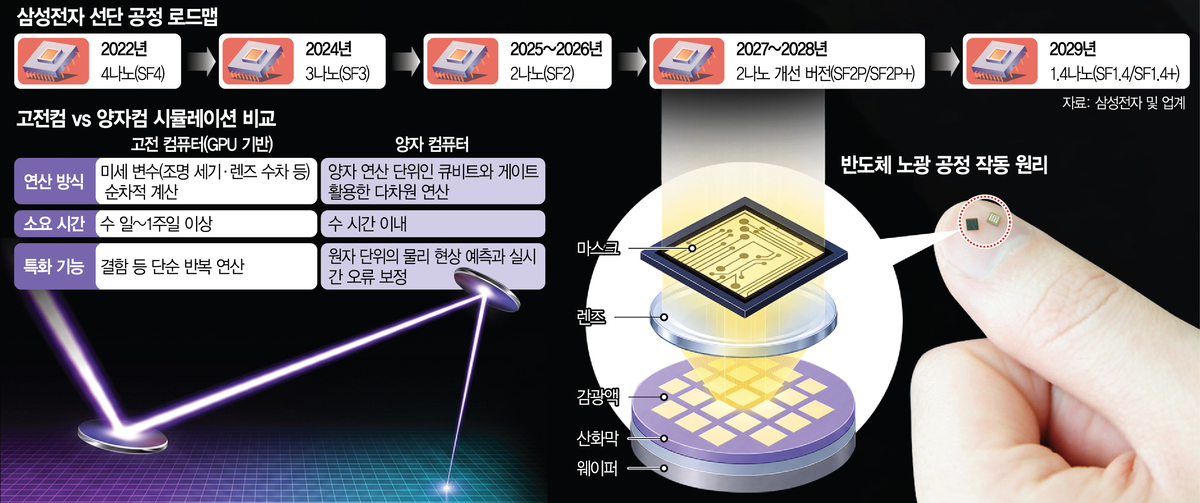
The phonon finding lands during a period of rapid recalibration across the quantum technology landscape. Samsung is separately testing a quantum-classical hybrid system for chip manufacturing simulation, an application with a much shorter timeline to industrial impact but driven by the same underlying physics of quantum behavior at small scales. The McGill result belongs to a different category of foundational work, scientifically significant but industrially premature, closer in character to the basic phonon emission questions that informed decades of laser development before that technology reached industrial scale.
The significant constraint the Physical Review Letters paper does not address is temperature. Generating controllable phonons at ten millikelvin requires equipment that would not fit into a submarine, a hospital corridor, or any practical setting that would benefit from quantum acoustic communication. The gap between laboratory demonstration and deployable technology is measured in decades when cryogenic requirements are involved. Superconducting quantum computers have navigated the same gradient for thirty years, moving from early liquid-helium cooled demonstrations to dilution refrigerator systems the size of a room, and remain exclusively in specialized facilities. A roadmap published last month in Nature Reviews Electrical Engineering by Australia’s national science agency described the same preparation-window problem for quantum computing in industrial settings, and phonon communications devices face an analogous trajectory.
What the McGill team has established is that the physics works the way it needed to, and then some. The electrons go supersonic, the crystal emits phonons, and the results exceed what existing theory predicted. Whether that excess points to a revision of the theoretical framework or identifies engineering parameters that could eventually be exploited at warmer temperatures is the question the paper raises without settling.