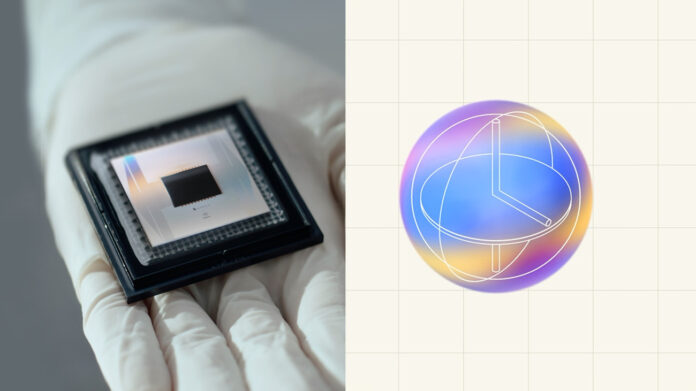

HELSINKI – The company that installed America’s first quantum computer at Oak Ridge National Laboratory just told investors, in its own prospectus, that it cannot promise the technology will ever find large-scale commercial use.
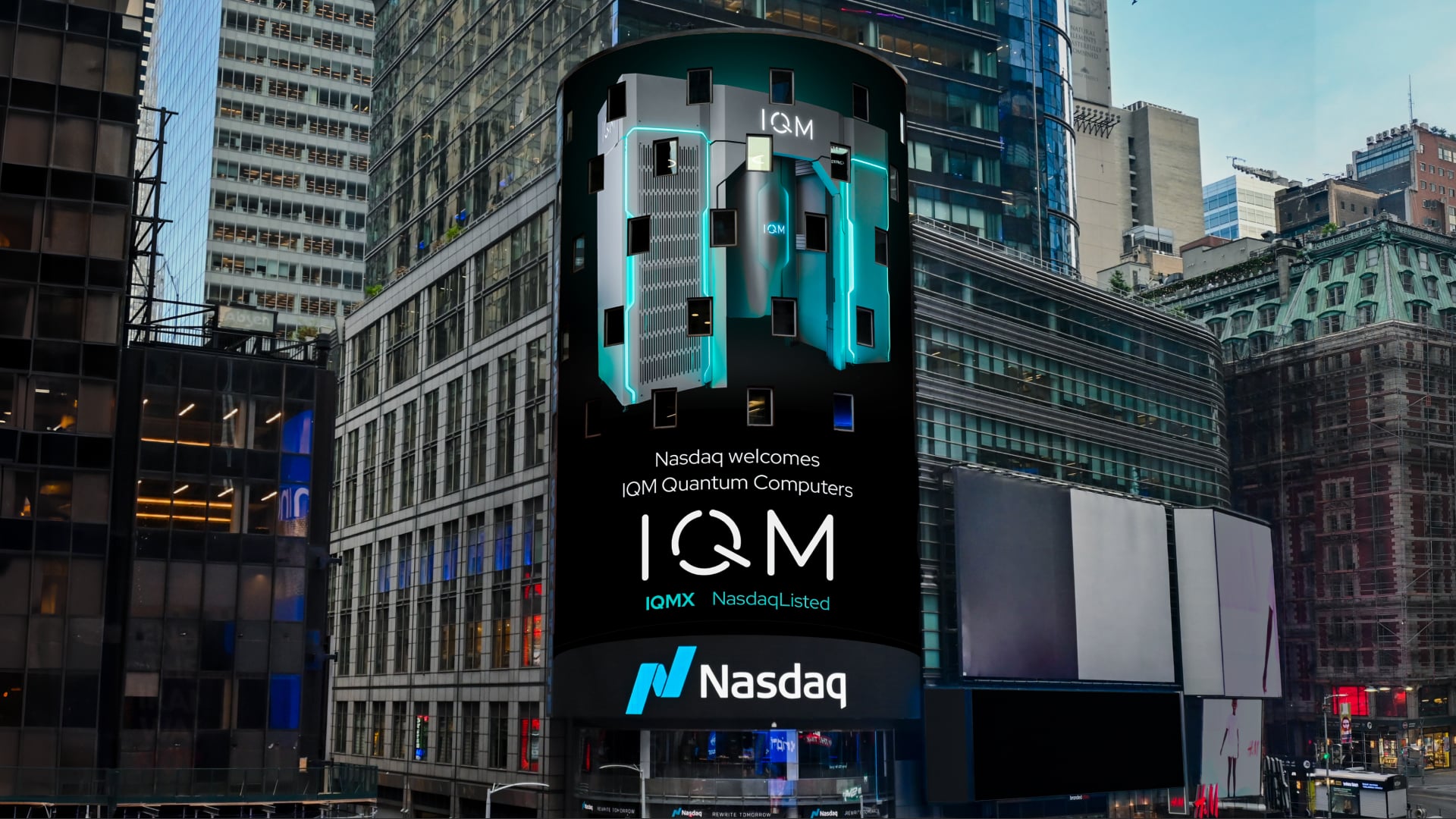
That is the unvarnished framing of IQM Quantum Computers’ debut on Nasdaq, which made the Finnish company Europe’s first publicly traded quantum computing business on Thursday. The listing closed a SPAC merger that raised roughly 198 million euros, or about $226 million, and set IQM’s market value at $1.9 billion, TechCrunch reported.
The admission in IQM’s own filings sits in tension with the momentum around it. The company’s customer base grew from eight to 22 in a single year. The United States Department of Energy, under the Trump administration, has committed to fielding the world’s first fault-tolerant quantum computer by 2028. French competitor Pasqal is preparing its own SPAC listing. The sector is moving fast. It just cannot tell you where it is going.
“No one, not even a company making quantum computers, can say when that might be,” CEO Jan Goetz told reporters around the listing. The line could serve as the company’s founding motto. IQM, an Aalto University spinout with 420 staff (roughly two-thirds based in Espoo, Finland), has built a business selling hardware and expertise to research institutions and governments while waiting for that larger commercial moment to arrive.
On Thursday, the stock began trading under the ticker IQMX on Nasdaq, with a simultaneous secondary listing on Nasdaq Helsinki.
The $1.9 billion valuation is not a profit milestone. IQM does not report significant recurring commercial revenue. It is a bet on position: on the technical credibility accumulated through more than 200 million euros in European public funding, on the Oak Ridge installation, and on the argument that whoever owns the hardware when quantum advantage finally materializes will capture an outsized share of what follows.
IQM’s own prospectus does not pretend to know when that happens. “Large-scale commercial traction of quantum computing technology may never occur,” reads one line of required disclosure that is unusually candid in a sector more accustomed to announcing breakthroughs. Goetz, asked to characterize a timeline, declined.
The DOE’s 2028 target for fault-tolerant quantum computing, framed as part of Washington’s push to maintain technological leadership against China in semiconductors and artificial intelligence, is ambitious in a way IQM’s own filings do not validate. That gap between Washington’s deadline and Helsinki’s hedge will be one of the more interesting data points as IQMX begins reporting quarterly to public markets.
IQM’s customer list, 22 organizations at last count, is anchored in research and defense-adjacent institutions. The Oak Ridge installation matters for a specific reason: Oak Ridge operates the world’s most powerful classical supercomputer, which means it is one of the few organizations positioned to run real-world benchmarks comparing quantum and classical performance on identical workloads. That IQM hardware is installed there does not confirm quantum advantage has arrived. It does confirm that serious researchers think the experiment is worth running.
The SPAC structure that brought IQM public has attracted criticism in other sectors. The mechanism has been used to take companies public that might not have survived a traditional IPO roadshow. IQM’s path required investors to accept both significant dilution risk and the technology uncertainty the company itself discloses. What the SPAC structure provided is capital with a longer horizon: the 198 million euros raised gives IQM runway to pursue fault-tolerant architecture without the immediate revenue pressure a conventional listing would generate.
Pasqal, the Paris-based neutral-atom quantum company backed by the French government, is preparing a similar move. The near-simultaneous announcements suggest European quantum companies have concluded that the US public market is the right venue to raise capital at this stage, even for companies whose largest installations and deepest government relationships are on the other side of the Atlantic.
The competition for quantum leadership increasingly maps onto the same fault lines as the broader AI infrastructure race: massive capital commitments, government backing, and a commercial horizon that keeps receding. IQM’s listing gives Europe a public stake in that contest for the first time.
What IQM has that most quantum competitors lack is a coherent hardware business married to a real geographic footprint. The Espoo campus, built around talent from Aalto University, gives the company an academic pipeline that pure commercial ventures cannot easily replicate. The accumulated EU funding means IQM has survived multiple capital cycles without becoming entirely dependent on investors who might lose patience before the technology matures.
Whether the Nasdaq listing accelerates that journey or simply introduces a new category of impatient capital is the question now attached to IQMX. The honest answer, not from this article but from IQM’s own filings, is that nobody knows.