
SEOUL – At 9:46 a.m. on June 23, the Korea Exchange triggered a market-wide circuit breaker, a halt it had not imposed since the pandemic, after the Kospi fell 9.99% in a single session, its fifth-largest decline on record. Foreign investors had already moved $2.5 billion offshore before the freeze. The proximate cause was a convergence of leveraged fund unwinds and institutional rebalancing. The actual cause was three weeks older and American in origin.
The circuit breaker in Seoul was the loudest single event in a global AI stock rout that has erased more than $1.3 trillion from semiconductor market capitalizations, stalled the most anticipated technology IPO since Meta, and placed a blunt question before investors from Tokyo to New York: can $452 billion in annual AI capital expenditure generate a return that justifies itself?
The chain that produced Seoul’s frozen exchange began on June 5, when Broadcom Inc. (AVGO) reported third-quarter guidance of $16 billion against analyst estimates of $17.2 billion. The miss was not catastrophic on its own. But it landed in a market that had priced AI semiconductor stocks as though every guidance beat was guaranteed. The Philadelphia Semiconductor Index fell 10.4%. Arm Holdings dropped 12.8%, Advanced Micro Devices shed 10.9%, and Intel gave up 11.3%. The Nasdaq Composite fell 4% before noon in New York.
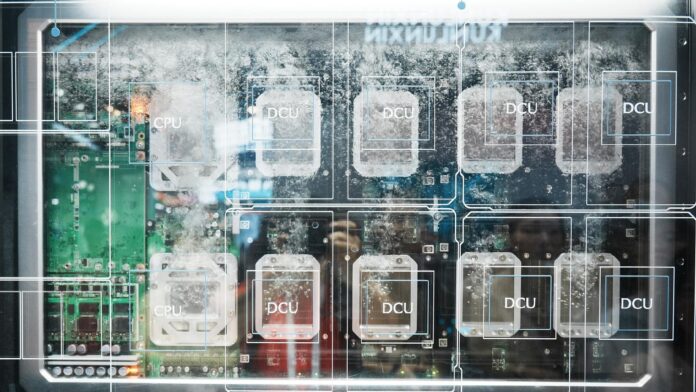
The Broadcom miss reset the AI growth calculus. Companies like SK Hynix and Samsung Electronics had been trading at multiples that assumed insatiable demand for high-bandwidth memory, the specialized chip architecture at the heart of every large language model deployment. When the market updated those assumptions, Korean semiconductor stocks became among the most exposed assets in the world.
By June 23, the pressure had built past what the exchange could absorb. SK Hynix lost 12.47% in the session. Samsung Electronics fell 12.31%. The Nikkei 225 dropped 3.55%. SoftBank Group, whose Vision Fund carries deep exposure to AI ventures, tumbled more than 12%. Bloomberg reported that the Kospi’s collapse sent emerging market stocks falling globally, forcing foreign funds to liquidate currency positions simultaneously. When the circuit breaker expired and trading resumed, the index closed near its session lows.
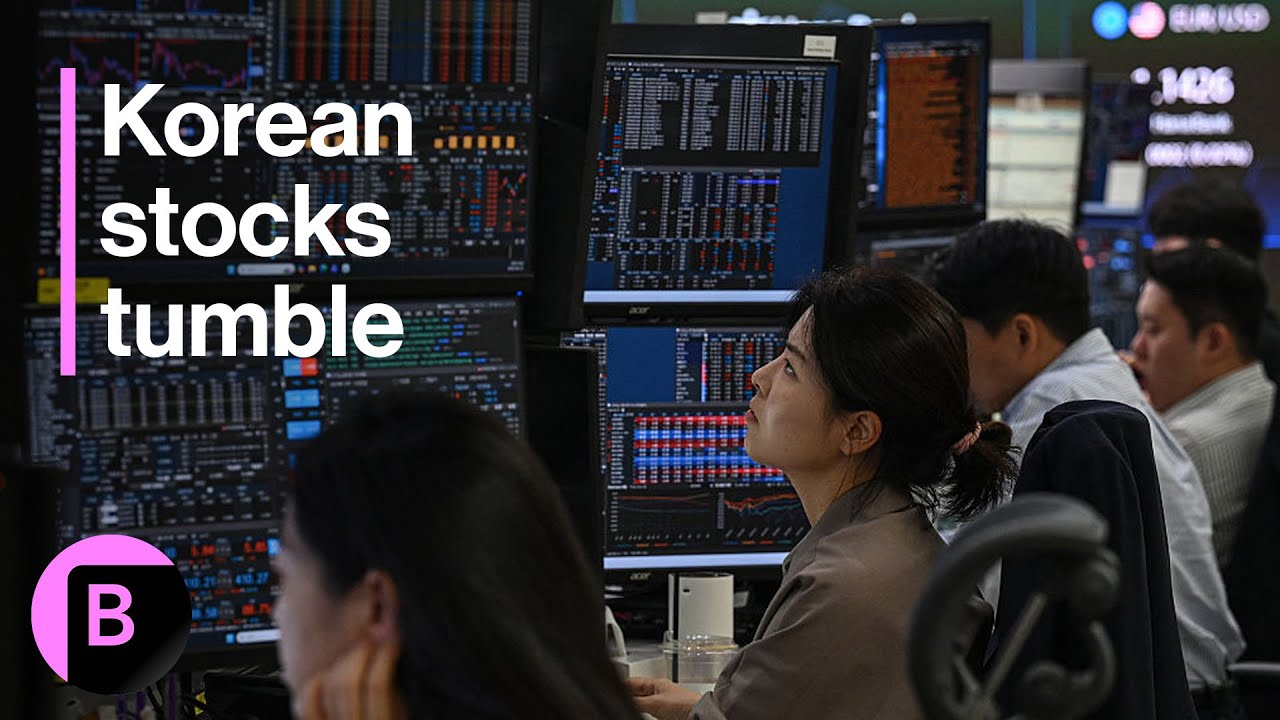
Three factors converged on June 23 that ordinary sector rotation cannot explain. MSCI’s decision to again defer South Korea’s reclassification to Developed Markets status forced institutional funds to unwind Korean equity positions. Leveraged ETFs tracking Samsung and SK Hynix amplified the declines through a mechanical feedback cycle that sold faster as prices fell. The Federal Reserve’s hawkish June 17 meeting minutes then forced dollar-denominated funds holding Korean equities to liquidate to cover currency exposure. All three hit the same trade at the same time. The chip rout that followed, Bloomberg noted, was the largest single test of whether the AI-driven equity rally could survive a genuine growth scare.
The same week Seoul froze, the Wall Street Journal reported that OpenAI’s advisers were recommending the company consider delaying its initial public offering until 2027 at earliest. Chief financial officer Sarah Friar was among those pressing internally for the delay. Chief executive Sam Altman has rejected any IPO at a valuation below $1 trillion, a floor his advisers have described internally as a “non-starter” in the current market environment. SpaceX’s post-listing trajectory has sharpened the caution: shares that priced at $185 climbed briefly to $225 before retreating to around $153.
OpenAI’s IPO hesitation crystallizes what the broader rout is actually about. The company is not unprofitable in the conventional sense. It is burning capital against a bet that AI services will prove indispensable at scale before the capital runs out. But public markets are now pressing the same question that private-market investors had been willing to defer: when does the AI monetization story become a revenue story?
Micron Technology’s most recent quarter illustrates the paradox. As Micron’s record $41.5 billion quarter showed, the company’s chief executive told analysts the company has “no line of sight” on when its high-bandwidth memory production can catch up with AI demand. Micron’s stock fell 5% on June 26 in continued selling, as investors began treating strong AI infrastructure demand as a lagging signal rather than a forward one.
A broader pattern of corporate belt-tightening has begun surfacing in enterprise data. Subscription cancellations for major AI platforms accelerated in the second quarter. Several large enterprises that committed to AI deployments in 2025 have reduced or paused contract renewals. Meta Platforms, which committed more than $60 billion in AI capital expenditure for 2026, quietly retired an internal AI model performance leaderboard in May.
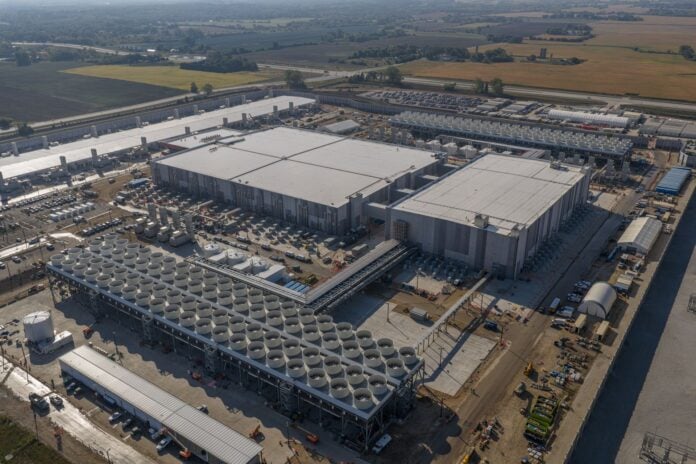
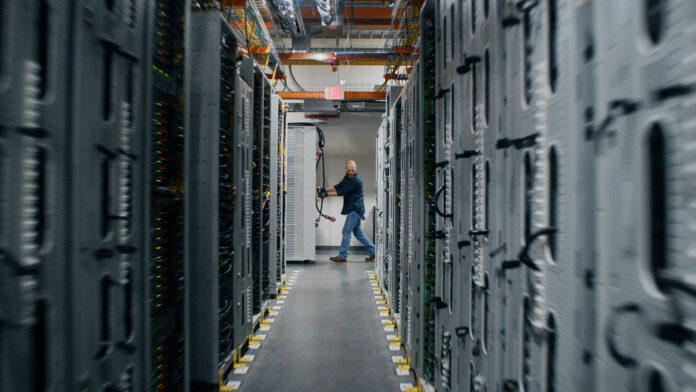
For the hyperscalers, the exposure is structural. Microsoft, Alphabet, Amazon, and Meta combined have committed approximately $452 billion in AI capital expenditure for 2026. That figure was cited in January as evidence of the AI buildout’s durability. It is now being examined as a potential liability. Alphabet, which shed $270 billion following the defection of four senior researchers to Anthropic, now faces its AI infrastructure commitments under simultaneous scrutiny from markets pricing in growth doubt.
What the market cannot yet determine is whether the rout represents a recalibration or a reset. A recalibration leaves the structural AI investment thesis intact while compressing semiconductor multiples to levels consistent with a more gradual adoption curve. A reset would mean the AI supercycle narrative fractures, capex guidance gets revised down, and companies that built capacity assuming sustained hyperscaler demand find themselves holding infrastructure they cannot fill. The Broadcom guidance miss does not settle that question. Seoul’s circuit breaker does not settle it. Even the OpenAI IPO delay is not a verdict. The answer will emerge from the next two quarters of hyperscaler earnings, when Microsoft, Alphabet, Amazon, and Meta will have to show the markets what $452 billion in AI spending is actually producing.