
NEW YORK – Sanjay Mehrotra’s company just posted the best quarter in its 46-year history. He spent part of the earnings call explaining why that is not enough.
Micron Technology Inc. (Nasdaq: MU) reported $41.46 billion in revenue for its third fiscal quarter, a 346% increase over the same period last year and a figure that beat Wall Street’s consensus estimate by nearly $5.8 billion. The numbers landed with the kind of authority that rarely requires qualification. Mehrotra qualified them anyway.
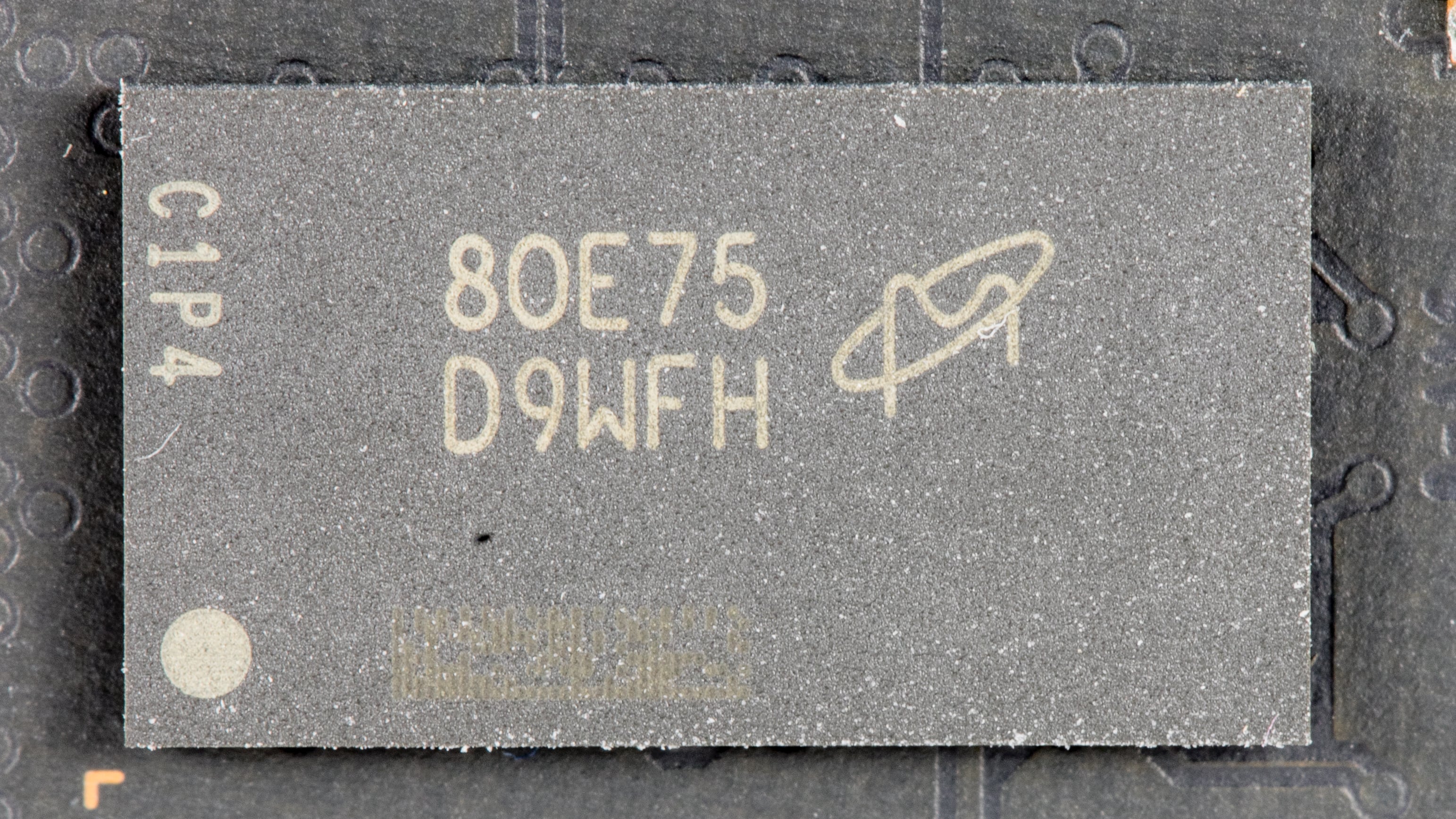
“We currently do not have line of sight as to when memory supply will be able to catch up with increasing demand,” Micron’s chief executive told analysts Thursday. The company can fill only half to two-thirds of requests it receives for high-bandwidth memory, the specialized chip architecture at the heart of every major AI accelerator, and it does not expect that ratio to improve through the end of 2026. Demand for HBM4, Micron’s newest generation, is already generating more than $1 billion in quarterly revenue while the chip has barely begun shipping at scale.
The admission puts a precise number on something the market has been debating in general terms: artificial intelligence’s most acute infrastructure bottleneck is not compute power, not energy, not even software. It is memory.
Micron’s gross margin in the quarter reached 84.9%, a record the company has never before approached. Non-GAAP earnings per share came in at $25.11, beating estimates by $4.62. The company now holds $22 billion in cash deposits from customers who have prepaid to secure future supply, a figure that reflects how desperate its largest buyers have become to guarantee access to chips that may not exist in sufficient quantities for years.
Sixteen unnamed strategic customers have signed long-term supply agreements with Micron, representing more than $100 billion in minimum contracted revenue, CNBC reported. Which specific hyperscalers and chip designers hold those agreements remains undisclosed, a gap in the public record that matters because the distribution of supply will determine which AI infrastructure projects move forward and which get rationed.
Mehrotra offered one answer, partially. Micron confirmed it has begun mass production of HBM4 for Nvidia Corp.’s next-generation accelerators. The two companies have been commercially intertwined since the HBM market emerged, but the public confirmation of the production ramp is new. Nvidia’s GB300 platform, expected to drive data center spending through late 2026 and into 2027, is built around the assumption that HBM4 supply will materialize on schedule. Micron is telling the market it will, while also telling the market it cannot fill current HBM3E demand.
That tension runs through the earnings report in multiple registers. For the fourth quarter, Micron guided to approximately $50 billion in revenue and earnings per share of $30 to $32. Gross margin is projected to expand further to around 86%. The trajectory has no obvious ceiling in the near term, which sent shares up between 14% and 17% in after-hours trading Thursday.
The broader memory market is not evenly heated. Micron’s data center business is driving the company’s performance; its consumer segments, including PC and smartphone DRAM and NAND flash used in consumer storage, have recovered but are not growing at the same velocity. DRAM prices have risen steeply over the past six months, with Apple raising MacBook and iPad prices as a direct consequence of constrained memory availability. Micron has been deliberately shifting capacity toward HBM and high-margin data center products, a bet that AI infrastructure spending will remain elevated long enough to justify the capital commitment.
The 16 strategic agreements and $22 billion in customer deposits are a financial mechanism for managing a supply allocation problem that cannot be solved with money alone. Building the fabrication capacity to meaningfully increase HBM output takes two to three years from decision to production. Mehrotra’s timeline of supply catching up with demand by 2028 “at the earliest” is not a forecast of demand moderation; it is a forecast of how long it takes to pour concrete, install lithography equipment, and ramp yield on a chip architecture that requires thousands of precisely aligned interconnects stacked on top of each other at atomic scale.
Google, Amazon, Microsoft, and Meta have each disclosed multibillion-dollar AI infrastructure spending plans that run through 2027 and 2028. None have disclosed how much of that spending depends on receiving memory allocations that Micron has already said it cannot guarantee. That gap between announced hyperscaler ambition and confirmed memory supply is the unresolved question the earnings report surfaces without answering, a hardware backdrop to the AI talent competition between Google DeepMind and Anthropic that is reshaping the industry’s organizational map in parallel.
Mehrotra described current market conditions as “the start of a multi-year HBM supercycle.” Whether this one proves durable will depend on how quickly AI training workloads continue scaling, and whether the 2026 generation of large models actually requires the memory densities that HBM4 was designed to deliver, or whether efficiency improvements in model architecture begin to reduce per-token memory consumption before Micron’s expanded capacity comes online.
Micron’s record quarter does not answer those questions. It establishes, with unusual clarity, that for the moment the memory market cannot keep up with the demand that AI has created, and that the company best positioned to profit from that imbalance still cannot fill its order book.