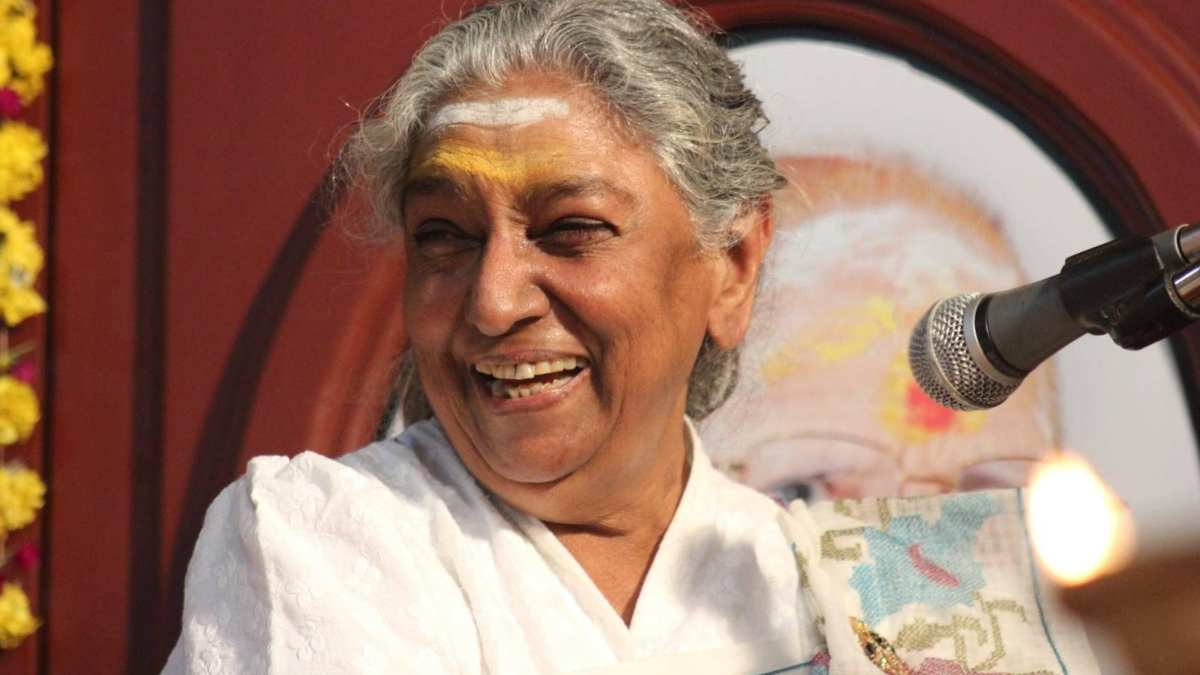

MYSURU – Apsara Vydyula sat at her grandmother’s bedside until the last moment. The announcement she posted Saturday morning was measured in its grief and specific in what it acknowledged: S. Janaki, the woman who had given South Indian cinema its voice for sixty years, had died at Apollo Hospital in Mysuru at the age of 88. The cause was cardiac arrest, arriving after a night of breathing difficulties that brought her family to the hospital before dawn. “She left us peacefully,” Vydyula wrote, “surrounded by the love of her family.”
The measurement of what went with her is not easily done. Janaki recorded more than 48,000 songs across seventeen languages during a career that began in 1957 and never settled. She sang for Tamil films and for Telugu and for Kannada and for Malayalam. She sang in Hindi and Odia and Bengali and Marathi. The figure – 48,000 songs in roughly sixty years – averages out to more than two songs recorded every day without a single day off. That the figure is accurate does not make it feel less like a rounding error.
She was born Sithara Janaki on April 23, 1938, in Pallapatla, a small town in the Guntur district of what is now Andhra Pradesh. Her professional career began at 19 with the 1957 Tamil film Vidhiyin Vilayattu. The industry absorbed her immediately. Tamil cinema, then Telugu film music, then Kannada – the sequence was not so much a progression as an expansion, each new language adding not a new audience but an entirely different film industry and its accompanying demands. Karnataka called her Gaana Kogile, the Songbird. The wider industry called her the Nightingale of South India, a title that understated how far across language borders her voice had traveled.
The decades that followed consolidated what those early years established. Ilaiyaraaja, who reshaped Tamil film music in the 1970s, relied on her regularly. M.S. Viswanathan, whose scores for Tamil and Telugu cinema defined two decades, returned to her voice repeatedly. A.R. Rahman’s arrival in the 1990s did not end her era; it extended it, offering a new sonic register for a voice that had already proved its range through forty years of changing film music fashions.
Her awards accumulated at a rate proportional to what was being accumulated: four National Film Awards – two for Tamil-language performances, one for Malayalam, one for Telugu – alongside 33 state film awards across Kerala, Andhra Pradesh, Tamil Nadu, and Odisha. The Kalaimamani award from the Tamil Nadu government. A Rajyotsava Prashasti from Karnataka. An honorary doctorate from the University of Mysore. The honors were not tokens; they were confirmations of something the industries had known for decades.
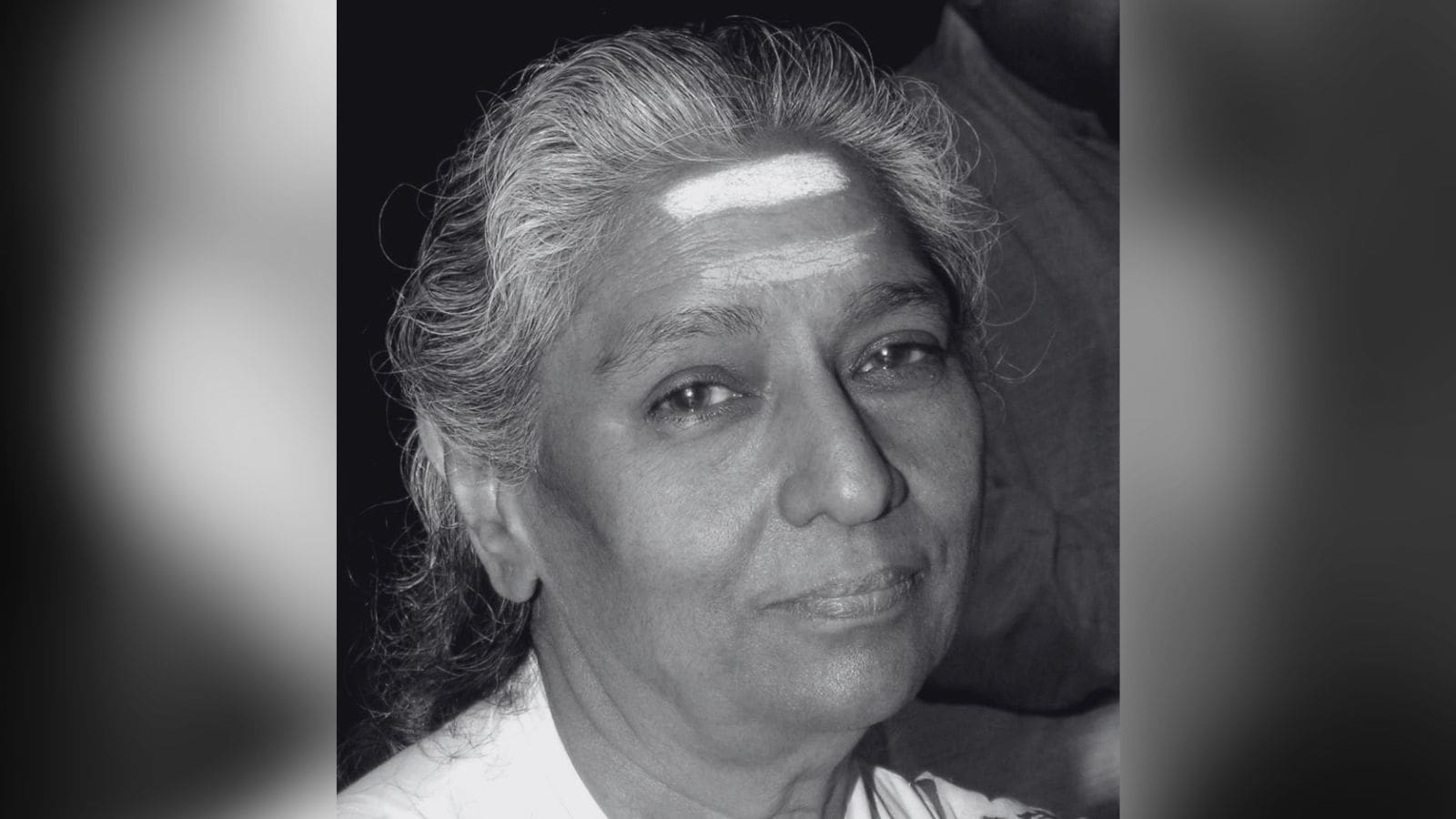
Then came the exception. In 2013, the Government of India offered the Padma Bhushan, the country’s third-highest civilian honor. Janaki declined. Her reasoning was precise: the honor had arrived too late, and she had expected the Bharat Ratna. The statement was not delivered with anger but with the calm that comes from accurate self-assessment. An artist who had given sixty years to Indian cinema and recorded in seventeen languages had her own accounting of what that was worth. The state’s offer did not match it. The refusal went into the record and stayed there.
A music industry that has spent recent years producing biopics about Western artists, including the record-breaking Michael biopic, has given significantly less documentary attention to the playback singing tradition that Janaki spent sixty years building. The form of playback singing itself, invisible labor that gives a film’s characters their voice, has resisted the biography it deserves.
Her family confirmed she had developed breathing difficulties Thursday night. She was admitted to a private hospital in Mysuru – reports later confirmed it as Apollo Hospital – where she died Friday morning. Her son Murali Krishna had died in January 2026 at the age of 65, leaving the family to grieve two losses within a single year. Vydyula’s public statement asked for privacy: “While our hearts are heavy, we are also filled with gratitude for the extraordinary life she lived and the immeasurable joy she brought to millions through her timeless music.”
Karnataka Chief Minister D.K. Shivakumar said, as The Siasat Daily reported, that Janaki had “found a place in the hearts and homes of millions” through her golden voice and that her singing would remain part of the state’s cultural heritage. The singer Chinmayi Sripaada, whose own career began in the tradition Janaki helped define, called her a Goddess. Kamal Haasan and Rajinikanth, both of whose films Janaki had scored across multiple decades, issued tributes, though specific statements from both had not been confirmed at the time of this report.
Vydyula spoke for the family in language that balanced grief with something like informed gratitude. She described her grandmother’s warmth, humility, and kindness as qualities the family would carry forward. The statement she released was that of someone holding two very different things at once: the scale of what S. Janaki gave to Indian cinema, and what it means to be at a grandmother’s bedside when she goes.
No state funeral arrangements had been announced by the time this report was filed. Whether Karnataka or Tamil Nadu, the two states with the deepest claim on her legacy, would declare public mourning was not yet confirmed. Whether the Bharat Ratna she had publicly sought during her lifetime would be considered posthumously remained a question no official source had addressed. The industry she served for sixty years had not yet answered the question of what comes next, or how to count what it had been given.