
NAPLES, Fla. – Sarah Hardwig had not yet sung a single note when “America’s Got Talent” already had a story. A blind singer from Naples, Florida, stepping onto the NBC stage that has launched careers and ended them in equal measure – that is the setup for something the show has spent twenty-one seasons perfecting: the moment before the sound, when the audience does not know what it is about to feel.
Then she sang. And Billboard magazine, the trade publication whose cultural authority in the American music industry is not easily earned, answered the question that talent shows invariably defer for maximum effect. The publication described Hardwig’s audition as a display of natural gift and called the performance inspiring – language the trade press applies to perhaps a handful of contestants every season across the landscape of competition television.
Hardwig’s appearance in this week’s episode – in which the show’s producers revealed which acts would advance to the live performance rounds – made her one of the most-discussed figures in the current season. The episode is the competition’s inflection point, the moment where the show separates itself from the audition reel and enters territory where commercial stakes become real. Acts that survive to the live rounds receive weeks of national exposure on one of American broadcast television’s most-watched summer franchises.
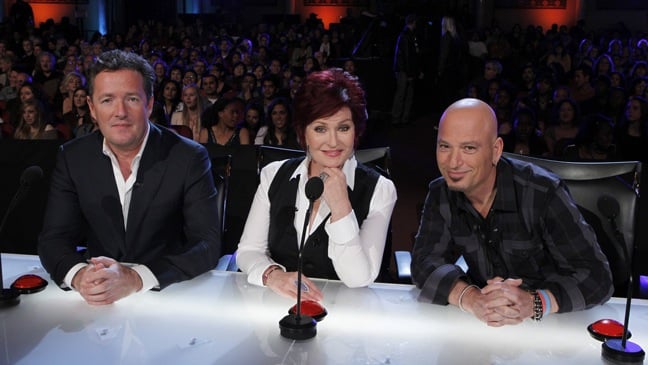
Simon Cowell, who has been the defining presence of “America’s Got Talent” for much of its run and whose instinct for commercially viable talent has generated more revenue in the entertainment industry than most studios manage in a decade, has said publicly that the acts he remembers are those that create silence before creating noise. The held breath before the ovation. Cowell’s judgment is not sentimental, which makes his enthusiasm for any particular act a more meaningful signal than the performative reactions that saturate competition television.
For a performer with a visual impairment, the dynamic on stage carries a particular weight. The audience sees before it listens. The story that precedes the voice is part of what a singer brings onto a stage like this, whether they intend it to be or not. What separates performances that become cultural moments from those that fade after the episode airs is whether the voice that follows the narrative is equal to the weight of that narrative.
By Billboard’s account, Hardwig’s voice was. The trade publication does not distribute “natural gift” characterizations carelessly. Its coverage of the audition signals that she was not simply a compelling human interest story in a format saturated with them, but a performer whose technical and emotional capabilities stand on their own terms. That distinction matters in an industry where sincerity and strategy are often indistinguishable and where the machinery of production can manufacture emotional moments that evaporate on second viewing.
The show airs on NBCUniversal’s broadcast network, which has carried “America’s Got Talent” through a period of significant disruption in the television landscape. While streaming platforms have absorbed enormous shares of viewing time and advertising revenue from traditional broadcast, the show has maintained an audience that linear networks increasingly struggle to attract for any programming. The live rounds – where fan voting determines outcomes alongside judge panel input – are the format’s most commercially significant phase, driving communal engagement that streaming’s on-demand model cannot replicate.
Naples, the Gulf Coast city where Hardwig lives, is not typically associated with the entertainment industry’s talent pipeline. The city’s economic identity is built around healthcare, finance, and real estate. Collier County, which encompasses Naples, is among the wealthiest communities in Florida. That a blind singer from this geography has arrived at the point where national television is considering whether she advances to a live performance franchise speaks to the democratizing function that competition formats serve – however imperfectly they serve it.
The press coverage generated following the episode – from a local Naples newspaper, a Gulf Coast regional outlet, and the national trade press – suggests that the story has escaped the bounds of the show’s own promotional machinery. The algorithm-driven media landscape generates enormous amounts of content about programs like “AGT” during their airings; the pieces that travel beyond the show’s immediate audience are those attached to something with independent momentum. Coverage that appears simultaneously in local, regional, and national outlets is a signal that the algorithm alone is not driving it.
The live rounds are where the competition’s economics shift and where careers can genuinely change. Annual champions have followed divergent paths – recording contracts, arena tours, Las Vegas residencies, and sustained niche popularity that predates the streaming era but has found new oxygen in short-form video platforms. The show’s infrastructure provides winners and high-profile contestants with access to a commercial ecosystem that a performer from Naples, Florida, would be unlikely to encounter through conventional paths to the industry.
The cultural dimension of Hardwig’s story sits in a broader pattern that talent competition television has documented across its two decades on American screens. Performers whose paths to visibility are constrained by geography, circumstance, or physical condition have used these shows as a mechanism of access that the mainstream industry structure does not readily provide. The shows have their critics – the production formulas that manufacture emotion, the editorial compression that collapses months of a performer’s life into minutes of airtime – but they have a documented track record of connecting genuinely exceptional performers with audiences that would not otherwise encounter them.
Whether Sarah Hardwig advances to the live rounds is a question that no editorial framing can answer. Fan voting and judge panel selection are the mechanism; the outcome belongs to the process. What can be said is that a blind singer from Southwest Florida has generated the kind of sustained, multi-outlet coverage that competition television is specifically designed to create – and that the attention feels, based on Billboard’s characterization, like it is tracking something real. What happens after the camera moves on is, as it always is with this format, the more interesting story.