
NEW YORK — The letter landed on David Ellison’s desk on Monday, the same day Scott Pelley was telling Nick Bilton to his face that Bari Weiss was murdering a television institution. It was signed by 130 people, beginning with Dan Rather — the anchor who held that institution together for two decades before his own exit under fire — and including former CBS correspondent Steve Kroft, documentary filmmaker Alex Gibney, and actress Glenn Close. Its central demand was not complicated: uphold the editorial independence of 60 Minutes, or be held publicly accountable by the people who built it.
Ellison has not responded.
The silence matters because the letter arrived at a moment when the argument for dismantling CBS News’s flagship program has never been harder to make on commercial grounds. According to Fox News’s Howard Kurtz, who cited figures from inside the network, 60 Minutes generates $200 million in advertising revenue annually for CBS. Its weekly audience stands at 9.1 million viewers, up 9 percent from the prior year. After 58 seasons — from Mike Wallace and Morley Safer through the era of Ed Bradley and Mike Wallace’s tobacco standoff — it remains one of the few legacy broadcast programs whose numbers are moving in the right direction. The show is not a patient in need of surgery. The surgery is happening anyway.
The signatories of the Rather letter were careful not to oppose change as such. They acknowledged that modernizing the program for new audiences and new delivery platforms was legitimate. What they disputed was the method: the wholesale dismissal of editorial management without any public commitment to the values that made the program credible. “What is at stake,” the letter told Ellison, “is not just the future of the most important and enduring television journalism program in this country, but the future of free and independent press in America.” The language was grand, possibly too grand, but the underlying arithmetic was precise. Within two weeks, the show had lost its executive producer, two of its five correspondents, multiple producing teams, and the correspondent who had served as its most vocal internal critic.
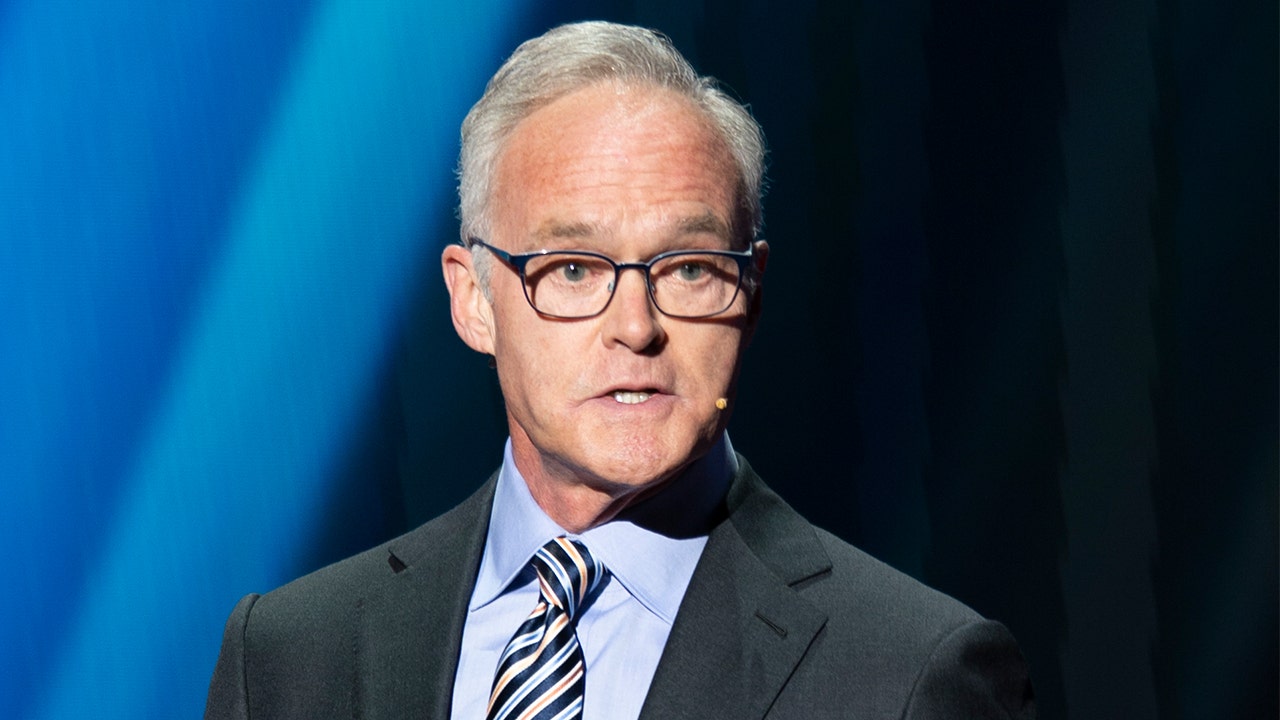
Pelley’s exit came in the manner he apparently chose. After confronting Bilton at a staff meeting — telling him that Weiss had “slender qualifications” for her role and “no qualifications” for his — Bilton fired him the following evening in a letter that described the behavior as a “performative display of hostility enacted in front of the staff.” Weiss followed the next morning on an all-hands call, framing the dismissal as a breakdown of “trust and mutual respect,” and noting that she had attempted to find “a way back” with Pelley. His response, delivered through a public statement, was that no such offer had ever materialized; in his telling, the word “firing” had been used by CBS News president Tom Cibrowski within fifteen seconds of the meeting beginning. That dispute over who said what first is now permanently unresolvable. What is not disputed is that Pelley left with a 51-Emmy career, a public statement accusing new management of instructing him to insert unverified claims into a story, and a claim that one of his pieces had come within nineteen minutes of being pulled entirely.
The political architecture behind the changes is not subtle. Oracle co-founder Larry Ellison and his son David are documented friends of President Donald Trump; in April they hosted a private dinner in Trump’s honor attended by Weiss, CBS anchor Norah O’Donnell, and Acting Attorney General Todd Blanche. Some inside the building, Kurtz reported for Fox News, saw the dinner as an uncomfortable projection of proximity to the White House. It did not slow the pace of change. The same Paramount Skydance deal that placed CBS under the Ellisons’ control is now awaiting regulatory approval for a takeover of Warner Bros. Discovery — an acquisition that would put CNN and HBO under the same ownership structure as CBS News and 60 Minutes. The scope of what is being built makes the editorial direction of a single newsmagazine look like a rounding error, but the rounding error has now attracted 130 signatories, a Rather letter, and the personal attention of the sitting president.
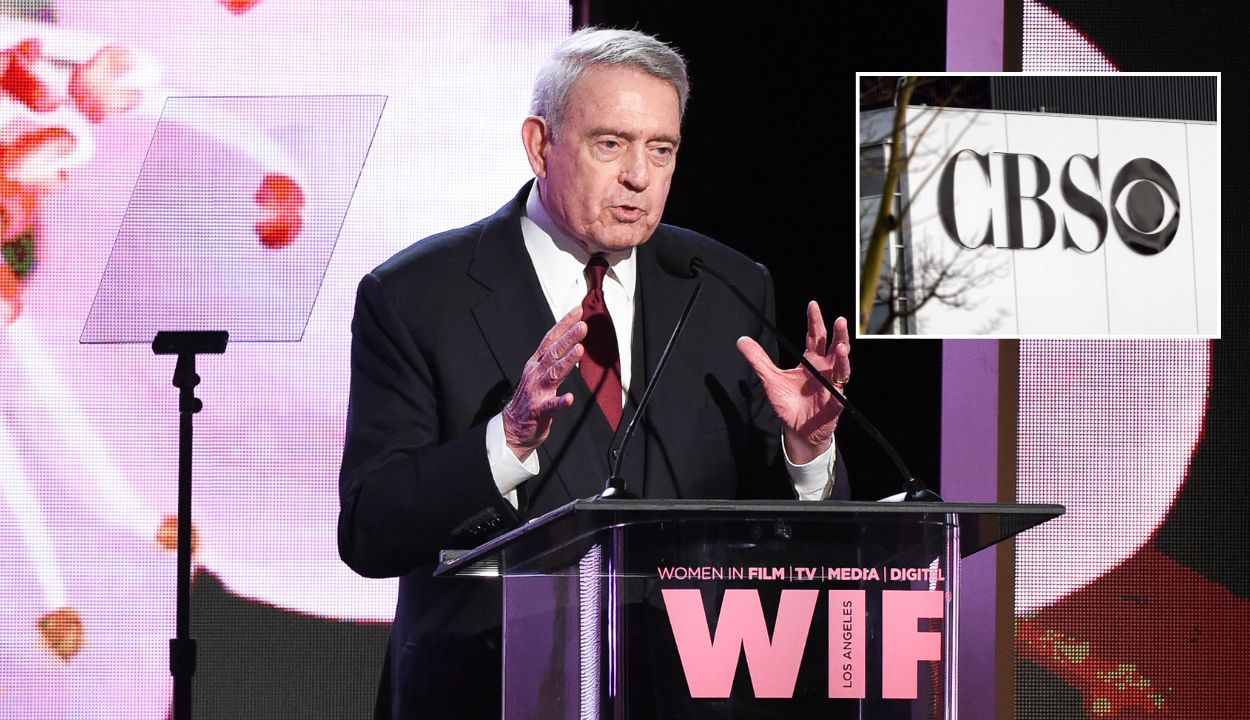
Trump’s contribution to the debate was characteristic. Speaking to the New York Post, he called Pelley “a stiff” who was “afraid” and part of “a gang of stupid, crooked people that don’t care about our country.” The remark placed Trump publicly and enthusiastically on the side of the management team that fired Pelley, a position that several CBS insiders said they found uncomfortable regardless of their views on the merits of Pelley’s outburst. The question of whether Weiss’s editorial direction constitutes an improvement in journalism or a political accommodation does not depend on whether Trump likes the outcome — and yet Trump liking the outcome is now part of the public record.
The spectrum of reaction across media has had the quality of a political Rorschach test. Rachel Maddow on MSNOW called the Bilton appointment part of a “Hungarian-style oligarchic takeover” of American media — a remark she partially walked back before doubling down, as The Eastern Herald reported when the story broke. Tommy Vietor, a former Obama White House official, offered the most precise dark-comedy read, describing Pelley as “attempting a murder/suicide” in which he was, so far, only halfway successful. On the right, Clay Travis wrote that Pelley would discover no other organization was prepared to pay him millions annually for a handful of stories each year. Brit Hume, appearing on Fox News, applied the simplest logic: “The boss is still the boss.” Newsmax’s Rob Schmitt called Pelley a mid-talent with a Jupiter-sized ego. The disagreement ran cleanly along ideological lines, which is itself a data point — it tells you less about Pelley’s conduct than about how thoroughly media coverage has become a proxy battle for the same political war being fought everywhere else.
The business case for stability at 60 Minutes deserves to sit at the center of this argument rather than the edge. This is not the CBS of the early 2010s, when the network’s news division was contracting and correspondent rosters were being trimmed as a defensive measure. The program’s audience and revenue figures, by the network’s own accounting, are the strongest argument against the thesis that something urgent needed fixing. In 1995, when CBS killed a Mike Wallace investigation into tobacco whistleblower Jeffrey Wigand hours before air because it feared a multi-billion-dollar lawsuit, the network could at least claim that legal and commercial pressures made the decision feel forced. No comparable commercial pressure exists now. What exists is ownership with political preferences and a new editor-in-chief who, by her own record at The Free Press and her own public statements, has a distinct editorial worldview that differs from the one 60 Minutes has operated under for the past two decades.
Whether that difference constitutes an improvement depends on the viewer’s politics, which is why neither side of this argument is producing much heat that illuminates. What the Rather letter does, more usefully, is frame the question as an institutional one rather than a partisan one: if the most commercially successful journalism franchise in American television can be restructured on ideological grounds while it is still growing, then the standard that editorial independence is protected when it is profitable has been conclusively retired. That is the case the 130 signatories are making to Ellison. He has not yet responded, and the three remaining correspondents — Lesley Stahl, Bill Whitaker, and Jon Wertheim — are watching to see if he does. So is the CBS newsroom, which NBC News reported feels “completely adrift,” and so, for that matter, is every other broadcast news organization watching how this plays out as ownership consolidation continues across the industry.
Bilton has not given a public interview since taking the executive producer role. The shape of the next season of 60 Minutes — who will present it, which stories it will pursue, how it will handle coverage of the administration that just publicly cheered the firing of its most vocal critic — remains entirely unknown. The letter from 130 journalists will not change any of that. What it does is establish, with names attached, that the people who made the program know the difference between reform and dismantlement, and believe they are watching the latter. Ellison has their letter. He has not said what he intends to do with it.