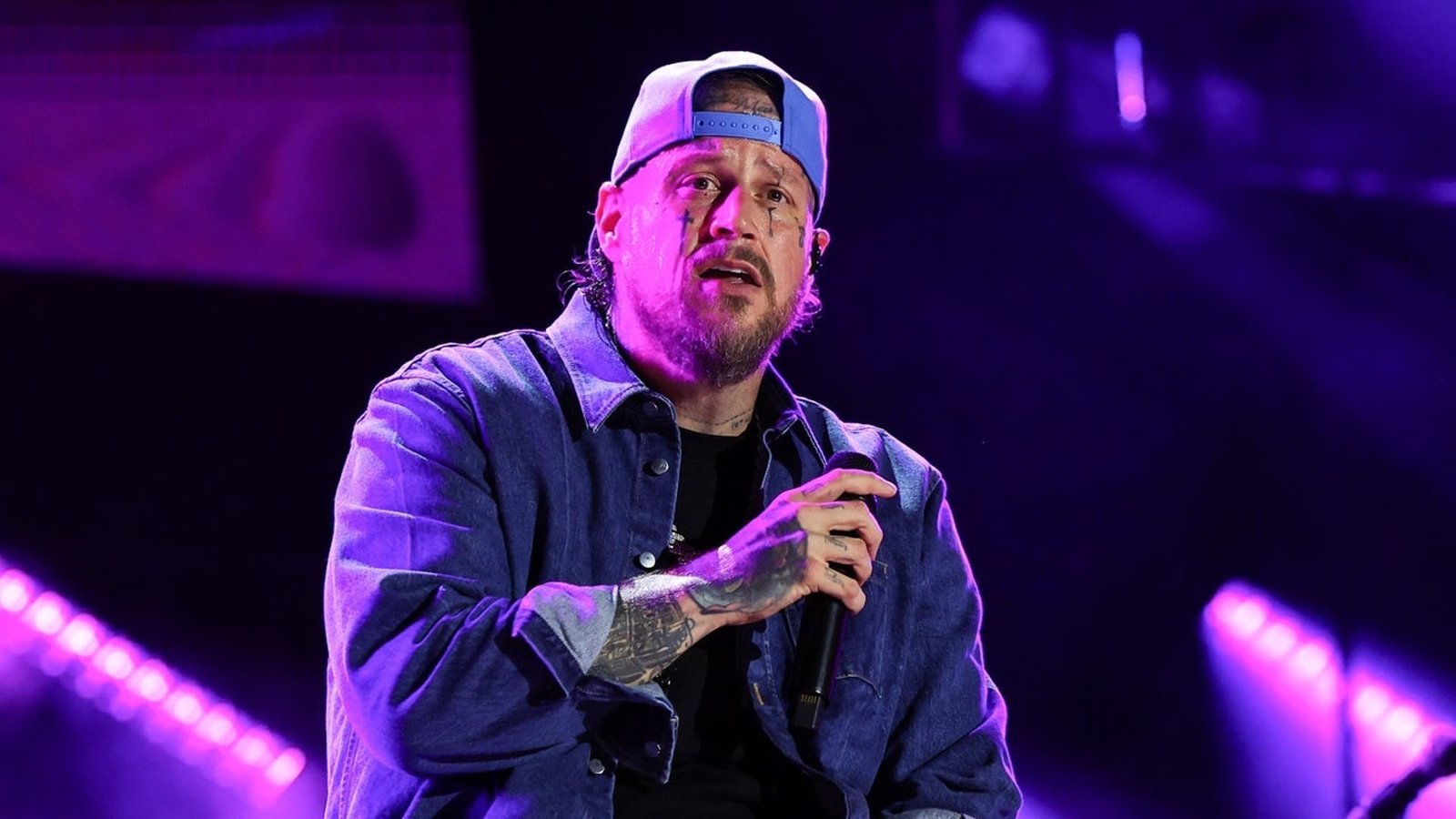

NASHVILLE – The dairy-free skillet cookie was not the problem. Jelly Roll, speaking in a YouTube video published Thursday, described how a single catering-table indulgence at a recent show spiraled into an evening of searching rest stops for chocolate bars, a taco truck run he could not explain, and the slow recognition that he had consumed 2,000 calories he had not planned to eat. By then, he said, the addict in him had taken over.
“The addict in me came out,” the Nashville-based rapper and country singer said in the video, posted July 10. “Later that night, I’m at the taco truck getting the peanut butter fluff. Next thing I know, we’re at the rest stop. I’m looking for a chocolate bar. I’m like, ‘Damn, that fast, now I’ve consumed 2,000 extra calories today that I didn’t even see coming.’”
The admission arrived six weeks after Jelly Roll, whose legal name is Jason DeFord, filed for divorce from his wife of nearly a decade, Bunnie Xo. Court records show the filing came May 18, 2026, citing irreconcilable differences, with a separation date of May 9. The couple, who married in August 2016 after a Las Vegas ceremony, had been together since 2015. The split is the first public rupture in a relationship that had been a visible part of his personal reinvention – she appeared alongside him at events, supported his sobriety, and discussed their marriage in a podcast they cohosted.
Bunnie Xo, a content creator and podcast host, built a substantial following alongside her husband’s rise from regional rapper to Grammy-nominated recording artist. Her public presence made their partnership a known quantity in the country music ecosystem. The divorce filing offered no public explanation beyond the legal standard, and Jelly Roll’s YouTube disclosure was not framed as a statement about the marriage itself – but the timing made the connection explicit.
The food binge he described fits a pattern he has discussed publicly for years. Before losing approximately 275 pounds – he once weighed more than 500 pounds – he described his eating habits in terms that mirrored his history with drugs and alcohol: total immersion, no floor, and an inability to stop once started. The weight loss, which he has attributed to sustained effort over three years, did not resolve that underlying architecture. What changed was his ability to structure around it, to avoid the first trigger. A skillet cookie at a catering table was apparently enough to breach that structure.
“I can’t have one burger,” he said. “I got to have five.” He connected that to a broader philosophy: “What I learned is how you do anything is how you do everything.” The candor is characteristic. Jelly Roll has made the disclosure of his addiction history and mental health a deliberate part of his public persona, something that separates his narrative from the polished distance of many artists at his level of recognition.

According to Fox News, he acknowledged in the same video that he had been “overeating the last three or four days” before the cookie incident and recognized stress as the primary trigger. “I’ve been overeating the last three or four days, and I was feeling myself stress eating,” he said. The admission was made in the context of his ongoing tour, with the incident apparently taking place at a concert venue with catering.
Nashville’s music industry has over the past several years become more openly conversant with the emotional costs of sustained fame and touring, partly through the stories of artists who have been public about addiction and mental health. Dolly Parton, whose own health setback drew attention this summer after she canceled her Las Vegas residency, represents an older tradition of managing those realities privately. The generation that followed, of which Jelly Roll is part, has moved in a different direction, treating transparency as both personal coping and professional strategy.
What his YouTube video does not reveal is the support structure around him during the divorce period. Whether he is working with a therapist, a dietitian, a sobriety coach, or a combination of those, is not addressed in the video or in any public statement. Artists at his touring level typically have road crews and management teams, but the gap between professional support for a music career and personal support for a health crisis is substantial, and the video makes no claim to have crossed it. He described the binge not as a crisis but as a data point about how his system works, one that he will apparently reckon with as the tour continues.
The divorce has not yet been finalized. No court date for the proceedings has been made public, and no asset disclosures have appeared in the available court record. What is clear is that the period between separation and legal resolution, already underway since May, coincides with an active touring schedule that appears to include the kind of catering-table exposure that triggered the episode he described. Jelly Roll’s weight loss was built on a system that works best with controlled environments. A tour does not offer that.