
BEIJING – His name was Liu. He was 66 years old, divorced, and living alone in a city of 22 million people when he made his final flight. He had suffered from anxiety for years. In his diary, investigators would later find, he had written about ending his life.
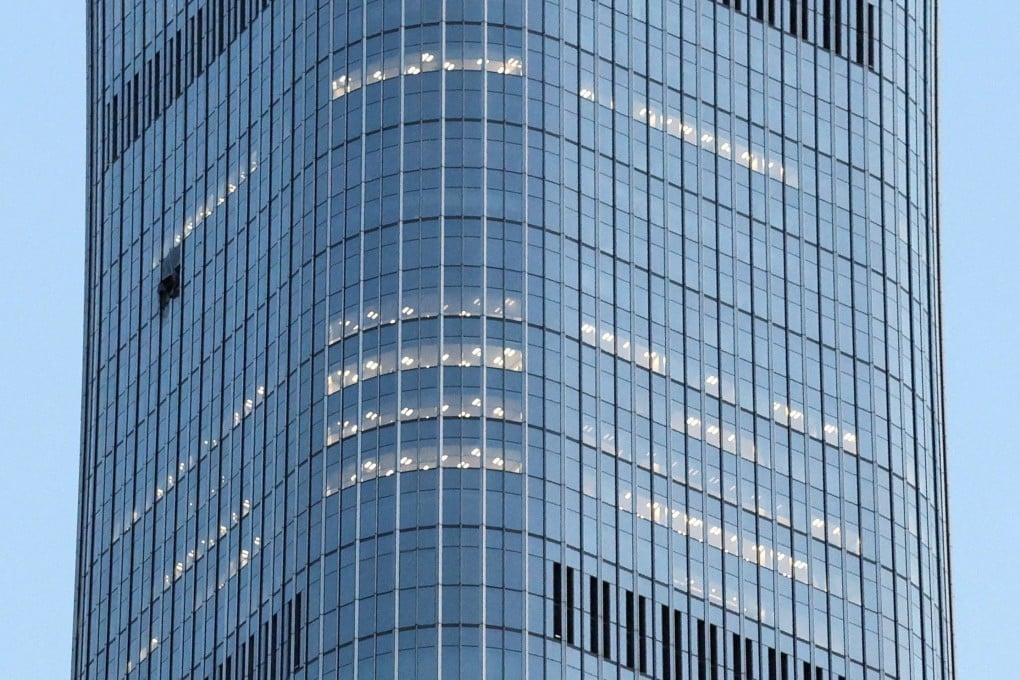
On the morning of June 28, Liu took off from a general aviation airfield in Pinggu district, on the northeastern edge of the capital. He was flying an Aurora SA60L, a small two-seat light-sport aircraft, under a private pilot licence he had obtained in 2024 after first qualifying as a sport pilot three years earlier. Within the hour, he had flown the aircraft into CITIC Tower, also known as China Zun, the country’s tallest completed building at 528 metres, planted at the centre of Beijing’s financial district in Chaoyang.
The tower sustained the impact. Liu died. No one else was killed.
For four days, that was the shape of the story. The Chaoyang district government, whose jurisdiction covers the building and the surrounding business district, said nothing publicly. Chinese state media treated the crash with the circumspect silence that in that system can signal many things: an investigation proceeding, a political sensitivity to manage, or a preference for a story to pass without commentary. International outlets reported the crash; official China left the why unaddressed.
On Thursday, the Chaoyang government issued what it described as a brief investigation summary. It named the pilot by his surname only and described him as a Beijing resident who had been a freelance worker, was divorced, and had lived alone. The summary disclosed that Liu had long suffered from anxiety and that his personal papers, including a diary, contained references to ending his life. Authorities attributed the crash to “personal reasons.” The statement ended there.
What China chose to withhold from that summary is, in its way, as informative as what it released. Liu’s full name was not disclosed. The content of his diary beyond its references to death was not described. The summary did not address whether Liu had declared his mental health history to aviation authorities when he applied for his licences, whether anyone at Pinggu airport observed anything unusual before his departure, or why, if his trajectory toward CITIC Tower was deliberate, he selected that building specifically.
The phrase “personal reasons” functions in Chinese official communication as a kind of terminal punctuation. It frames an act as concluded and private, discouraging further inquiry without appearing to suppress it. Whether it reflected a complete investigation or a managed disclosure point is not something the Chaoyang government’s brief summary offered to clarify.
Liu obtained his first pilot qualification in 2021, starting with a sport pilot certificate, a restricted category that permits flying recreational light aircraft under certain conditions. In 2024, he upgraded to a full private pilot licence, a credential requiring additional hours, testing, and medical evaluation. That progression suggests someone who committed to flying as an activity over several years, not a casual or impulsive pursuit. What the hobby represented to Liu, and whether it was recreational or something that acquired a different purpose in his final months, was not addressed in the summary that described his end.
China has aggressively expanded general aviation infrastructure over the past decade as part of its low-altitude economy initiative, which envisions small aircraft, drones, and similar vehicles becoming integrated into everyday transport and logistics. The country has more than 3,000 licensed general aviation airfields and landing zones. The regulatory framework for mental health disclosure in that sector, and specifically whether applicants with known anxiety conditions are required to report them to licensing authorities, was not addressed in the summary and has not been made part of the public conversation about what happened on June 28.
CITIC Tower, completed in 2018, is the headquarters of CITIC Securities, one of China’s largest state-owned investment banks, and it serves as the architectural signature of Beijing’s ambitions as a global financial centre. Its 528-metre profile defines the Chaoyang skyline. An aircraft striking it at any speed could not pass unnoticed. The tower is not near Pinggu; the distance between the airfield and the building is not trivial. If Liu chose his destination, that choice involved planning. If it was not chosen in advance, the coincidence has not been explained.
The crash occurred in the days before the Communist Party of China’s 105th anniversary, at which Xi Jinping presented China’s economic model to the developing world. Neither event was connected. But in the interval between the crash and the brief summary, the Chinese state had significant competing material to manage, and the pilot’s act receded from the top of official attention accordingly. It is a feature of Chinese information management, not a conspiracy: the system reserves its energy for what it wants to amplify, and lets what it does not want to amplify become quiet.
The same week also brought the implementation of China’s ethnic unity law, extending Beijing’s regulatory reach domestically and abroad. None of that connects to Liu. But it situated his act in a week when China was preoccupied with the stories it had chosen to tell, which made the brevity of Thursday’s summary legible as something other than negligence.
As South China Morning Post reported, the Chaoyang investigation summary identified Liu’s suffering but not its origins, his act but not his reasoning. What drove him to Pinggu airport on June 28, and from there to the tower, is not in the official record. What a brief investigation summary can do is close a file without filling it. China’s disclosure on Thursday confirmed that Liu died in distress. It left open the question of what kind of distress, what it had built toward, and what, in the end, he intended. Those are the questions official China has decided do not require a public answer.