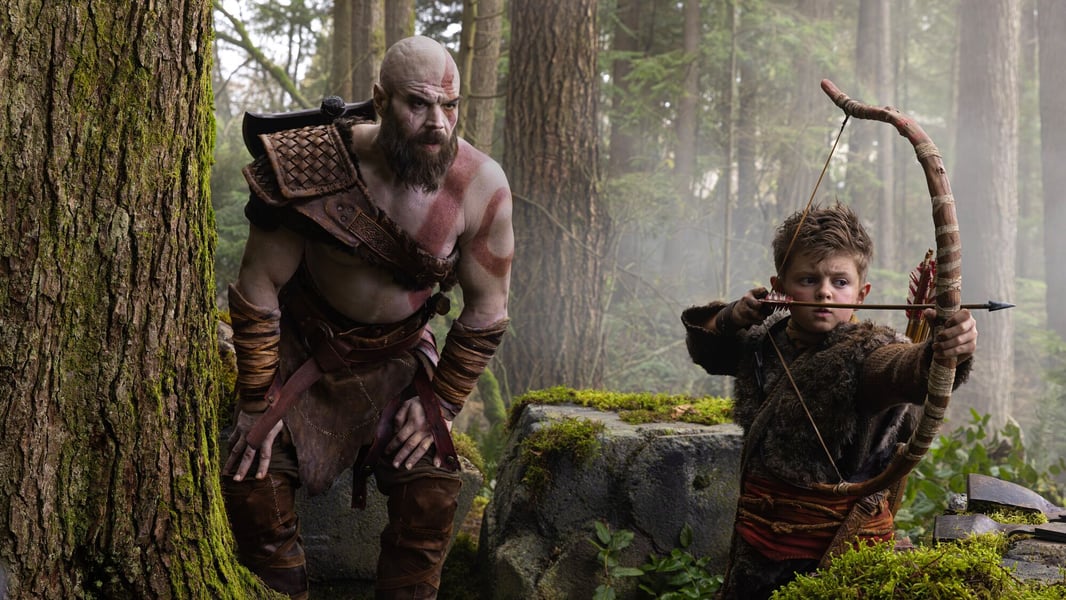

LOS ANGELES – Ryan Hurst will not finish playing Kratos. The actor, who spent months transforming his body for the title role of Amazon Prime Video’s live-action God of War, tore his bicep during a stunt on the Vancouver set in late June and will not be cleared to resume filming until well into 2027, a timeline that Sony Pictures Television and Amazon MGM Studios decided they cannot afford.
The studios confirmed Thursday they are recasting the role. Four episodes had been completed before the injury. All four will be reshot with whoever takes Hurst’s place. That person has not been named publicly.
Hurst had added roughly 40 pounds of muscle to his already substantial frame to inhabit the Spartan warrior-turned-Norse-god at the center of the franchise. He underwent surgery after the bicep tear. His physicians told the production that full recovery and a return to the physical demands of the role will not be possible until 2027, later than the shooting window the studios committed to when they placed a back-to-back two-season order running through April 2027.
The decision to recast rather than wait follows a calculation that has little to do with sentiment. Holding the entire God of War production in suspension for the better part of a year, keeping a cast of a dozen notable performers on hold, maintaining a crew in Vancouver, managing studio overhead, is not an option any reasonable production accounting can absorb. The show goes on with someone else in the lead.
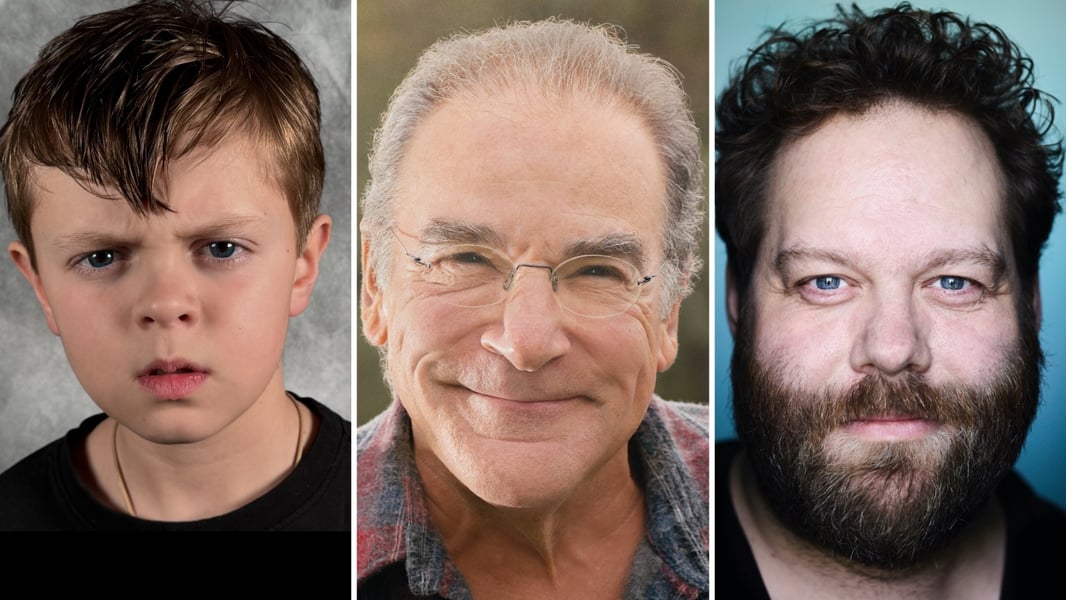
Nobody else is going anywhere. Callum Vinson, who plays Atreus (Kratos’s son and the series’ emotional center), remains committed. Mandy Patinkin stays as Odin. Ed Skrein, cast as Baldur, is in. Max Parker (Heimdall), Ólafur Darri Ólafsson (Thor), Teresa Palmer (Sif), Alastair Duncan (Mimir), Jeff Gulka (Sindri), and Danny Woodburn (Brok) are all continuing. The new Kratos inherits a cast that built chemistry across four now-abandoned episodes.
Production prep is expected to begin in mid-August, with cameras rolling again by mid-October, according to Deadline.
The show was created by Ronald D. Moore, the showrunner who built Battlestar Galactica from a nostalgia remake into one of television’s defining prestige series and who spent eight seasons on Outlander. His involvement gave the production immediate credibility when Amazon and PlayStation Productions first announced it, positioning God of War as a serious dramatic enterprise rather than a rushed gaming IP grab.
That framing matters more now than it did before. The recent track record of gaming adaptations ranges from HBO’s The Last of Us, which became one of the most-watched series in the network’s history, to a handful of streaming projects that never figured out what they were. God of War is among the most commercially valuable franchises Sony holds. The PlayStation 4 reboot sold more than five million copies in its first month in 2018; the franchise has moved more than 35 million units across platforms, according to Amazon’s production announcement. Prime Video’s two-season commitment signals that this is a tent-pole, not an experiment.
The games, developed by Sony’s Santa Monica Studio, follow a version of Kratos that begins in Greek mythology and migrates, in the 2018 reboot and its 2022 sequel Ragnarök, into Norse mythology. That Kratos is a father trying to teach his son to be a better god while trying to conceal what he himself has destroyed. The role requires an actor who can project immovable authority while accessing a very specific kind of grief. Hurst, known for similarly contained and physically imposing characters in Sons of Anarchy and The Walking Dead, was considered an ideal fit. Whoever replaces him steps into a role defined in exhaustive detail by a digital character that millions of players have spent dozens of hours inhabiting.
Whoever Amazon and Sony cast next will face comparisons not just to Hurst’s casting photographs but to a character carrying enormous accumulated fan expectation. The Bond 26 casting process, still underway at Amazon MGM with Denis Villeneuve personally calling shortlisted actors, offers a parallel: both situations involve a legacy character with obsessive global fanbases and a studio deciding how much time it can spend on getting the cast exactly right.
The continuity of the supporting cast is, paradoxically, one of the more valuable elements the production retains. Vinson’s Atreus, Patinkin’s Odin, and Skrein’s Baldur are known quantities. The four completed episodes gave the ensemble time to settle into the material. A new Kratos joins actors who already know the show, which is a different challenge from a full reset but also, in some ways, an advantage.
For Hurst, Thursday’s announcement is the kind of setback that has no good version. He spent months preparing for the role, completed four episodes, and loses the part entirely to circumstances outside his control. The studios have been careful to note the decision was not a reflection of his performance.
What remains unknown is who takes over, whether any elements of the already-filmed footage can be preserved, and whether the mid-October restart will hold given the complexity of finding a new lead. The Sony PlayStation franchise, already navigating the transition away from physical media, rarely needs a successful live-action adaptation as much as it does right now.