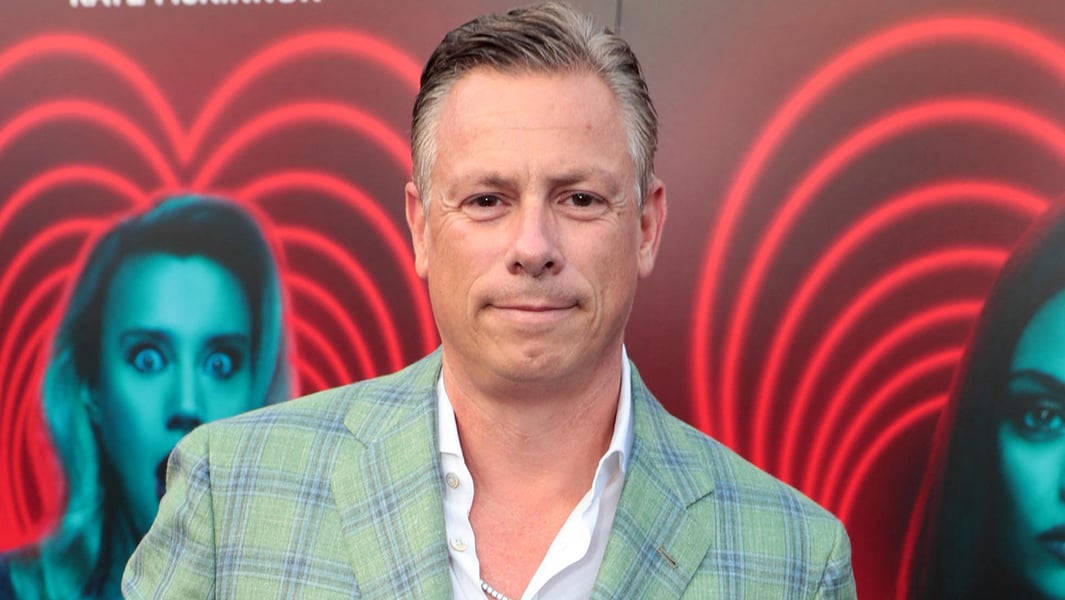

LOS ANGELES — Jason Cloth had producer credits on Joker, Licorice Pizza, and House of Gucci. He had accumulated enough standing in award-season Hollywood to function as a credible counterparty for institutional investors seeking film exposure. When he was arrested Tuesday in Los Angeles, he was facing seven federal wire fraud counts alleging he had spent seven years building what prosecutors are calling a Ponzi scheme financed by the same credibility he spent years developing.
The indictment, unsealed in federal court in Chicago, alleges that Cloth solicited more than $100 million from an Illinois investment advisor and associated clients between 2019 and 2026. The clients believed they were financing entertainment projects through Creative Wealth Media, the financing entity Cloth co-founded. According to prosecutors, as The Hollywood Reporter reported, the capital was not used for the film investments it was raised to fund. It was diverted — to a Canadian real estate development project, to repayments for earlier clients whose returns needed covering.
The mechanism prosecutors describe is functionally standard Ponzi architecture: incoming capital services the obligations created by earlier capital, creating the appearance of a productive enterprise while the actual investment position deteriorates. The Hollywood wrapping around that structure gave it unusual longevity. Film financing is genuinely opaque. Production schedules shift. Revenue from international distribution can lag for years. The inherent complexity of entertainment finance provided structural cover for the discrepancy between what investors were told and what their capital was funding.
Cloth stepped down as co-head of C2 Motion Picture Group in 2024 while addressing fraud allegations — a departure that in retrospect appears timed to the point at which legal exposure became too visible to manage from a corporate leadership position. A Florida jury had already determined that year that Cloth defrauded an investor in connection with productions including Ghostbusters: Afterlife, Monkey Man, and an NBA documentary series. At least four civil lawsuits filed since 2021 made the same basic allegation: that Cloth shuffled investments between entities to satisfy outstanding obligations. Federal prosecutors in Chicago have now framed that pattern as criminal conspiracy spanning seven years.
The Bron Studios connection gives the indictment its wider industry resonance. Creative Wealth served as the primary financing entity for Bron, the Canadian production company that accumulated 30 Oscar nominations and six wins before declaring bankruptcy in 2023. Bron’s collapse was one of the most dramatic failures in recent Hollywood history — it left dozens of productions in financial limbo and generated widespread fraud accusations across multiple lawsuits. During Bron’s bankruptcy proceedings, Creative Wealth received majority control of Bron’s remaining assets, including stakes in multiple films. Cloth stated at the time: “We are pleased that the Court recognized how Creative Wealth was affected by Bron’s actions and has decided to award us control of its surviving assets.” The federal indictment suggests the court may have been working from an incomplete picture of Creative Wealth’s own financial practices.
The Cloth indictment is distinct from earlier civil actions in one significant respect: the federal wire fraud charge requires prosecutors to prove not merely that investors lost money but that Cloth specifically misrepresented how their capital would be used and did so knowingly. The civil cases established that investors did not receive what they expected. The criminal case requires a higher evidentiary threshold — proof that the misrepresentations were deliberate. That distinction will be the core question at trial, which will unfold in the Northern District of Illinois rather than in California, where Cloth was arrested.
Each of the seven wire fraud counts carries a maximum sentence of 20 years. Prosecutors are also seeking forfeiture of at least $12.25 million. The Illinois investment advisor and the associated clients who collectively provided more than $100 million in alleged Ponzi capital have not been identified in publicly available court documents.
Hollywood’s institutional credibility has been under sustained scrutiny in recent weeks from multiple directions. The Cloth indictment adds a financial fraud layer to a moment in which the industry is also navigating structural questions about where production financing goes and whether the oversight mechanisms available to institutional capital providers in entertainment are adequate for the scale of money now flowing through the sector. The Sony Pictures connection — Creative Wealth financed projects that Sony distributed — illustrates how integrated the Hollywood finance ecosystem is and how far a single financing entity’s failure can reach.
What the indictment does not yet resolve: the status of Creative Wealth’s bankruptcy estate, the fate of Bron’s remaining film assets, and whether additional defendants will be charged. The prosecutors have filed against Cloth individually. Whether the case eventually broadens to include other participants in the Creative Wealth structure remains to be established through the discovery process. For the investors who funded more than $100 million in what they believed to be film financing, the gap between what they were told and what actually happened remains a partially told story — with the most consequential details likely to emerge only at trial.
According to The Hollywood Reporter, the Cloth indictment is distinct from the civil actions that preceded it in one significant respect: the federal wire fraud standard requires proof not merely of investor loss but of deliberate misrepresentation at the time of solicitation. That evidentiary requirement — showing Cloth knew his representations were false when he made them — is what transforms seven years of disputed civil claims into a federal criminal case with potential sentences of 20 years per count.